
9 Nights 10 Days Chitrakoot Prayagraj Varanasi Ayodhya Bodhgaya Tour Package

9 Nights / 10 Days · Pilgrimage & Heritage ·2 - 15 ·Chitrakoot
4.9 22 reviews

9 Nights 10 Days Chitrakoot Prayagraj Varanasi Ayodhya Bodhgaya Tour Package — Chitrakoot Tour Package Overview

Embark on the most comprehensive multi-faith pilgrimage circuit of North and East India with our 9 Nights 10 Days Chitrakoot Prayagraj Varanasi Ayodhya Bodhgaya Tour Package — an extraordinary 10-day journey that unites the sacred geography of the Ramayana, the Vedic tradition, and the Buddhist Dharma into one seamless, deeply moving pilgrimage. This circuit is unique among all Indian tour packages: it traces the divine footsteps of Lord Ram through Chitrakoot, Prayagraj, and Ayodhya; ascends the eternal City of Shiva at Varanasi; and then crosses into Bihar to reach Bodhgaya — the most sacred site in Buddhism and one of the most spiritually charged places on earth — where Siddhartha Gautama attained Enlightenment under the Bodhi Tree in 528 BCE. At Chitrakoot, spend two immersive nights in the forest where Lord Ram lived in exile — Kamadgiri Parikrama, Gupt Godavari Caves, Hanuman Dhara, and the serene Mandakini ghats. At Prayagraj, the Tirtha-raja, take two days for the Triveni Sangam Snan at dawn, Akshaya Vat, Alopi Devi Shakti Peetha, and Bharadvaja Ashram. Spend two unforgettable nights in Varanasi for a Ganges sunrise boat ride, Kashi Vishwanath Jyotirlinga, Sarnath, and the grand Ganga Aarti. Experience Ayodhya — Ram's birthplace — for Ram Mandir darshan, Saryu Snan, and the full pilgrimage circuit from Hanumangarhi to Guptar Ghat. Conclude with two nights at Bodhgaya — the Navel of the Earth — for the Mahabodhi Temple, the sacred Bodhi Tree, Vajrasana, and the circumambulatory shrines of the Buddhist world. Ten days, six sacred cities, two of the world's great religions, and the complete spiritual heritage of the Indian subcontinent.

Package Highlights

V

VisitKashi

Your trusted travel partner · 24×7 support

Tour Highlights — Key Experiences in This Package

Two nights at Chitrakoot — Kamadgiri Parikrama, Gupt Godavari Caves, Hanuman Dhara & Sphatik Shila
Two nights at Prayagraj — Triveni Sangam Snan, Akshaya Vat, Alopi Devi Shakti Peetha & Bharadvaja Ashram
Two nights at Varanasi — Ganges sunrise, Kashi Vishwanath Corridor, Sarnath & Dashashwamedh Ganga Aarti
Ayodhya — Ram Mandir (consecrated 2024), Saryu Snan & complete pilgrimage circuit
Two nights at Bodhgaya — Mahabodhi Temple (UNESCO World Heritage Site), the sacred Bodhi Tree & Vajrasana
Kamadgiri Parikrama — 5 km barefoot walk around Lord Ram's wish-fulfilling hill
Gupt Godavari Caves — underground royal court of Ram with inner wading water cave
Hanuman Dhara — miraculous perpetual spring with panoramic Chitrakoot valley views
Triveni Sangam dawn bath — the most meritorious holy dip in all of Hinduism
Akshaya Vat — the indestructible banyan tree mentioned in the Mahabharata
Sunrise boat ride on the Ganges at Varanasi — India's most iconic spiritual experience
Kashi Vishwanath Jyotirlinga darshan & grand Vishwanath Corridor
Sarnath — Dhamek Stupa, Ashoka's Lion Capital & Buddha's first sermon site
Dashashwamedh Ganga Aarti — 7 priests, 45-minute synchronized fire ritual
Ram Mandir darshan — the temple of the millennium consecrated January 2024
Mahabodhi Temple Bodhgaya — the exact spot of the Buddha's Enlightenment
Sacred Bodhi Tree & Vajrasana — the Diamond Throne beneath the original Bodhi Tree
Multi-nation monastery circuit — Thai, Japanese, Tibetan, Bhutanese & Chinese temples

Day-by-Day Itinerary — 9 Nights 10 Days Chitrakoot Prayagraj Varanasi Ayodhya Bodhgaya Tour Package

9 Nights / 10 Days · Chitrakoot · Timings adjustable to your arrival

Day 1

Arrival in Chitrakoot — Kamadgiri Parikrama & Ram Ghat Evening Aarti

Arrive at Chitrakoot by road or train (Chitrakoot Dham Karwi Railway Station, 8 km from the main temple area). Meet your dedicated pilgrimage guide and check in to hotel. After freshen-up, begin the most sacred act at Chitrakoot — the Kamadgiri Parikrama. This 5 km barefoot circumambulation of the Kamadgiri hill is described in the Valmiki Ramayana and multiple Puranas as bestowing merit equal to a hundred Ashwamedha Yagnas. Lord Ram is believed to dwell within this hill in his subtle eternal presence, and circumambulating it with sincere devotion is said to fulfill all worldly and spiritual wishes. The paved forest path winds through ancient temples: Bharat Milap Mandir — the emotionally charged spot where Bharat fell weeping at Ram's feet begging him to return to Ayodhya — Matangi Devi Temple, and the central Kamadgiri shrine. Evening: proceed to Ram Ghat on the tranquil Mandakini River — the very ghat where Mother Sita bathed daily during the years of exile. Attend the gentle evening Aarti as oil diyas drift on the sacred Mandakini. Dinner and overnight in Chitrakoot.
Day 2

Chitrakoot Deep Darshan — Gupt Godavari, Hanuman Dhara, Sphatik Shila & Sati Anusuiya

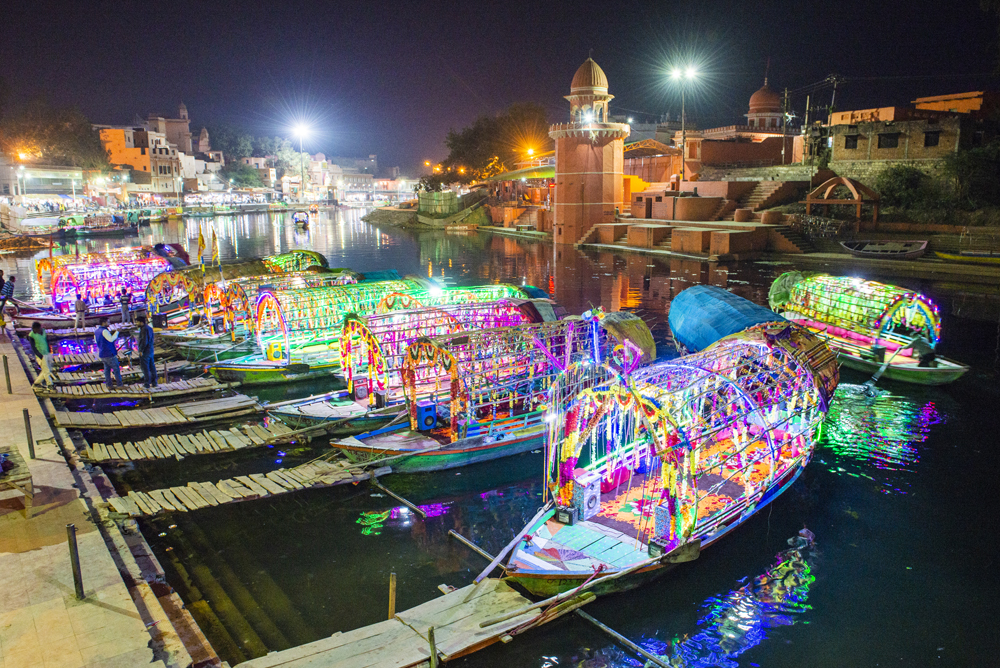
Rise before sunrise for a Mandakini Snan at Ram Ghat — the most auspicious start to a Chitrakoot pilgrimage day. After breakfast, cover the full sacred circuit: Gupt Godavari Caves — twin caves where Lord Ram held his royal court in forest exile; the inner cave requires wading 40-50 metres through ankle-deep underground Godavari waters in a narrow rock passage — a completely unique sacred experience. Janaki Kund — the peaceful riverside ghat where Sita bathed each day. Hanuman Dhara — climb 360 stone steps to the miraculous perpetual spring on the wooded hillside; the hilltop commands a breathtaking panoramic view of the Chitrakoot valley. Sati Anusuiya Ashram — where the great sage Atri's wife Anusuiya bestowed divine boons upon Sita: immortal sindoor, the Akshaya Patra, and eternal youth. Afternoon: Sphatik Shila — the smooth crystalline rock on the Mandakini bank where Ram and Sita sat together watching the sunset, carrying a tender intimate sanctity; Raghav Prayag Ghat. Evening: sunset Mandakini boat ride past the forested ghats of Chitrakoot. Overnight in Chitrakoot.
Day 3

Drive to Prayagraj — Akshaya Vat, Patalpuri Temple & Triveni Sangam Sunset

Begin with an early Mandakini Snan before breakfast. Check out and drive to Prayagraj (approx. 130 km, 3 hrs) — the Tirtha-raja (King of all Pilgrimages), where the Ganga, Yamuna, and the invisible Saraswati converge at the most sacred tripoint in Hinduism. Check in to hotel. Afternoon: visit Allahabad Fort (1583 CE) for Akshaya Vat darshan — the immortal banyan tree mentioned in the Mahabharata as indestructible even during cosmic dissolution, documented by Chinese pilgrim Xuanzang in 644 CE. Visit the underground Patalpuri Temple — an ancient cave shrine of great antiquity — and Saraswati Koop within the fort. Bade Hanuman Ji — the remarkable reclining Hanuman idol at the Sangam shore that submerges under Ganga floodwaters each monsoon and always resurfaces. Evening: sunset boat ride at the Triveni Sangam — witness the majestic confluence of the deep-blue Yamuna and the turbid Ganga as they merge in golden evening light; one of the most visually and spiritually spectacular scenes in India. Overnight in Prayagraj.
Day 4

Prayagraj — Triveni Sangam Dawn Snan, Alopi Devi Shakti Peetha, Bharadvaja Ashram & Ganga Aarti

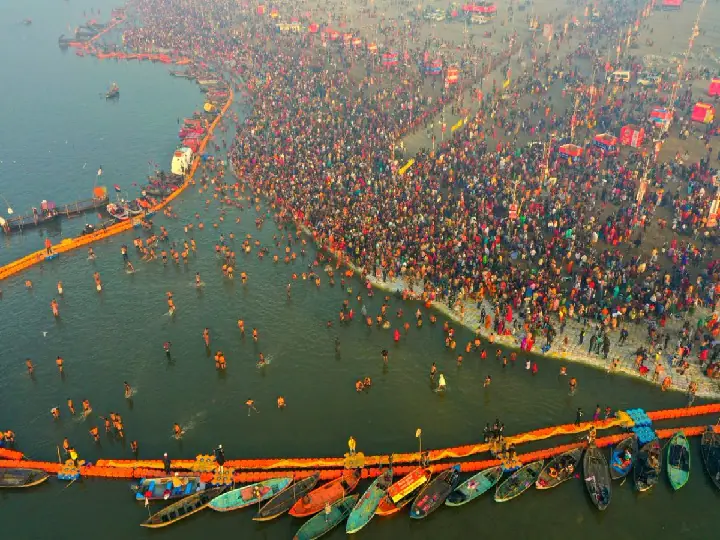
Wake well before sunrise for the supreme pilgrimage act of Prayagraj — Triveni Sangam Snan at dawn. Board a boat to the exact confluence point where Ganga, Yamuna, and Saraswati meet. The Puranas declare that a single dawn bath here washes away the sins of all past lives and bestows the merit of a thousand Ashwamedha Yagnas. Witness the first rays of sunrise transform the sacred confluence into liquid gold as pilgrims chant and offer arghya. After the snan and breakfast: Alopi Devi Mandir — one of the 51 Shakti Peethas of India, unique in that the goddess is worshipped as a decorated palanquin (doli) rather than an idol, marking where Sati's last trace (allop) disappeared. Bharadvaja Ashram — the ancient hermitage of the Vedic sage Maharishi Bharadvaja, who in the Ramayana directed Ram, Sita, and Lakshman toward Chitrakoot on their way from Ayodhya; visiting this ashram weaves the complete Ramayana geography of this pilgrimage into a coherent narrative. Afternoon: Anand Bhawan (ancestral Nehru-Gandhi home, now a national museum). Evening: Ganga Aarti at Sangam Ghat. Overnight in Prayagraj.
Day 5

Drive to Varanasi — Arrival, Ghat Walk & Dashashwamedh Ganga Aarti

After breakfast, check out and drive from Prayagraj to Varanasi (approx. 200 km, 3.5 hrs) — the world's oldest continuously inhabited city and the eternal capital of Lord Shiva, where the Ganges flows northward against all logic in a great sacred arc. Arrive by afternoon. Check in to hotel. After freshen-up, explore the main ghat area on foot or by boat: the eternal fire of Manikarnika Ghat that has burned without interruption for 3,500 years, Dashashwamedh Ghat (the most festive ghat), Assi Ghat, Panchganga Ghat, and Lalita Ghat. This arrival evening walk along the ghats — absorbing the sights, sounds, and aromas of Varanasi — is itself a profound spiritual experience. Evening: the spectacular Dashashwamedh Ghat Ganga Aarti — 7 head priests in white silks perform a 45-minute synchronized fire ritual with 21-tier brass wands, conch shells, incense, and Sanskrit chants before thousands of awestruck devotees and international pilgrims. Overnight in Varanasi.
Day 6

Varanasi — Sunrise Ganges Boat Ride, Kashi Vishwanath Corridor, Sarnath & Sankat Mochan

Pre-dawn: board a traditional wooden rowing boat for the iconic Varanasi sunrise — one of the most transcendent spiritual experiences available to any pilgrim on earth. Float past all 84 ghats as the ancient city gradually awakens: priests perform Surya Puja, sadhus sit in deep Samadhi at the water's edge, devotees chant and take holy dips, and the eternal fires of Manikarnika Ghat cast a sacred amber glow on the slowly moving Ganges. After breakfast, explore the magnificent Kashi Vishwanath Corridor (inaugurated 2021) — the grand precinct surrounding the Jyotirlinga featuring Annapurna Devi Temple, Avimukteshwar Mandir, and the historical Vishwanath Lane. After lunch: drive to Sarnath (10 km) — the deer park where the Enlightened Buddha gave his first sermon in 528 BCE. Visit the Dhamek Stupa (5th-6th century CE), Chaukhandi Stupa, Mulagandha Kuti Vihara, and the Sarnath Archaeological Museum — home to the Lion Capital of Ashoka (India's national emblem). The Sarnath visit is particularly meaningful before Bodhgaya: the Buddha was Enlightened at Bodhgaya, then walked to Sarnath to share that Enlightenment with the world. Afternoon: Durga Kund Temple, Tulsi Manas Mandir (where Tulsidas composed the Ramcharitmanas in 1574 CE), Sankat Mochan Hanuman Temple. Overnight in Varanasi.
Day 7

Drive to Ayodhya — Ram Mandir Darshan, Hanumangarhi & Saryu Ghat Aarti

After breakfast, check out and drive to Ayodhya (approx. 200 km, 3.5-4 hrs) — the birthplace of Lord Ram, one of the seven Moksha-puris (cities of liberation) of Hinduism, and the most emotionally resonant city in the world for hundreds of millions of devotees. Arrive by afternoon. Check in to hotel. Proceed for the most eagerly anticipated darshan of the Hindu portion of this journey — the Sri Ram Janmabhoomi Mandir, the magnificent temple consecrated on 22 January 2024 at the exact birthplace of Lord Ram. The 161-foot Nagara shikhara in white Rajasthani makrana marble and pink Bansi Paharpur sandstone with 392 intricately carved columns is a masterpiece of sacred Chandela architecture. The sanctum houses the idol of Ram Lalla on a golden throne. Visit Hanumangarhi — the fort-temple of Sankat Mochan Hanuman perched 76 feet above the city, housing the beloved idol of Anjani Mata with the infant Hanuman. Evening: the enchanting Saryu Aarti at Ram Ki Paidi — priests perform the sacred fire ritual as illuminated diyas drift down the holy Saryu. Overnight in Ayodhya.
Day 8

Ayodhya — Saryu Snan, Kanak Bhawan, Guptar Ghat — Drive to Bodhgaya

Wake before sunrise for a Saryu Snan at Ram Ki Paidi — the most sacred bath in Ayodhya, declared in the Skanda Purana to confer moksha (liberation). Witness the sunrise aarti and the city awakening in devotion. Complete the full Ayodhya circuit: Kanak Bhawan (the golden palace gifted to Sita by Queen Kaikeyi, housing magnificent golden idols of Ram and Sita), Sita Ki Rasoi (the original palace kitchen, one of the most ancient temple sites), Nageshwarnath Temple (established by Luv — son of Ram — and one of the oldest temples in Ayodhya), Treta Ke Thakur at Tulsi Ghat, Mani Parvat (from which Hanuman leapt with the Sanjeevani), and the solemn Guptar Ghat — where Lord Ram took Jal Samadhi (divine submergence into the Saryu), concluding his earthly avatar. After lunch, check out and drive to Bodhgaya (approx. 280 km, 5-5.5 hrs via Varanasi-Gaya highway). Arrive by late evening. Check in to hotel near the Mahabodhi Temple. Overnight in Bodhgaya.
Day 9

Bodhgaya — Mahabodhi Temple, Sacred Bodhi Tree, Vajrasana & World Monastery Circuit

Begin before sunrise at the Mahabodhi Temple complex — a UNESCO World Heritage Site and the most sacred place in Buddhism, marking the exact spot where Siddhartha Gautama sat under the Bodhi Tree and attained Enlightenment (Nirvana) in 528 BCE. The 55-metre pyramid tower of the Mahabodhi Temple (5th-6th century CE) rises in magnificent Gupta-period architecture above the sacred grove. At the heart of the complex stands the descendant of the original Bodhi Tree (Ficus religiosa) under which the Buddha sat — still alive, its branches spreading over the Vajrasana (Diamond Throne), the red sandstone platform marking the exact spot of the Buddha's Enlightenment. Sit beneath the Bodhi Tree in meditation — one of the most profound spiritual experiences available to any human being, regardless of faith. Walk the Cankamana (the Jewelled Walk) — 18 lotus medallions in stone marking where the newly Enlightened Buddha walked back and forth in the first week after Enlightenment. Visit the Animesh Lochana Chaitya, Ratnagarh Stupa, and the sacred Muchalinda Lake. Afternoon: the extraordinary international monastery circuit — Thai Wat, Royal Bhutan Monastery, Japanese Indosan Nipponji Temple, Tibetan Monastery, Chinese Temple, and the great Daijokyo Buddha statue. Evening: meditation session at the Mahabodhi complex as monks from across the world chant in the gathering dark. Overnight in Bodhgaya.
Day 10

Bodhgaya — Bodhi Tree Dawn Meditation, Dungeshwari Caves & Departure from Gaya

Rise early for the dawn circumambulation (pradakshina) of the Mahabodhi Temple and a final meditation beneath the Bodhi Tree in the profound quiet of early morning — when only the most dedicated pilgrims and monks are present, and the atmosphere carries an extraordinary depth of silence. After breakfast: Dungeshwari Cave Temples (also called Mahakala Caves) — the rock caves 12 km from Bodhgaya where Siddhartha Gautama practiced severe ascetic austerities for six years before concluding that extreme asceticism was not the path and proceeding to sit under the Bodhi Tree. A Tibetan monastery now marks the main cave. Sujata Kuti — the stupa marking the site where the village girl Sujata offered Siddhartha a bowl of milk-rice (kheer), ending his fast and strengthening him for the final Enlightenment; a deeply tender and humanizing spot in the Buddhist sacred geography. Vishnupad Temple at Gaya — the deeply revered temple housing the footprint of Lord Vishnu imprinted in solid rock, one of the most important sites for Hindu Pinda-daan (ancestral offerings) in all of India. Falgu River bank at Gaya for Pinda-daan for ancestors (optional, on request). Depart from Gaya Railway Station (approx. 13 km from Bodhgaya) or Gaya Airport for your onward journey. Tour concludes with the complete blessings of Chitrakoot, Prayagraj, Kashi, Ayodhya, and Bodhgaya — a sacred circuit uniting the greatest pilgrimage sites of Hinduism and Buddhism.

What's Included & What's Not Included

Inclusions

  • 9 nights accommodation (2N Chitrakoot + 2N Prayagraj + 2N Varanasi + 1N Ayodhya + 2N Bodhgaya)
  • Daily breakfast and dinner as per itinerary (10 Breakfasts + 9 Dinners)
  • Private AC vehicle for all transfers and sightseeing throughout the 10-day circuit
  • Full route: Chitrakoot - Prayagraj - Varanasi - Sarnath - Ayodhya - Bodhgaya - Gaya departure
  • Dedicated English/Hindi-speaking pilgrimage guide at all five destinations
  • Sunset boat ride at Triveni Sangam Prayagraj (Day 3)
  • Sunrise boat ride on the Ganges at Varanasi (Day 6)
  • Mandakini River sunset boat ride at Chitrakoot (Day 2)
  • Kamadgiri Parikrama full guidance and briefing
  • All toll taxes, driver allowance, parking, and fuel charges
  • Arrival pick-up at Chitrakoot (Karwi Railway Station or bus stand)
  • Departure drop at Gaya Railway Station or Gaya Airport
  • 24/7 on-call support throughout the 10-day journey

Exclusions

  • Train, bus, or flight tickets to Chitrakoot (start) or from Gaya (end)
  • Lunches and beverages not listed in the itinerary
  • Personal puja samagri, prasad, temple donations, and offerings
  • Allahabad Fort entry ticket for Akshaya Vat and Patalpuri Temple darshan
  • Sarnath ASI site entry and museum fees (approx. Rs. 40 for Indians, Rs. 600 for foreigners)
  • Mahabodhi Temple entry and Bodhgaya site fees (as applicable)
  • Pinda-daan at Gaya (optional, available on request at additional cost)
  • Any personal expenses — shopping, laundry, beverages, phone calls
  • Travel insurance (strongly recommended for all travelers, mandatory for international pilgrims)
  • Medical or emergency expenses
  • Tips and gratuities for guide and driver
  • Any services not explicitly mentioned under inclusions

Good to Know

Dress modestly at all sites — cover shoulders and knees; remove footwear before temples, ghats, and the Mahabodhi Temple complex.

Carry a government-issued photo ID for each adult traveler (mandatory at Allahabad Fort and Mahabodhi Temple).

For Gupt Godavari inner cave (Chitrakoot): wear clothes suitable for wading ankle-deep water; keep valuables in a waterproof pouch.

Kamadgiri Parikrama is done barefoot — carry a cloth bag for footwear during the 5 km circumambulation.

Photography is strictly prohibited inside the Ram Mandir sanctum (Ayodhya) and the Kashi Vishwanath main shrine (Varanasi).

At the Mahabodhi Temple Bodhgaya: mobile phones are permitted but maintain strict silence in the meditation areas around the Bodhi Tree and Vajrasana.

Sarnath ASI site entry fees are payable on-site (approx. Rs. 40 for Indians, Rs. 600 for foreign nationals).

Tour starts in Chitrakoot (Karwi) and ends at Gaya. Pick-up from Karwi Station and drop to Gaya Station or Gaya Airport are included.

For Buddha Purnima (April-May), advance booking of 3 months is strongly recommended; the Mahabodhi Temple area is exceptionally crowded.

Pinda-daan at Gaya (for departed ancestors) is available as an optional addition on Day 10 — please inform at time of booking.


Frequently Asked Questions — 9 Nights 10 Days Chitrakoot Prayagraj Varanasi Ayodhya Bodhgaya Tour Package

Why is Bodhgaya included in a Chitrakoot pilgrimage package?

Bodhgaya (Bihar) and the UP pilgrimage circuit share a profound geographical and spiritual relationship. Sarnath (Varanasi) — where the Buddha gave his first sermon — is already part of every Varanasi visit. Bodhgaya, where the Buddha attained Enlightenment, is just 250 km from Varanasi via Gaya. Including Bodhgaya transforms this from a purely Hindu pilgrimage into one of the world's great multi-faith sacred journeys: the Ramayana geography of Chitrakoot and Ayodhya, the Vedic sanctity of Prayagraj and Kashi, and the Buddhist heartland of Sarnath and Bodhgaya — all in one continuous 10-day arc. Pilgrims of any faith find this circuit deeply meaningful.

What is the Vajrasana at Bodhgaya?

The Vajrasana (Diamond Throne) is the red sandstone platform beneath the Bodhi Tree at Bodhgaya, marking the exact spot where Siddhartha Gautama sat in meditation and attained Enlightenment in 528 BCE. Emperor Ashoka built a diamond throne here in the 3rd century BCE. The Vajrasana is considered the most sacred spot on earth in Buddhism. Sitting at this spot — beneath the living descendant of the original Bodhi Tree — is one of the most powerful spiritual experiences a pilgrim of any tradition can have.

Are there Hindu pilgrimage sites at Bodhgaya and Gaya as well?

Yes. Gaya (13 km from Bodhgaya) is one of the most important Hindu pilgrimage cities, particularly for Pinda-daan — the offering of rice balls for departed ancestors on the banks of the Falgu River, considered one of the most meritorious ancestral rites in Hinduism. The Vishnupad Temple at Gaya, housing the footprint of Lord Vishnu imprinted in solid rock, is deeply venerated. Every year, lakhs of Hindus visit Gaya for Pitru Paksha (the ancestral fortnight) to perform Pinda-daan. Our optional Day 10 extension covers both Bodhgaya and Gaya sacred sites.

What is the significance of the Dungeshwari (Mahakala) Caves near Bodhgaya?

The Dungeshwari Cave Temples (Mahakala Caves) are rock caves 12 km from Bodhgaya where the young Siddhartha Gautama practiced extreme ascetic austerities for six years before concluding that self-mortification was not the path to Enlightenment. He then came down from the caves, accepted food from Sujata, and proceeded to sit beneath the Bodhi Tree. A Tibetan Buddhist monastery now marks the main cave. Visiting Dungeshwari before the Mahabodhi Temple creates the complete narrative arc of the Buddha's Enlightenment story.

Can I perform Pinda-daan at Gaya during this package?

Yes — Pinda-daan at the Falgu River ghat in Gaya and Vishnupad Temple can be arranged on Day 10 as an optional addition. The ritual involves offering rice balls (pinda) at specific sacred spots along the Falgu River, guided by a Gaya pandit, to liberate the souls of departed ancestors. This is considered one of the most powerful ancestral rites in Hinduism, believed to free 21 generations of ancestors from the cycle of rebirth. Please inform us at the time of booking if you would like this arranged.

What is the best time to visit Bodhgaya?

October to March is ideal for Bodhgaya, when the weather is cool and pleasant. Buddha Purnima (April-May) is the most sacred day in Buddhism — commemorating the Buddha's birth, Enlightenment, and Parinirvana — and attracts pilgrims from across the world. Bodhgaya during Buddha Purnima is extraordinary but very crowded; book 3 months in advance. The Mahabodhi Temple complex is open 5 AM to 9 PM year-round. Winter mornings (December-January) at the Bodhi Tree — with mist and chanting monks — are particularly serene.

How is this package different from a standard Varanasi-Bodhgaya package?

Most Varanasi-Bodhgaya packages cover only these two cities. This 10-day circuit adds three extraordinarily significant destinations that are rarely combined with Bodhgaya: Chitrakoot (Lord Ram's forest exile, 2 nights with Gupt Godavari and Kamadgiri Parikrama), Prayagraj (Triveni Sangam Snan and Akshaya Vat, 2 nights), and Ayodhya (Ram Mandir, 1 night). The result is the most complete North India pilgrimage circuit available — covering the Ramayana geography, the Vedic pilgrimage sites, and the Buddhist sacred heartland in one continuous 10-day journey.


Ready to Explore Chitrakoot?

Customized itineraries · Best price guarantee · 24×7 support

Ready to Plan Your Sacred Journey?

Talk to our Varanasi travel experts — free consultation, custom itinerary & transparent pricing.