
7 Nights 8 Days Prayagraj Varanasi Ayodhya Chitrakoot Tour Package — Prayagraj Tour Package Overview
This is VisitKashi's flagship 8-day itinerary — and the only package in this circuit that gives two full days in Ayodhya, transforming a standard darshan visit into a genuine deep-dive into the Ramayana's birthplace. While shorter tours hurry through Ram Mandir and leave the next morning, this itinerary lets you spend a full second day discovering Nandi Gram (where Bharat kept Ram's padukas on the throne), Guptar Ghat (where Ram took his final jal samadhi), Dashrath Mahal, Mani Parvat, a sacred morning dip in the Saryu, and Ayodhya's lesser-known but profoundly moving temples at a genuine pilgrim's pace.
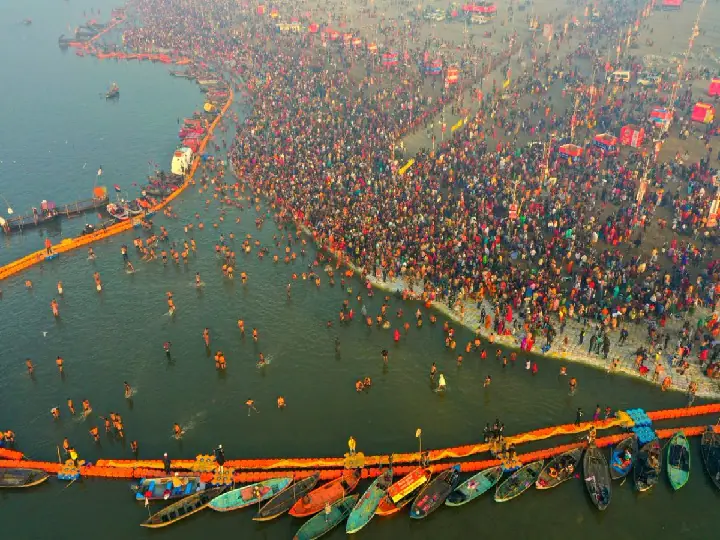
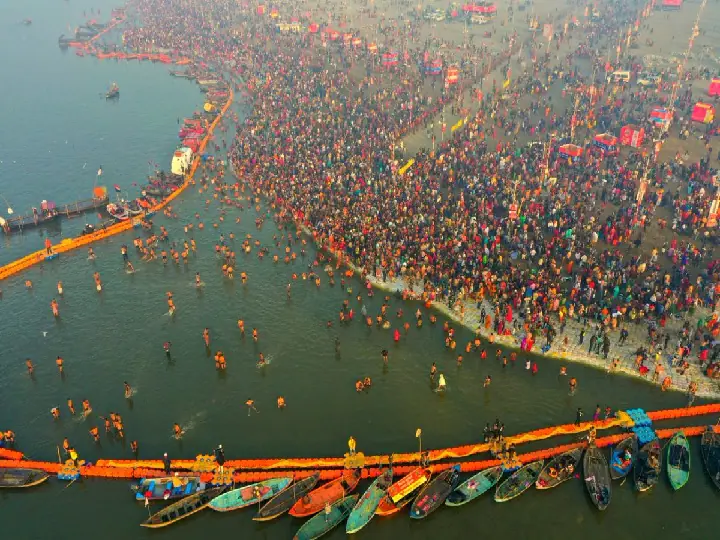
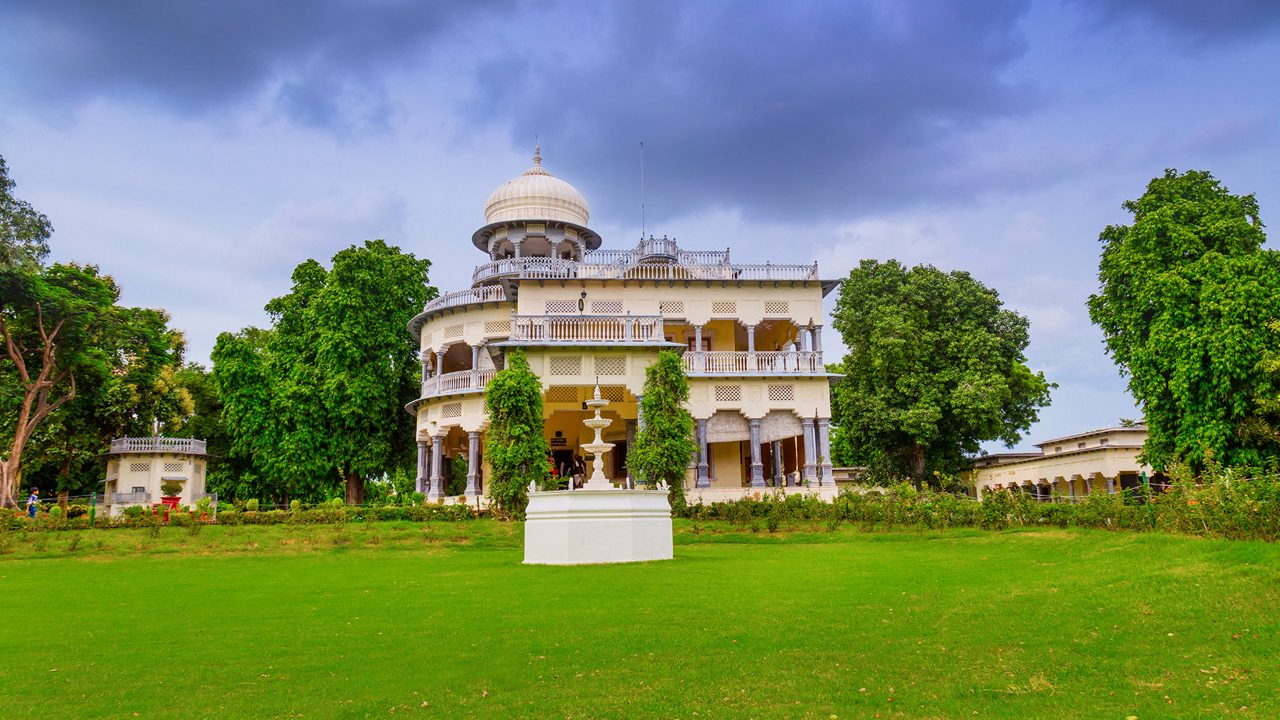
Prayagraj (2 nights) — Begin at the Triveni Sangam, the eternal confluence of Ganga, Yamuna, and the mystical Saraswati — the most sacred bathing spot in Hinduism, where a holy dip is believed to cleanse karma across seven lifetimes. Explore the Prayagraj Fort, Akshayavat, Ashoka Pillar (232 BCE), the freedom-struggle heritage of Anand Bhawan & Swaraj Bhawan, the Mughal beauty of Khusro Bagh, and the iconic Chandra Shekhar Azad Park.
Ayodhya (2 nights) — Two unhurried days in Lord Ram's birthplace. Day one covers the Ram Mandir, Ram Janmabhoomi, Hanuman Garhi, Kanak Bhawan, and the evening Saryu Aarti. Day two reveals the deeper, quieter soul of Ayodhya: Nandi Gram, Guptar Ghat, Dashrath Mahal, Mani Parvat, Swarg Dwar, a Saryu morning holy dip, and Ayodhya's ancient riverside ghats. Most visitors never see this Ayodhya.
Varanasi (2 nights) — Two full days in the world's oldest living city. Experience Kashi Vishwanath Jyotirlinga, the grand Ganga Aarti on both evenings, an iconic sunrise boat ride past 84 ancient ghats, the Buddhist sacred site of Sarnath, and Kashi's timeless temple lanes and silk bazaars.
Chitrakoot (1 night) — Complete the sacred circuit at the Ramayana's most emotionally powerful destination — the forest city where Lord Ram, Sita, and Laxman spent 11½ years of exile. The Kamadgiri Parikrama, Ramghat Aarti, Gupt Godavari Caves, Sphatik Shila, and Mandakini boat ride leave an impression that stays for a lifetime.
VisitKashi — Varanasi's most trusted pilgrimage travel partner — handles every detail: private AC intercity transfers, hand-picked hotels near each city's pilgrimage heart, government-licensed expert guides in all four cities, boat rides at each destination, and 24/7 on-trip support.
Package Highlights
Private AC Cab
Dedicated AC Innova Crysta / Ertiga for all local sightseeing and intercity drives across 4 cities — no shared transport, full flexibility.
7 Nights Hotel
2N Prayagraj + 2N Ayodhya + 2N Varanasi + 1N Chitrakoot — hand-picked hotels near pilgrimage sites in each city.
Sangam Boat Ride
Motorboat to Triveni Sangam confluence — Prayagraj's holiest experience.
Ganges Sunrise Boat Ride
Dawn row boat past all 84 Varanasi ghats — India's most iconic morning experience.
Mandakini Boat Ride
Sacred boat ride on the Mandakini River at Ramghat, Chitrakoot.
Expert Guides (4 Cities)
Separate government-licensed English / Hindi specialist guides in Prayagraj, Ayodhya, Varanasi, and Chitrakoot.
24/7 Support
Round-the-clock VisitKashi helpline and WhatsApp support across all 8 days.
VisitKashi
Your trusted travel partner · 24×7 support
Tour Highlights — Key Experiences in This Package
Day-by-Day Itinerary — 7 Nights 8 Days Prayagraj Varanasi Ayodhya Chitrakoot Tour Package
7 Nights / 8 Days · Prayagraj · Timings adjustable to your arrival
Arrival Prayagraj · Triveni Sangam · Bade Hanuman Ji · Sangam Ganga Aarti
Night 1 — Prayagraj · The eternal sacred confluence
Our VisitKashi representative receives you at Prayagraj Junction / Airport / Bus Stand and transfers you to your hotel for check-in and freshening up.
Afternoon — Triveni Sangam
- Drive to Sangam Ghat and board a motorboat to the sacred Triveni Sangam — the confluence of Ganga, Yamuna & the invisible Saraswati; considered the most auspicious bathing spot in all of Hinduism
- Perform Sangam Snan — a holy dip believed to cleanse karma across seven lifetimes and grant the soul liberation (moksha)
- Float a deep daan (lamp offering) on the sacred waters and offer prayers at the confluence
- Visit Bade Hanuman Ji Temple (Lete Hanumanji) — the extraordinary reclining Hanuman idol embedded in the earth at Sangam; uniquely rises with floodwaters every monsoon — one of India's most revered and unusual Hanuman shrines
Evening — Sangam Ganga Aarti
- Witness the serene Ganga Aarti at Sangam Ghat — lamp offering ceremony with chanting and flowers at the riverbank as the sun sets over the sacred confluence
- Evening walk through the local market for chai, chaat, and street food
Return to hotel for overnight rest. Dinner on own account.
Prayagraj Fort · Akshayavat · Anand Bhawan · Khusro Bagh · Azad Park · Shankar Viman Mandapam
Night 2 — Prayagraj · Mughal grandeur, India's freedom heritage & spiritual gems
Full breakfast at the hotel, then an immersive day through Prayagraj's extraordinary Mughal, colonial, nationalist, and spiritual landmarks.
Morning — Prayagraj Fort Complex
- Prayagraj Fort (Akbar's Qila, 1583 AD) — built by Emperor Akbar at the sacred Sangam junction; one of Mughal India's grandest military fortifications overlooking the confluence
- Patalpuri Temple — ancient underground temple revered as a portal to the netherworld; one of the 68 sacred tirthas of Prayag listed in the Puranas
- Akshayavat (Immortal Banyan Tree) — described in Puranas as indestructible even through cosmic dissolution; sacred since Ashoka's reign and venerated for over 2,000 years; pilgrims believe touching the tree grants liberation
- Ashoka Pillar (232 BCE) — one of India's oldest and most significant monuments; the sandstone monolith bears Emperor Ashoka's rock edicts and Samudragupta's Allahabad Prasasti (375–415 CE) — two empires' inscriptions on a single pillar
Afternoon — Nehru Legacy & Mughal Gardens
- Anand Bhawan — ancestral home of India's first Prime Minister Jawaharlal Nehru; a national museum with personal artefacts, independence-era exhibits, photographs, and the Jawahar Planetarium
- Swaraj Bhawan — birthplace of Indira Gandhi; the heritage museum dedicated to the Nehru-Gandhi family's pivotal role in shaping modern India
- Khusro Bagh — a serene walled Mughal garden enclosing three ornate sandstone tombs of Mughal royals; a peaceful photography-perfect heritage gem
Late Afternoon — Azad Park & Shankar Viman Mandapam
- Chandra Shekhar Azad Park — the 133-acre colonial park where the legendary revolutionary Azad made his last stand on 27 February 1931; visit his iconic memorial beneath the old Alfred Park trees
- Shankar Viman Mandapam — a striking South Indian-style temple near Sangam, featuring 5 ornate Dravidian towers (gopurams) visible from across Prayagraj; dedicated to Lord Shiva with intricate sculptural panels
- Mankameshwar Mandir — an ancient Shiva temple on the Yamuna banks, one of Prayagraj's most beloved neighbourhood shrines with a serene riverside setting
Return to hotel for overnight rest. Dinner on own account.
Drive to Ayodhya · Ram Mandir · Hanuman Garhi · Kanak Bhawan · Saryu Aarti
Night 3 — Ayodhya · Lord Ram's sacred birthplace — the new Ram Mandir
After an early breakfast and check-out, begin your 3-hour drive to Ayodhya — one of Hinduism's seven most sacred cities (Sapta Puri) and the eternal birthplace of Lord Rama, the 7th avatar of Vishnu.
Upon Arrival — Ram Mandir & Ram Janmabhoomi
- Check in to your Ayodhya hotel, freshen up, and proceed directly to the Sri Ram Janmabhoomi Temple (Ram Mandir) — consecrated in January 2024, this magnificent temple marks the exact birthplace of Lord Ram and is among the most spiritually significant structures built in modern India
- Seek darshan of Ram Lalla — the divine infant form of Lord Ram enshrined in the inner sanctum; one of Hinduism's most beloved and sought-after darshans
- Walk through the Ram Janmabhoomi Parikrama Path — the sacred circumambulation route around the 70-acre temple complex with beautifully carved pillars depicting scenes from the Valmiki Ramayana
- Explore the Ram Janmabhoomi Trust Complex — the 22 additional shrines being constructed around the main temple, including the Saptarishi Temple and the 108-foot Dhwaja Stambha
Afternoon — Hanuman Garhi & Kanak Bhawan
- Hanuman Garhi — a magnificent 10th-century fort-temple atop 76 steps, housing an extraordinary idol of child Hanuman (Bal Hanuman) cradled by his mother Anjani Devi; Ayodhya's guardian temple from which Hanuman is believed to protect the entire city — no Ayodhya visit is complete without darshan here
- Kanak Bhawan — the exquisitely ornate temple gifted by Queen Kaikeyi to Sita after her marriage; the inner shrine features adorned gold-crowned idols of Ram and Sita in royal wedding attire with lavish silver decor — one of Ayodhya's most beloved and photographed shrines
- Nageshwarnath Temple — Ayodhya's oldest surviving temple, said to have been established by Ram's son Kush; dedicated to Lord Shiva; one of the few temples that survived the medieval period intact
- Treta Ke Thakur — ancient temple marking the spot where Ram performed the Ashwamedha Yagna; houses black stone idols of Ram, Sita, Laxman, Bharat, Shatrughan & Hanuman carved from a single stone — said to date from the Treta Yuga
Evening — Saryu Aarti at Ram Ki Paidi
- Witness the magnificent Saryu Aarti at Ram Ki Paidi Ghat — priests perform the evening fire ceremony on the banks of the sacred Saryu River where Lord Ram took his final jal samadhi (divine departure)
- Walk along the Ram Ki Paidi steps — the beautiful 750-metre-long stepped ghat complex on the Saryu, illuminated every evening with lamps; the spiritual centre of Ayodhya's riverside life
- Take a holy dip in the Saryu River — considered as spiritually potent as the Ganga; scriptures say bathing in Saryu at Ayodhya grants liberation equivalent to completing ten Ashwamedha Yagnas
Return to hotel for overnight rest. Dinner on own account.
Nandi Gram · Guptar Ghat · Dashrath Mahal · Mani Parvat · Swarg Dwar · Saryu Morning Snan
Night 4 — Ayodhya · The hidden, deeper soul of Ram's city
Your second day in Ayodhya — one of the most distinctive and spiritually rewarding aspects of this 8-day itinerary — takes you far beyond the standard tourist trail into the sacred sites that most pilgrims never visit.
Early Morning — Saryu River Holy Dip
- Begin at sunrise with a sacred morning dip in the Saryu River at Ram Ki Paidi Ghat — the most auspicious time to bathe in the river where Lord Ram himself bathed daily; the golden sunrise over Saryu at Ayodhya is among North India's most serene and beautiful morning experiences
- Attend the early morning aarti at Saryu Ghat — a gentle, intimate ceremony performed at dawn before the crowds arrive
Morning — Nandi Gram
- Nandi Gram (18 km from Ayodhya) — the most emotionally moving site in the entire Ayodhya circuit; this is the village where Bharat (Ram's brother) came to live during the 14-year exile after Ram refused to return; Bharat placed Ram's padukas (sandals) on the throne and governed the kingdom in Ram's name for 14 years, living like an ascetic in a grass hut
- The Nandi Gram Temple enshrines the original padukas and the seat where Bharat meditated; the site's atmosphere of selfless devotion and fraternal love is unlike anything else in the Ramayana circuit
- Most tour packages skip Nandi Gram entirely — on this 8-day itinerary, you have the time to make this profoundly meaningful journey
Mid-Morning — Dashrath Mahal
- Dashrath Mahal (Raja Dashrath's Palace) — the palace complex of King Dashrath, Ram's father; one of Ayodhya's oldest temple-palace structures, housing the Koshaleshwar Mahadeva Shivalinga said to date from the Treta Yuga; the inner shrine contains deities of the entire royal family and is a centre of Ayodhya's Shaiva and Vaishnava traditions
- Tulsi Smarak Bhawan (adjacent) — a grand cultural complex dedicated to Goswami Tulsidas, author of the Ramcharitmanas; featuring murals of Ram's life, an audio-visual theatre, and a library of Sanskrit manuscripts
Afternoon — Guptar Ghat & Swarg Dwar
- Guptar Ghat (8 km from central Ayodhya) — the most sacred ghat in Ayodhya after Ram Ki Paidi; the Saryu River bank where Lord Ram, along with the citizens and all creatures of Ayodhya, took his final jal samadhi (walked into the Saryu and ascended to Vaikuntha in his physical form); a profoundly moving site of divine departure — quiet, deeply spiritual, and rarely crowded
- Chakra Harji Vishnu Temple at Guptar Ghat — where Lord Vishnu is said to have descended to receive Ram upon his jal samadhi; one of the most ancient temple sites in the Ayodhya complex
- Swarg Dwar (Gateway to Heaven) — a sacred ghat area in central Ayodhya where pilgrims perform last rites and shraddha ceremonies; one of the few sites in North India (outside Varanasi) considered highly auspicious for ancestral rites
Late Afternoon — Mani Parvat
- Mani Parvat — an ancient Buddhist-era stupa hill in Ayodhya; the hilltop offers the most panoramic view of Ayodhya's sacred skyline — the Ram Mandir shikhara, the Hanuman Garhi fort-temple, Saryu River bends, and the forest beyond; climb to the summit for unforgettable photographs and a spiritual overview of the entire city
- The hill is one of the few places in Ayodhya that combines Buddhist, Hindu, and Jain heritage — a reminder of Ayodhya's role as one of Asia's greatest ancient religious centres across all traditions
Evening — Saryu Aarti (2nd viewing)
- Attend the Saryu Aarti at Ram Ki Paidi for the second evening — knowing the ritual's structure, you notice its layered symbolism and the devotion of individual participants with fresh depth
Return to hotel for overnight rest. Dinner on own account.
Drive to Varanasi · Kashi Vishwanath · 84 Ghats Heritage Walk · Grand Ganga Aarti
Night 5 — Varanasi · The eternal city of Lord Shiva
After an early breakfast and check-out, begin your 3.5-hour drive to Varanasi (Kashi) — the world's oldest continuously inhabited city, Lord Shiva's own eternal abode, and the spiritual capital of Hinduism.
Upon Arrival — Kashi Vishwanath Temple
- Check in to your Varanasi hotel, freshen up, and proceed to the Kashi Vishwanath Temple — one of the 12 sacred Jyotirlingas; Hindu scriptures state Lord Shiva personally whispers the Taraka Mantra (liberation mantra) into the ears of those who die in Kashi, granting instant moksha
- Walk through the magnificent Kashi Vishwanath Corridor — the landmark 5-lakh sq ft development reconnecting the 2,000-year-old temple directly to the Ganges, restoring 40+ ancient shrines in the precinct
- Seek blessings at Annapurna Devi Temple — the Goddess of nourishment, whose presence ensures no devotee ever goes hungry in Kashi
- Visit Kaal Bhairav Temple — Varanasi's Kotwal (police chief); according to tradition, one must seek Kaal Bhairav's permission to reside in Kashi — a unique and powerful form of Bhairava
Afternoon — 84 Ghats Heritage Walk
- Walk Varanasi's iconic ghats — the ancient stone stairways each with its own mythology, deity, and ritual life stretching along the sacred Ganges
- Manikarnika Ghat — Hinduism's most sacred cremation ground, where pyres burn continuously 24 hours a day, 365 days a year; a profound encounter with India's fearless relationship with death and liberation
- Dashashwamedh Ghat, Assi Ghat, Scindia Ghat, Kedar Ghat, Harishchandra Ghat — explore with our expert guide narrating the myths, history, and living stories of each ghat
- Sankat Mochan Hanuman Temple — beloved temple founded by Tulsidas, author of the Ramcharitmanas; considered Varanasi's most powerful Hanuman shrine
Evening — Grand Ganga Aarti
- Witness the world-famous Ganga Aarti at Dashashwamedh Ghat — seven priests performing simultaneously with massive fire torches, conch shells, incense, and Vedic chanting; a breathtaking, century-old ceremony watched by thousands every evening
Return to hotel for overnight rest. Dinner on own account.
Sunrise Boat Ride · Sarnath · Kashi Temple Trail · Silk Bazaar · Ganga Aarti (2nd time)
Night 6 — Varanasi · Deep dive into Kashi's temples, Buddhism & soul
Your second day in Varanasi — one of the greatest gifts of this 8-day itinerary — begins before dawn at the river.
Early Morning — Sunrise Ganges Boat Ride
- Board a wooden rowing boat at Assi Ghat at sunrise (5–5:30 AM) and glide past all 84 ghats as Kashi awakens in golden light
- Watch morning puja rituals, yogis in seated meditation, pilgrims performing Ganga Snan, and the haunting smoke of Manikarnika Ghat rising against the rising sun — one of the most extraordinary visual experiences anywhere in the world
- Optional: early morning Ganga Snan at Dashashwamedh or Assi Ghat — believed to wash away all sins when performed at dawn in the Ganga at Kashi
Morning — Sarnath
- Sarnath (12 km from Varanasi) — one of Buddhism's four holiest sites; where the Buddha gave his first sermon after his enlightenment at Bodhgaya, setting the Wheel of Dharma (Dhammacakkappavattana Sutta) in motion
- Dhamek Stupa (500 CE) — the 34-metre stupa marking the exact spot of the Buddha's first discourse; exquisite Gupta-era geometric and floral carvings on the drum
- Ashoka Pillar at Sarnath (250 BCE) — whose Lion Capital became India's national emblem and Dhamma Chakra became the central wheel of the national flag
- Sarnath Museum (optional, entry extra) — housing the original Lion Capital and Asia's finest collection of Buddhist stone sculptures
- Mulagandha Kuti Vihar — a beautiful Japanese Buddhist temple with vivid Kosetsu Nosu murals depicting the Buddha's entire life journey
Afternoon — Kashi's Sacred Temple Trail & Silk Bazaars
- Durga Temple (Durga Kund) — a striking 18th-century red-painted temple on the banks of the temple tank; dedicated to Goddess Durga; known for the large monkey population revered as Durga's messengers
- Tulsi Manas Temple — the white marble temple marking where Goswami Tulsidas composed the Ramcharitmanas in the 16th century; walls inscribed with immortal Ramayana verses in gold
- Batuk Bhairav Temple — one of Varanasi's most ancient and powerful Bhairav shrines; a living centre of Kashi's Shaiva tantric tradition
- Explore Vishwanath Gali — Varanasi's famous narrow temple lane packed with flower stalls, puja shops, and ancient shrines hidden in plain sight
- Optional: visit a Banarasi silk weaving workshop — watch master weavers create the famous zari brocade sarees on traditional handlooms, and shop at genuine weaver prices
Evening — Ganga Aarti (2nd viewing)
- Attend the Ganga Aarti at Dashashwamedh Ghat again — the second viewing is invariably deeper and more moving than the first; knowing the ritual's structure, you see the layered symbolism, individual priests' gestures, and the crowd's devotion with fresh awareness
- Optional: take a rowboat during the aarti (nominal cost) for the closest, most intimate river-level view of the ceremony
Return to hotel for overnight rest. Dinner on own account.
Drive to Chitrakoot · Kamadgiri Parikrama · Bharat Milap Mandir · Ramghat Aarti
Night 7 — Chitrakoot · Ram's sacred forest — the Ramayana comes alive
After an early breakfast and check-out, begin your 4-hour drive to Chitrakoot — the sacred Ramayana forest city where Lord Ram, Sita, and Laxman spent 11½ years of their 14-year vanvas (exile). This is the Ramayana's most emotionally powerful destination — not a city of spectacular temples, but a forest of living devotion.
Upon Arrival — Kamadgiri Parikrama
- Kamadgiri Parvat Parikrama — a 5 km barefoot circumambulation of the sacred hill that is worshipped as a physical manifestation of Lord Ram himself; scriptures declare one Kamadgiri parikrama to be equal in spiritual merit to ten Govardhan parikramas and one complete Kashi Yatra — making it one of the most meritorious acts a Hindu pilgrim can perform
- The parikrama path circles the forested hill with small temples, shrines, and sacred trees at regular intervals; the atmosphere — forest sounds, incense, barefoot devotees, and the distant Mandakini River — is unlike any urban pilgrimage site
- Visit the Kamta Nath Temple at the base of the hill — a beautiful Ramayana-era shrine with vivid murals
- Bharat Milap Mandir — the profoundly moving spot where Bharat met Ram during the exile and begged him to return to Ayodhya; one of the most emotionally charged spots in all of Chitrakoot; stone footprints of Ram, Sita, Laxman, and Bharat are preserved here
Afternoon — Ramghat & Mandakini River
- Ramghat — the principal ghat on the Mandakini River where Ram, Sita & Laxman bathed daily during the exile; the most sacred and photographed spot in Chitrakoot; the gentle Mandakini flows through forested hills creating an atmosphere of timeless peace
- Mandakini River Boat Ride — a serene boat ride along the holy river past ancient ghats, forest ashrams, and temple-studded banks; the Vindhya hills frame the skyline on both sides
- Sati Anusuya Ashram — a tranquil forest ashram dedicated to the sage Atri's wife Anusuya, whose piety was so extraordinary that the Trimurti (Brahma, Vishnu, Shiva) sought shelter here during the exile; the walk through the forest path to the ashram is itself deeply meditative
Evening — Ramghat Aarti
- Witness the Ramghat Aarti on the Mandakini — as thousands of oil lamps illuminate the riverbanks amid the forested Vindhya hills; an intimate, deeply moving ceremony that many travellers rank as the single most spiritually powerful moment of the entire 8-day journey
Check in to hotel in Chitrakoot. Dinner on own account.
Gupt Godavari Caves · Sphatik Shila · Janaki Kund · Hanuman Dhara · Ram Darshan Museum · Departure
Day 8 — Chitrakoot full morning · Departure transfer
Begin your final morning with breakfast, then spend a rich last morning exploring Chitrakoot's remaining sacred and scenic sites — geological wonders, sacred river spots, and Ramayana heritage that complete the circuit perfectly.
Morning — Gupt Godavari Caves
- Gupt Godavari Caves (18 km from Ramghat) — two mysterious cave temples where Lord Ram held court during his forest exile; the first cave requires wading through a narrow, ankle-to-knee-deep subterranean stream (symbolising passage to the divine) before opening into a large hall with a perennial natural spring and ancient Shivalingas; the second cave is a large accessible chamber with beautiful rock formations and temple shrines; a geological and spiritual marvel unlike anything else in India
Mid-Morning — Sphatik Shila, Janaki Kund & Hanuman Dhara
- Sphatik Shila — a naturally formed crystalline quartz rock on the Mandakini bank where Lord Ram and Sita are said to have rested; Ram's footprints are preserved in the rock — one of Chitrakoot's most photographed and revered spots
- Janaki Kund — the sacred bathing tank where Sita bathed daily during the exile; a peaceful riverside spot with an ancient temple surrounded by old-growth trees and singing birds
- Hanuman Dhara (optional, 200+ step climb) — a natural hillside spring that perpetually flows over a rock-cut Hanuman image; Ram is said to have created this stream to cool Hanuman after he burned Lanka; the summit offers panoramic views of Chitrakoot's forested landscape
Late Morning — Final Ramghat Visit & Ram Darshan Museum
- Optional final holy dip in the Mandakini River at Ramghat — the most peaceful and spiritually charged time at the river; completing the full circuit of holy dips in Triveni Sangam, Saryu, Ganges, and Mandakini
- Ram Darshan Museum (near Kamadgiri) — a beautifully illustrated audio-visual museum depicting the complete Ramayana narrative with dioramas, paintings, and recorded narrations in Hindi and English; an exceptional final synthesis of the entire Ramayana journey you have just completed in person across four cities
After lunch (own expense), our driver transfers you to Chitrakoot Railway Station / Satna Junction (45 min) / Karwi Bus Stand for your onward journey — or we return you to Varanasi or Prayagraj if your departure is from there. 🙏 You have now walked the complete Ramayana circuit — Sangam, Ram Janmabhoomi, Kashi, and Chitrakoot — in 8 days. May the blessings of Lord Ram, Kashi Vishwanath, and the sacred rivers travel with you always.
What's Included & What's Not Included
Inclusions
- 7 nights hotel stay — 2N Prayagraj + 2N Ayodhya + 2N Varanasi + 1N Chitrakoot (twin sharing, daily breakfast)
- Private AC cab for all local sightseeing and intercity drives (Prayagraj–Ayodhya–Varanasi–Chitrakoot)
- Expert government-licensed English / Hindi guides in all four cities
- Arrival & departure transfer (railway station / airport / bus stand)
- Motorboat ride at Triveni Sangam — Prayagraj
- Sunrise wooden rowing boat ride on the Ganges — Varanasi
- Boat ride on the Mandakini River at Ramghat — Chitrakoot
- Nandi Gram excursion (Day 4) — transport included
- Guptar Ghat excursion (Day 4) — transport included
- Kamadgiri Parikrama guidance & pilgrimage assistance
- All toll taxes, parking fees & driver allowances
- 24×7 VisitKashi on-trip WhatsApp support
Exclusions
- Train / flight / bus tickets to / from Prayagraj, Ayodhya, Varanasi, or Chitrakoot
- Lunch & dinner (own expense throughout all 8 days)
- Entry fees — Anand Bhawan, Prayagraj Fort inner sections, Sarnath Museum, Allahabad Museum, Ram Darshan Museum, Gupt Godavari caves
- Ram Mandir special / VIP darshan ticket or prasad (available locally at nominal cost)
- Kashi Vishwanath Temple VIP / special darshan ticket (optional, nominal cost)
- Puja samagri, prasad & flowers at all temples (available locally at nominal cost)
- Personal expenses & shopping (Banarasi silk, local handicrafts, Ayodhya religious items)
- Camera / videography fees at heritage sites and temples
- Tips & gratuities for guides / drivers
- Travel insurance (strongly recommended for multi-city pilgrimages)
- Anything not explicitly listed above
Good to Know
Night Distribution: Night 1 & 2 — Prayagraj · Night 3 & 4 — Ayodhya · Night 5 & 6 — Varanasi · Night 7 — Chitrakoot. Departure Day 8 from Chitrakoot (Karwi / Chitrakoot Station / Satna Junction, 45 min). Return to Prayagraj or Varanasi for onward travel available at nominal extra cost.
Ram Mandir Entry (Ayodhya): No advance booking needed for general darshan. Carry government ID (Aadhar card). Mobile phones, bags, and leather items NOT permitted inside — deposit at entry lockers provided. Guide assists with all formalities. Best darshan is morning (7–9 AM) before peak crowds.
Nandi Gram (Day 4): Nandi Gram is 18 km from central Ayodhya — approximately 35 minutes each way. We depart early morning (7 AM) to complete Nandi Gram before the Dashrath Mahal visit. Comfortable footwear recommended as the temple complex involves walking on uneven stone.
Guptar Ghat (Day 4): Located 8 km from central Ayodhya. A quiet, riverside site — dress modestly for the ghat area. Best visited in the afternoon before sunset for reflective golden-hour photography along the Saryu.
Gupt Godavari Caves — What to Wear (Day 8): Carry spare light trousers or quick-dry pants — you will wade through ankle-to-knee-deep water in the main cave. Rubber sandals (₹20) available for rent at the entrance. Not recommended if you have serious knee or mobility issues.
Kamadgiri Parikrama — Preparation (Day 7): Done entirely barefoot on a paved 5 km path. Start at 5 PM (cooler temperatures). Carry a 500 ml water bottle. Takes 1.5–2 hours at a slow pace. Thin socks allowed inside provided footwear covers if needed.
Kashi Vishwanath Temple (Day 5): Mobile phones and cameras strictly NOT permitted inside the temple. Deposit all valuables in provided lockers at the entry gate. Aadhar card mandatory for entry. Guide handles all formalities.
Second Saryu Aarti & Second Ganga Aarti: On this 8-day package you attend both the Saryu Aarti (Day 4) and Ganga Aarti (Day 6) for the second time. On both second viewings, consider taking a rowboat for the most intimate river-level perspective — guide arranges on-site at nominal cost.
Frequently Asked Questions — 7 Nights 8 Days Prayagraj Varanasi Ayodhya Chitrakoot Tour Package
What is the night distribution in the 7N/8D Prayagraj Varanasi Ayodhya Chitrakoot package?
▼Night 1 & 2 in Prayagraj · Night 3 & 4 in Ayodhya · Night 5 & 6 in Varanasi · Night 7 in Chitrakoot. Departure on Day 8 from Chitrakoot (Karwi Bus Stand, Chitrakoot Railway Station, or Satna Junction — 45 min away). We can return you to Varanasi (4 hrs) or Prayagraj (3.5 hrs) if your onward journey departs from there.
What is the key difference between the 6N/7D and 7N/8D Prayagraj Ayodhya Varanasi Chitrakoot packages?
▼The 7N/8D package gives you two full days in Ayodhya instead of one. The extra day unlocks sites that shorter packages simply cannot include: Nandi Gram (where Bharat lived with Ram's padukas during the exile), Guptar Ghat (where Ram took his final jal samadhi — Ayodhya's most profoundly sacred spot outside Ram Mandir), Dashrath Mahal (the palace of King Dashrath), Mani Parvat (Ayodhya's ancient hill with the best panoramic city views), and a Saryu morning holy dip on Day 4. If Ayodhya is your primary pilgrimage destination, the 7N/8D is the right choice.
What is Nandi Gram and why is it important in Ayodhya?
▼Nandi Gram is approximately 18 km from central Ayodhya — the village where Bharat came to live after Ram refused to return from exile. Bharat placed Ram's padukas (sandals) on the throne of Ayodhya and ruled as Ram's regent for 14 years, living like an ascetic in a grass hut with no royal comforts. The Nandi Gram Temple enshrines the original padukas and Bharat's meditation seat. It is one of the most emotionally moving sites in the entire Ramayana circuit — a testament to Bharat's extraordinary selflessness and fraternal devotion — and most tour packages skip it entirely.
What is the significance of Guptar Ghat in Ayodhya?
▼Guptar Ghat (meaning "hidden ghat") is the Saryu River bank where Lord Ram, together with the citizens and all creatures of Ayodhya, took his final jal samadhi — walked into the sacred waters and ascended to Vaikuntha (Vishnu's heaven) in his physical form at the end of his earthly avatar. The Chakra Harji Vishnu Temple here marks where Lord Vishnu is said to have descended to receive Ram. It is one of Ayodhya's holiest and most peaceful sites — rarely crowded, deeply contemplative, and among the most spiritually significant spots in the entire Ramayana geography.
Is the new Ram Mandir in Ayodhya open to visitors?
▼Yes. The Ram Mandir was consecrated in January 2024 and is open to devotees daily (timings: 7 AM–11 AM and 2 PM–7 PM, subject to change for festivals and special occasions). No advance booking is required for general darshan. The Ram Janmabhoomi Parikrama is open throughout the day. Mobile phones, large bags, and leather items must be deposited at the entry gate — our guide assists with all formalities. Best darshan time is early morning (7–9 AM) before the crowds build.
Can I take a holy dip in all four sacred rivers on this 8-day tour?
▼Yes — this is one of the most spiritually significant aspects of this circuit. Triveni Sangam (Ganga, Yamuna, Saraswati) at Prayagraj on Day 1, Saryu River morning dip at Ayodhya on Day 4, the Ganges in Varanasi during the sunrise boat ride (Day 6 optional), and the Mandakini River at Ramghat in Chitrakoot (Day 8 optional). Completing holy dips in all four sacred rivers of this circuit is considered extraordinarily auspicious and is one of the unique privileges of an 8-day itinerary.
What is the Kamadgiri Parikrama and how should I prepare?
▼The Kamadgiri Parikrama is a 5 km barefoot circumambulation of the sacred hill at the heart of Chitrakoot, worshipped as Lord Ram himself in physical form. The path is entirely paved and flat. It takes approximately 1.5–2 hours at a comfortable pilgrim pace. Go barefoot (footwear is removed at the parikrama start and stored safely). Best done in the evening (5–7 PM) when temperatures are cooler. Carry a 500 ml water bottle. Suitable for most ages.
What makes attending the Saryu Aarti and Ganga Aarti on this tour special?
▼On this 8-day itinerary, you attend four separate evening aarti ceremonies across three sacred rivers: Sangam Ganga Aarti at Triveni Sangam (Day 1), Saryu Aarti at Ram Ki Paidi Ayodhya (Days 3 and 4), Ganga Aarti at Dashashwamedh Ghat Varanasi (Days 5 and 6), and Ramghat Aarti on the Mandakini Chitrakoot (Day 7). Each aarti has a completely different character — the intimate Sangam ceremony, the magnificent fire-theatre of Varanasi, the devotional simplicity of Ayodhya's Saryu, and the forest-framed lamp-lit Mandakini at Chitrakoot.
What is the best time of year for this complete Ramayana pilgrimage circuit?
▼October to March is ideal — pleasant weather (12°C–28°C) perfect for outdoor parikramas, ghats walks, and cave visits. November is exceptional: Dev Deepawali in Varanasi (Kartik Purnima) illuminates the entire Ganges with one million lamps. Ram Navami (March/April) in Ayodhya is spectacular. Magh Mela at Prayagraj (January/February). Avoid May–June (extreme heat, 40–47°C). July–August monsoon makes Gupt Godavari caves inaccessible.
Is this 8-day pilgrimage suitable for senior citizens and families with children?
▼Yes, with appropriate planning. The Sangam and Saryu boat rides are gentle. The Kamadgiri parikrama (5 km, flat paved path) is suitable for most seniors at a slow pace. Gupt Godavari cave wading can be skipped. Hanuman Dhara (200+ steps) is fully optional. Nandi Gram involves a short comfortable drive. For children, the Ram Mandir experience, Ayodhya's Ramayana trail, and Chitrakoot's cave temples are especially engaging. We regularly handle senior pilgrimage groups of 65–80+ years and multigenerational family groups.
What makes VisitKashi the right choice for this 8-day Ramayana pilgrimage?
▼VisitKashi is based in Varanasi with deep expertise spanning the entire Prayagraj–Ayodhya–Varanasi–Chitrakoot corridor. Our guides are government-licensed city specialists — not generalists who cover all four cities superficially. Our vehicles are verified, AC-equipped, and GPS-tracked. Our hotels are hand-picked for proximity to key pilgrimage sites. We have successfully managed thousands of multi-city pilgrimage groups including first-time visitors, NRI pilgrims, international devotees, senior citizens, and families with young children. Every itinerary is fully customisable — including extending to Bodhgaya or Lucknow.
Ready to Explore Prayagraj?
Customized itineraries · Best price guarantee · 24×7 support