
4 Nights 5 Days Ayodhya, Prayagraj & Varanasi Tour Package | Complete Pilgrimage Circuit — Ayodhya Tour Package Overview
While a shorter tour rushes you through Varanasi's surface, this 5-day package gives you three full days in Varanasi — enough to experience its spiritual layer, its cultural layer, and its historical layer separately and completely. Add to that the grand Ram Mandir darshan in Ayodhya, the Triveni Sangam holy dip in Prayagraj, and the Chunar Fort riverside excursion overlooking the Ganga — and you have five days that no rushed package can match.
The Ramayana–Kashi Circuit — Three Cities, One Story
- Ayodhya (Day 1): Ram Janmabhoomi, Hanuman Garhi, Kanak Bhawan, Saryu Aarti — the Ramayana begins here
- Prayagraj (Day 2, en route): Triveni Sangam holy dip, Akshayavat, Patalpuri — where Ram crossed the Ganga during his exile
- Varanasi (Days 2–5): Ganga Aarti, sunrise boat ride, Kashi Vishwanath, Sarnath, cultural Varanasi, Chunar Fort, BHU, Ramnagar Fort — where moksha is granted and where Tulsidas wrote the Ramcharitmanas
Why 5 Days Is the Right Duration for This Circuit
- Day 3 Varanasi: Spiritual Varanasi — sunrise boat ride, Kashi Vishwanath, Tulsi Ghat, Sarnath, evening Ganga Aarti
- Day 4 Varanasi: Cultural & Historical Varanasi — Sankat Mochan, Bharat Mata Mandir, Kabir Math, Chunar Fort excursion
- Day 5 Varanasi: Artistic & Heritage Varanasi — BHU Vishwanath, Nepali Temple, Ramnagar Fort, Banarasi silk weaving workshop
- Three days, three completely different faces of Varanasi — each one a revelation in itself
- Pickup from Ayodhya Airport (AYJ) or Ayodhya Junction; drop at Varanasi Airport (VNS) or Varanasi Junction (BSB)
- Comfortable 1 night Ayodhya + 3 nights Varanasi hotel stay with daily breakfast
- Private AC cab all 5 days including the full Ayodhya–Prayagraj–Varanasi highway drive and Chunar Fort excursion
Package Highlights
Private AC Cab (5 Days)
Dedicated vehicle all 5 days — city circuits, Ayodhya–Prayagraj–Varanasi highway drive, and Chunar Fort excursion (~110 km round trip on Day 4)
Point-to-Point Transfers
Pickup from Ayodhya Airport (AYJ) or Ayodhya Junction Day 1; drop at Varanasi Airport (VNS) or Varanasi Junction (BSB) on Day 5
4 Nights Hotel Stay
1 night Ayodhya (temple zone) + 3 nights Varanasi (Ganga-view / ghat area); breakfast included all mornings
Three Sacred Water Rituals
Saryu sunrise dip (Ayodhya, Day 2) + Triveni Sangam dip (Prayagraj, Day 2) + sunrise Ganga boat ride (Varanasi, Day 3)
Chunar Fort Excursion
Full afternoon excursion to Chunar Fort (55 km from Varanasi) — unique riverside hilltop fort not included in any shorter package
Expert Pilgrim Guide
Local driver-guide with deep knowledge of all three cities — darshan facilitation, ghat navigation, cultural narration and boat booking
VisitKashi
Your trusted travel partner · 24×7 support
Tour Highlights — Key Experiences in This Package
Day-by-Day Itinerary — 4 Nights 5 Days Ayodhya, Prayagraj & Varanasi Tour Package | Complete Pilgrimage Circuit
4 Nights / 5 Days · Ayodhya · Timings adjustable to your arrival
Day 1: Arrival Ayodhya → Hanuman Garhi → Kanak Bhawan → Dashrath Mahal → Sita Ki Rasoi → Saryu Ghats → Saryu Sandhya Aarti → Overnight Ayodhya
Night 1 — Ayodhya
Arrival & Welcome at Ayodhya (Flexible — based on your flight/train):
Your driver-guide receives you at Ayodhya Airport (AYJ) or Ayodhya Junction Railway Station with a name board. A warm Jai Shri Ram welcome and a briefing on your five-day Ramayana circuit sets the tone for everything that follows. Proceed to the hotel for check-in and freshening up.
Hotel Check-in — Ayodhya (3-star, temple zone / Saryu Ghat area):
All Ayodhya properties in our portfolio are pure vegetarian — no meat, no alcohol — fully in keeping with the city's sacred character. Enjoy lunch at the hotel or a nearby eatery before beginning the afternoon temple circuit.
Hanuman Garhi Temple (Early Afternoon):
Begin at Hanuman Garhi — the iconic hilltop Hanuman temple that every Ayodhya pilgrim visits before approaching Ram Janmabhoomi. Tradition holds that one must seek Hanuman ji's blessing first. Climb the famous 76 steps to reach the temple housing Mother Anjani nursing infant Hanuman. From the hilltop, your first panoramic view of Ayodhya unfolds — rooftops, temple spires, the silver shimmer of the Saryu in the distance, and the 70-acre Ram Janmabhoomi complex visible on the horizon.
Kanak Bhawan (Mid-Afternoon):
Walk to Kanak Bhawan — the "Golden Palace" gifted by Queen Kaikeyi to Mata Sita as a personal wedding residence for the divine couple. The temple enshrines Ram and Sita in stunning gold-adorned royal attire — an intimacy unlike the grand public darshan of Ram Mandir. The ornate carved interior and richly coloured murals create an atmosphere of deep personal devotion. Many pilgrims are visibly moved to tears here.
Dashrath Mahal & Sita Ki Rasoi (Late Afternoon):
Visit Dashrath Mahal — the ancestral palace of King Dashrath with elaborate Ramayana frescoes and courtyard shrines. Adjacent, step into Sita Ki Rasoi — the legendary kitchen of Mata Sita, one of Ayodhya's oldest Ramayana tradition sites, with preserved ancient cooking implements and a Sita sanctum. This is the domestic, intimate Ayodhya — the divine family's household as opposed to the grand birthplace temple complex.
Ram ki Paidi Ghats — Saryu Evening Walk (5:00 PM):
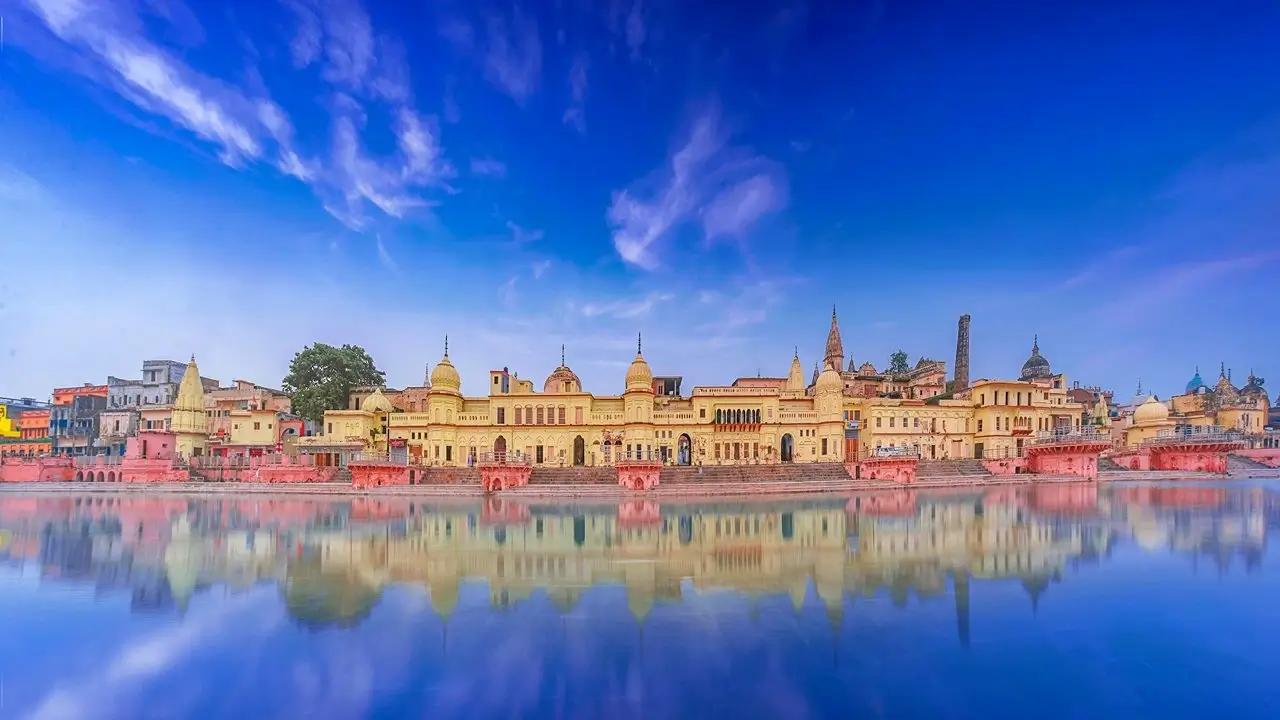
Walk to the beautifully developed Ram ki Paidi marble ghats on the sacred Saryu River. Sit at the water's edge, offer flowers, and watch the evening gather over the water as pilgrims and sadhus arrive for the aarti. The Saryu in Valmiki's telling is the river dearest to Lord Ram — he bathed in it daily, and ultimately chose to take his final departure by walking into its waters.
Saryu Sandhya Aarti (5:30–6:30 PM):
Witness the Saryu Sandhya Aarti — a lamp-lit dusk ritual with conch blowing, chanting, and thousands of diyas floated on the sacred river. Gentle, intimate, deeply devotional — this Ayodhya riverside aarti is the quieter counterpart of the grand Ganga Aarti you will witness in Varanasi on Day 2 evening. Two rivers, two aartis, two different flavours of the sacred.
Dinner & Overnight Stay — Ayodhya:
Return to hotel for a wholesome sattvic dinner. Retire early — tomorrow begins before dawn with a holy dip in the Saryu, followed by Ram Mandir, Prayagraj, and by evening the Ganga Aarti in Varanasi. It is the longest and most richly packed day of the entire circuit.
Day 2: Sunrise Saryu Dip → Ram Janmabhoomi & Ram Mandir → Drive via Prayagraj (Triveni Sangam + Akshayavat) → Varanasi → Ganga Aarti → Overnight Varanasi
Night 2 — Varanasi
Pre-Dawn Sunrise Saryu Holy Dip (5:00–5:45 AM):
Rise before dawn for the most auspicious ritual of the Ayodhya stay — a holy dip in the Saryu River at sunrise. The ghats at this hour are mist-wrapped and almost silent. The Valmiki Ramayana describes the Saryu as moksha-dayini — the liberation-bestowing river. This pre-dawn Saryu snan is the exclusive spiritual privilege of those who sleep in Ayodhya. Emerge from the water feeling a clarity and lightness that every returning pilgrim describes.
Ram Janmabhoomi & Ram Mandir Darshan (6:30–9:00 AM):
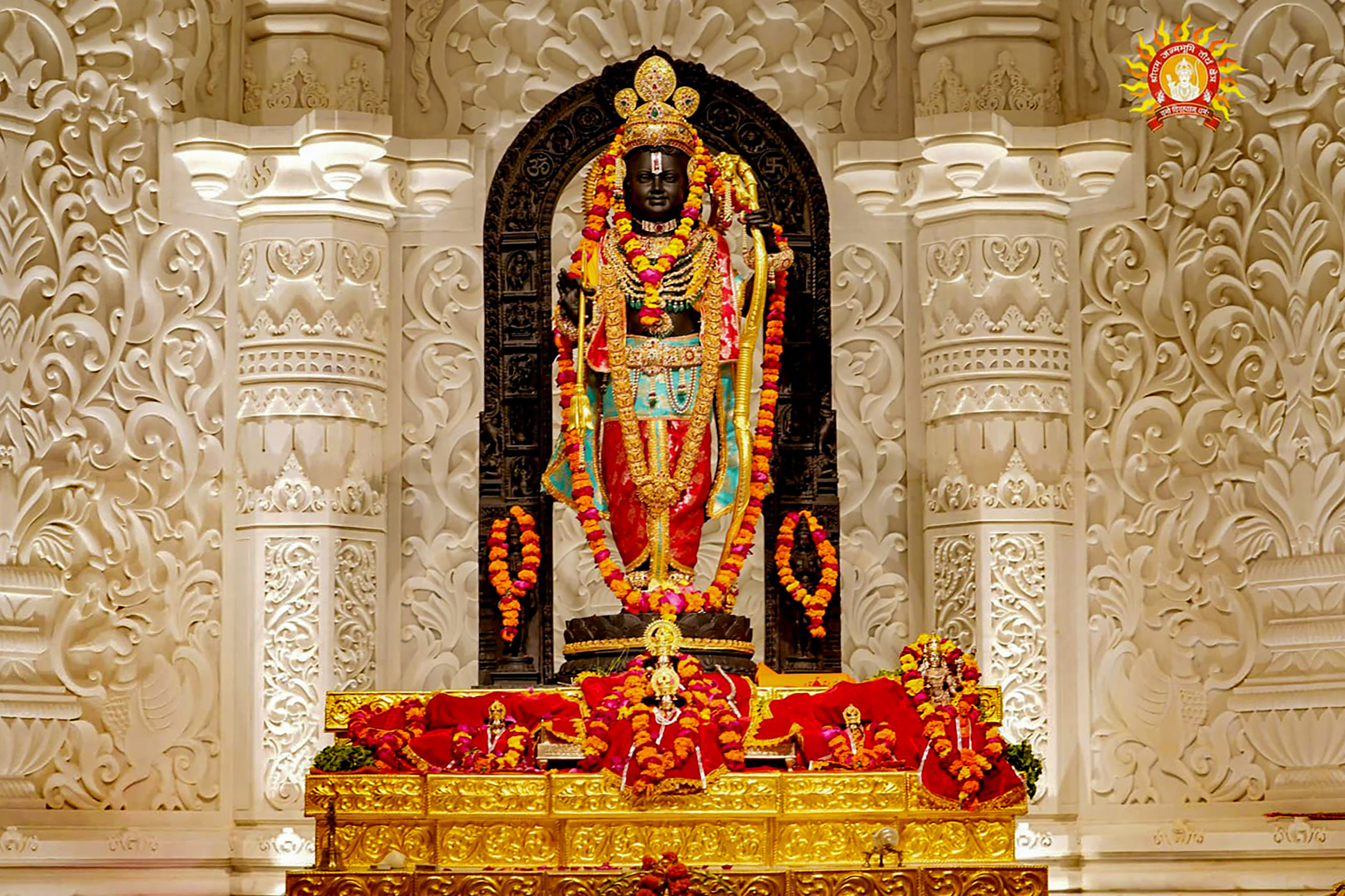
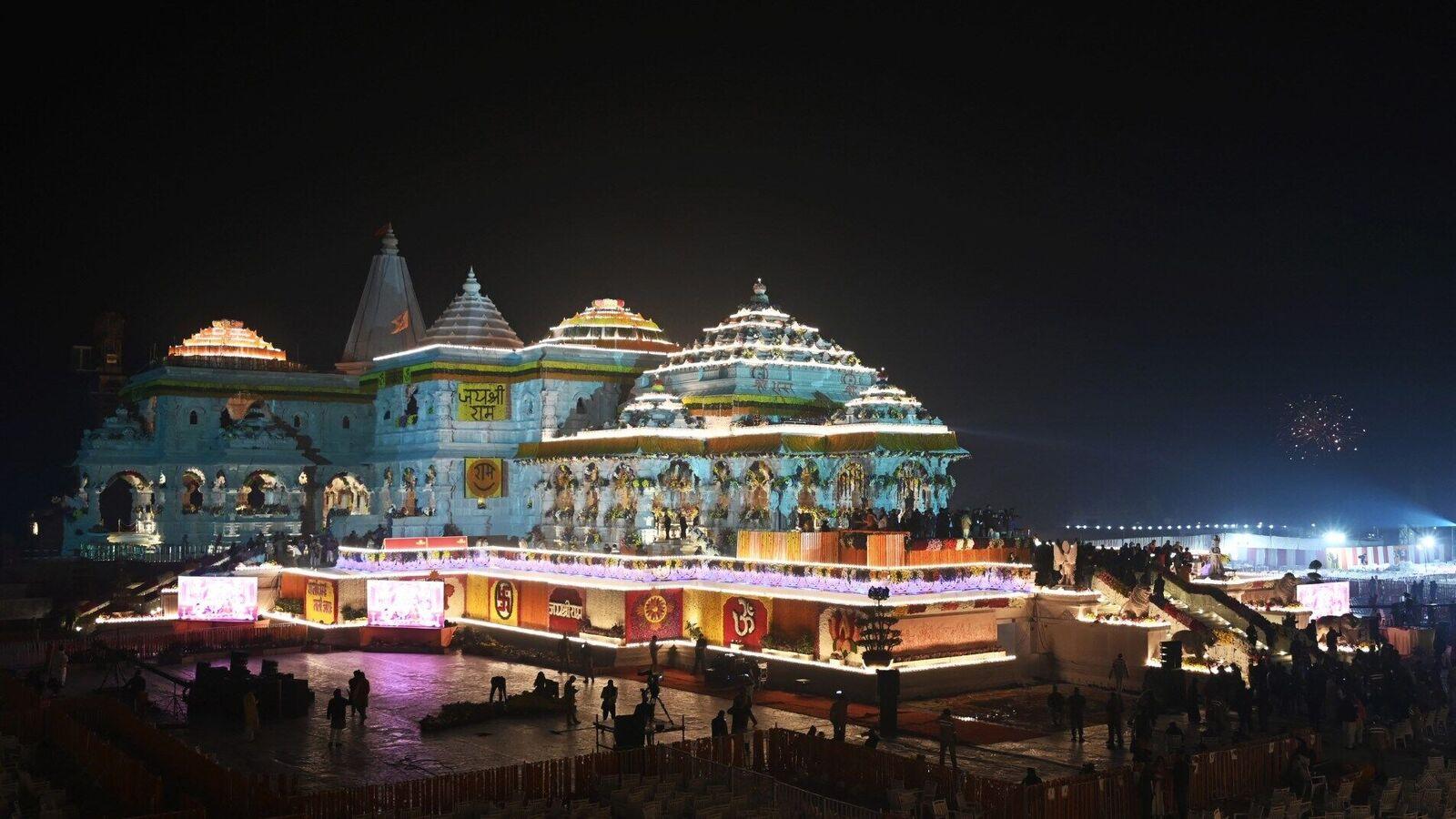
Proceed to Ram Janmabhoomi for darshan in the early morning slot — the absolute best time to visit. Queues are at their shortest, the atmosphere is at its most devotional (morning aarti, golden sanctum light, minimal crowd), and the experience is profoundly intimate. The grand Ram Mandir — consecrated January 2024, built in Nagara-style pink Rajasthan sandstone on the 70-acre complex — houses Ram Lalla at the exact spot of Lord Ram's birth. Your guide narrates the 500-year history of the site, the archaeological significance, and the Ramayana meaning of each area of the complex as you move through it.
Breakfast & Hotel Checkout (9:00–10:00 AM):
Hot sattvic breakfast near the Ram Mandir precinct — kachori, puri-sabzi, or poha with masala chai. Return to hotel, collect luggage, load the cab. You leave Ayodhya — the beginning of the story — and now travel toward Prayagraj, where the exile began at the banks of the Ganga.
Drive: Ayodhya → Prayagraj (~165 km / ~3 hrs, depart 10:00 AM):
The highway drive from Ayodhya to Prayagraj follows the ancient pilgrim corridor across the Gangetic plains. Your guide narrates the Ramayana connection: Lord Ram, Sita, and Lakshmana walked this general corridor in the early days of their exile, eventually reaching the Ganga at Shringverpur where the boatman Kevat refused to ferry Ram across until he had washed Ram's feet — one of the most beloved episodes in the Ramcharitmanas. Prayagraj is where that crossing happened.
Triveni Sangam — Holy Dip at the Sacred Confluence (1:00–2:30 PM):
Arrive at Prayagraj and proceed by boat to the Triveni Sangam — the holiest water confluence in Hinduism, where the Ganga, Yamuna, and the invisible Saraswati merge. The Sangam is called the Tirtha-raja — King of all Pilgrimage Sites — and is the epicentre of the Kumbh Mela, the world's largest human gathering. A ritual dip here is believed to multiply merit a thousandfold. After the Saryu at dawn, this is your second sacred water ritual of the day — and the Ganga boat ride still awaits tomorrow morning in Varanasi.
Akshayavat & Patalpuri Temple (2:30–3:15 PM):
Visit Akshayavat — the immortal banyan tree said to be indestructible, mentioned in both the Ramayana and Mahabharata, under which Lord Ram is said to have rested during his exile. The tree and the adjacent underground Patalpuri Temple are located within the Allahabad Fort — one of the only places where an ancient Hindu pilgrimage site sits inside a Mughal fort, which itself is now an Indian Army cantonment. This layering of civilisations in one place is quintessentially Indian.
Drive: Prayagraj → Varanasi (~125 km / ~2.5 hrs, depart ~3:30 PM):
Depart eastward for Varanasi. As the drive progresses, your guide transitions the narrative from Ramayana geography to Kashi — why the city is called the City of Light (Kashi), why the Ganga flows northward here (unique geographical phenomenon), and why dying in Kashi is considered the ultimate liberation. You arrive as the city enters its sacred evening hour.
Hotel Check-in & Ganga Aarti (6:30–7:30 PM):
Swift check-in at your Varanasi ghat-area hotel, drop luggage, and head immediately to Dashashwamedh Ghat for the Ganga Aarti — one of the most magnificent rituals in the world. Seven priests in silk dhotis perform a choreographed fire-lamp puja with massive brass lamps, conch shells, incense, and Sanskrit mantras reverberating across the Ganga. The reflection of flames on the dark river and thousands of diyas create an atmosphere of cosmic devotion. If the Saryu Aarti was intimate, the Ganga Aarti is overwhelming — vast, magnificent, and utterly unforgettable.
Dinner & Overnight Stay — Varanasi (Night 2):
Dinner in the lanes near Dashashwamedh Ghat — try the iconic Banarasi thali, thandai, or kachori-sabzi from Kachori Gali. Rest — tomorrow begins before dawn with the sunrise boat ride on the Ganga.
Day 3: Sunrise Ganga Boat Ride → Kashi Vishwanath → Tulsi Ghat → Manikarnika → Sarnath → Evening Ganga Aarti → Overnight Varanasi
Night 3 — Varanasi (Spiritual Layer)
Pre-Dawn Sunrise Ganga Boat Ride (5:00–6:30 AM):
Rise before dawn for the defining Varanasi experience — a private boat ride on the Ganga at sunrise. As the wooden boat glides past Varanasi's ancient stone ghats in the pre-dawn blue light, you witness the most extraordinary spiritual tableau in India: pilgrims bathing, priests performing rituals, sadhus meditating, funeral pyres burning at Manikarnika, flowers drifting downstream, and the sun rising in pure gold over the eastern bank of the Ganga. Your boatman navigates the full ghat stretch — Assi Ghat, Tulsi Ghat, Kedar Ghat, Harishchandra Ghat, Manikarnika Ghat, Dashashwamedh Ghat, Man Mandir Ghat — as your guide narrates the mythology of each. No photograph captures this morning. It must be lived.
Tulsi Ghat — The Ramcharitmanas Birthplace (6:30–7:00 AM):
Step ashore at Tulsi Ghat — where Goswami Tulsidas lived, meditated, and composed the Ramcharitmanas. Consider the arc: you stood at Ram's birthplace in Ayodhya (Day 1), at the Ganga crossing of the exile in Prayagraj (Day 2), and now at the ghat where the Ramayana was written for all future generations. The story lived, the exile witnessed, the scripture written — the complete Ramayana arc across three sacred geographies.
Breakfast at the Ghats (7:00–7:45 AM):
Classic Banarasi ghat-side breakfast — kachori with aloo sabzi, jalebi, and clay-cup chai (kulhad) — watching the city come fully alive. The morning streets of old Varanasi have an incomparable energy: ancient and very much alive.
Kashi Vishwanath Jyotirlinga Darshan (8:30–10:00 AM):
Proceed to the Kashi Vishwanath Temple — one of India's 12 sacred Jyotirlingas, the most revered Shiva temple in the world. The magnificent Kashi Vishwanath Corridor (inaugurated December 2021) provides a grand processional approach from the Ganga. Seek blessings of Vishwanath Mahadev — the Lord of the Universe — who is said to whisper the Taraka Mantra into the ears of those who die in Kashi, granting moksha. Tulsidas himself worshipped here daily. Kashi is simultaneously the city of Ram (through Tulsidas) and the city of Shiva (through Kashi Vishwanath) — and this temple is where both traditions meet.
Manikarnika Ghat — The Eternal Fire (10:00–10:30 AM):
Walk to Manikarnika Ghat — Varanasi's great cremation ground where fire is said to have burned continuously for millennia. Hindus believe that those cremated here receive moksha — which is why Manikarnika sees hundreds of cremations daily, with families arriving from across India. Witnessing it is not morbid — it is one of the most direct, honest, and transformative confrontations with the nature of life and liberation available to any traveller.
Lunch Break (11:00 AM–12:30 PM):
A relaxed Varanasi vegetarian lunch. Today's afternoon is dedicated to Sarnath — so use the lunch break to rest briefly before the drive.
Sarnath — The Buddha Turns the Wheel (1:00–3:30 PM):
Drive 10 km to Sarnath — where the Buddha, having attained enlightenment at Bodhgaya, delivered his first sermon to five disciples, setting the Wheel of Dharma in motion. Visit the Dhamekh Stupa (3rd century BCE, Emperor Ashoka), the excavated ruins of the first Buddhist monastery, the Sarnath Museum housing the original Ashoka Lion Capital (India's national emblem, displaying four lions back-to-back), and the Mahabodhi Society's modern temple with exquisite Sri Lankan-style murals depicting the Buddha's life. Varanasi holds extraordinary multireligious significance — the city of Shiva and Ram (Hindu), of Tulsidas (Bhakti), and of the Buddha (Buddhist). Sarnath brings the Buddhist layer to the foreground.
Evening Ganga Aarti (Second Viewing, from the River) (6:30–7:30 PM):
This evening, watch the Ganga Aarti from the river itself — on a boat positioned directly in front of Dashashwamedh Ghat. The perspective from the water is completely different from the ghat-side view of Day 2 — you see the flames, the priests, and the entire ghat crowd reflected in the water simultaneously. Two viewings of the Ganga Aarti — ghat-side on Day 2 (the crowd experience) and boat-side on Day 3 (the river-eye perspective) — together give you the complete picture of this extraordinary ritual.
Dinner & Overnight Stay — Varanasi (Night 3):
Dinner at a reputable Varanasi restaurant. Try the city's famous Banarasi paan (betel leaf preparation, a cultural tradition) before returning to the hotel. Tomorrow is Varanasi's cultural and historical layer — a completely different experience from today's spiritual immersion.
Day 4: Sankat Mochan → Bharat Mata Mandir → Kabir Math → Chunar Fort Excursion → Evening Cultural Varanasi → Overnight Varanasi
Night 4 — Varanasi (Cultural & Historical Layer)
Sankat Mochan Hanuman Temple (7:30–8:30 AM):
Begin Day 4 at Sankat Mochan Hanuman Mandir — founded by Tulsidas himself at the very spot where he first received the darshan of Lord Hanuman, who then directed him to Lord Ram and the composition of the Ramcharitmanas. This temple is one of the most beloved and frequently visited in Varanasi — not for its grandeur, but for its profound sense of living devotion. The idol of Hanuman here is especially fierce and protective. From Hanuman Garhi in Ayodhya (Day 1) to Sankat Mochan in Varanasi (Day 4) — Hanuman ji has accompanied you as the faithful companion across the entire pilgrimage.
Durga Temple — Durga Kund (8:30–9:00 AM):
Visit the striking Durga Temple (Durga Kund Mandir) — its deep ochre-red Nagara spire rising dramatically over the adjacent sacred tank. The temple houses a self-manifested (swayambhu) idol of Goddess Durga and is particularly vibrant during Navratri but maintains a powerful devotional atmosphere year-round. The adjacent Durga Kund is filled with Ganga water and receives offerings of flowers from devotees around its stepped perimeter.
Bharat Mata Mandir — India's Unique Map-Temple (9:15–10:00 AM):
Visit the extraordinary Bharat Mata Mandir — one of the most unusual temples in India. Instead of a deity idol, this temple enshrines a massive relief map of undivided India carved in marble — mountains, rivers, valleys, and plains sculpted to scale as the object of veneration. Founded in 1936 and inaugurated by Mahatma Gandhi, it was born from the independence movement's vision of the entire nation as a living goddess (Bharat Mata — Mother India). For pilgrims who have just crossed Ayodhya, Prayagraj, and Varanasi — seeing all those sacred geographies sculpted together in the marble map has a profound resonance.
Kabir Math — Birthplace of the Weaver-Mystic (10:15–11:00 AM):
Visit Kabir Math — the birthplace and spiritual centre of Kabir Das (1440–1518 CE), the poet-saint-weaver whose dohas (couplets) bridge the Hindu Bhakti and Sufi traditions and are recited by millions across all faiths in North India. Kabir lived in Varanasi, worked as a weaver, composed some of the most penetrating spiritual poetry in human history ("Moko kahan dhundhe re bande..."), and deliberately rejected caste, ritual, and sectarianism. The Math houses his original loom, manuscripts, and a devotional atmosphere of quiet, universal spirituality that stands in beautiful contrast to the grand temple circuit you've been covering.
Drive to Chunar Fort (~55 km / ~1 hr, depart 11:30 AM):
Drive southeast from Varanasi along the Ganga to Chunar Fort — one of the oldest and most strategically significant hilltop fortresses on the Ganga. Perched on a rocky promontory of the Vindhya Range directly above the river, Chunar Fort's location is spectacular: the Ganga sweeps around its base, the plains stretch out below, and the fort itself rises as if growing from the rock. Chunar is visited by very few Varanasi tourists — those who find it feel they've discovered a hidden chapter in India's history.
Chunar Fort — Layers of Indian History (1:00–3:00 PM):
Chunar Fort has been occupied by virtually every major Indian power: Chandela Rajputs, Muhammad of Ghor, Babur (who used it as a base), Sher Shah Suri (who strengthened it significantly), the Mughals, the Nawabs of Awadh, and finally the British East India Company (Warren Hastings held it famously). Each layer is visible in the architecture — Rajput pillars, Mughal stonework, Sher Shah Suri's distinctive style, and British barracks built atop ancient structures. The fort's terrace offers one of the finest Ganga panoramas anywhere — the river curving through forests below, ancient ghats at the base, and the plains vanishing into the horizon. Chunar is history compressed into sandstone, standing on a river that has witnessed it all.
Return to Varanasi (3:00–4:30 PM):
Return drive to Varanasi. Freshen up at the hotel before the evening programme.
Man Mandir Ghat Observatory — Sunset at the Ghats (5:00–6:30 PM):
Visit the Man Mandir Ghat Observatory — a 17th-century astronomical observatory (similar to the Jantar Mantar in Delhi and Jaipur) built by Maharaja Jai Singh II of Jaipur on the Ganga ghat. The observatory instruments — sundials, celestial spheres, and astronomical arcs — face the Ganga and are still used for celestial calculations. The ghat itself is one of Varanasi's most picturesque, with the observatory's Mughal-style facade rising directly from the river. This is the intellectual Varanasi — a city that produced not just devotion, but science, mathematics, and philosophy.
Evening at Assi Ghat (6:30–7:30 PM):
Spend the evening at Assi Ghat — the southernmost and most relaxed of Varanasi's major ghats, where the Assi River meets the Ganga. Unlike the bustling Dashashwamedh area, Assi has a gentler, more local atmosphere — students from BHU, sadhus, expat scholars, and families sitting by the water as the evening settles. The small Assi Ghat aarti is intimate and community-led. Browse the ghat-side market for rudraksha malas, silver puja items, and Varanasi crafts.
Dinner & Overnight Stay — Varanasi (Night 4):
Your third Varanasi evening. You have now experienced the spiritual layer (Day 3), the cultural and historical layer (Day 4), and tomorrow completes the artistic and heritage layer. Three days, three completely different faces of the same ancient city — each one a revelation.
Day 5: BHU Vishwanath → Nepali Temple → Ramnagar Fort → Banarasi Silk Weaving Workshop → Shopping → Varanasi Airport / Station Drop
Day 5 — Varanasi Departure (Heritage & Artistic Layer)
Optional Early Morning (5:30–6:30 AM, for late departures):
If your flight or train departs in the afternoon or evening, rise for a final early morning Ganga walk along Assi Ghat as dawn breaks — the most serene possible farewell to Varanasi. The city at dawn is at its most distilled and timeless. Alternatively, catch the morning Aarti at Assi Ghat — a small, intimate daily ritual led by the local Brahmin community, far less crowded than Dashashwamedh and deeply moving in its simplicity.
BHU Vishwanath Temple & Banaras Hindu University (8:00–9:30 AM):
Visit the Vishwanath Temple at Banaras Hindu University (BHU) — a stunning white-marble temple modelled on the original Kashi Vishwanath, built in 1966. The campus temple allows unhurried darshan without the security restrictions of the original, and its white marble against the green campus is architecturally beautiful. Then walk through the BHU campus itself — founded in 1916 by freedom fighter Madan Mohan Malaviya, it is one of Asia's largest residential universities, with a tree-lined boulevard, heritage buildings, and the Bharat Kala Bhavan museum (optional entry: ₹20) housing exceptional Varanasi miniature paintings, Mughal-era manuscripts, and an outstanding collection of Hindu temple sculpture.
Nepali Temple (Pashupatinath Mandir Varanasi) (9:45–10:15 AM):
Visit the Nepali Temple — a stunning replica of the Pashupatinath Temple in Kathmandu, built by a 19th-century Nepalese king as an expression of Varanasi's sacred significance across the Indian subcontinent. The temple is built in wood with intricate Newari-style erotic carvings on the exterior beams (similar to Khajuraho) and an atmosphere of Himalayan spirituality transplanted to the banks of the Ganga. Almost entirely missed by casual tourists, it is one of Varanasi's most architecturally distinctive shrines.
Ramnagar Fort — Royal Heritage of Varanasi (10:15–11:30 AM):
Cross the Ganga to Ramnagar Fort — the ancestral palace of the Maharaja of Varanasi, built in 1750 CE in cream sandstone in Mughal-Rajput style. The attached Ramnagar Fort Museum houses: vintage cars (including a 1930s Cadillac), ivory palanquins, ornate gold and silver royal paraphernalia, astrological clocks, and antique weapons from the royal armoury. From the fort's river-facing terrace, the entire Varanasi skyline is visible across the Ganga — all the ghats in a single panoramic sweep. This is the view that the Maharaja himself has watched for centuries, and it remains one of the finest in India.
Banarasi Silk Weaving Workshop (12:00–1:00 PM):
Visit a master weaver's workshop in the silk-weaving lanes of Varanasi (Lallapura or Madanpura area) for a first-hand look at how Banarasi brocade silk sarees are created on traditional handlooms. Listed as a UNESCO Intangible Cultural Heritage, Banarasi silk has been woven in Varanasi for over 600 years — a single saree can take anywhere from 15 days to 6 months to complete. Watching a master weaver work the loom — interlacing zari (gold thread) with silk to create intricate temple border designs — is a meditative and humbling experience. You may purchase directly from the weaver at fair prices, bypassing the tourist markup of bazaar shops.
Shopping & Final Lunch (1:00–2:30 PM):
Browse Varanasi's famous lane markets — Vishwanath Gali for puja items and rudraksha, Thatheri Bazaar for traditional Varanasi brass utensils, Chowk for Banarasi sarees and brocade. Enjoy a final Varanasi lunch. Do not leave without the city's iconic send-offs: a glass of thandai, a warm Banarasi paan, and — if the season permits — a cup of malaiyo, the gossamer cold sweet made from morning dew and milk that exists only in Varanasi in winter.
Hotel Checkout & Departure — Varanasi Airport (VNS) or Varanasi Junction (BSB) (2:30–4:00 PM or as per schedule):
Your driver ensures timely arrival at Lal Bahadur Shastri International Airport (IATA: VNS) or Varanasi Junction Railway Station (BSB) for your onward journey. You leave Varanasi carrying five days of extraordinary experience — the Ramayana lived, the exile's crossing witnessed, the scripture's birthplace visited, the eternal city's three layers explored, and the river's two great aartis witnessed at their best.
Three sacred cities. Three holy rivers. Five unforgettable days. Jay Shri Ram. Har Har Mahadev.
What's Included & What's Not Included
Inclusions
- Private AC cab for all 5 days including Ayodhya–Prayagraj–Varanasi highway drive and Chunar Fort round trip (~110 km)
- Pickup from Ayodhya Airport (AYJ) or Ayodhya Junction Railway Station on Day 1
- Drop at Varanasi Airport (VNS - Lal Bahadur Shastri International) or Varanasi Junction (BSB) on Day 5
- 1 night accommodation at 3-star hotel near temple zone, Ayodhya (with breakfast Day 2)
- 3 nights accommodation at 3-star hotel near Ganga ghats, Varanasi (with breakfast Days 3, 4 & 5)
- Sunrise Ganga boat ride in Varanasi on Day 3 (private boat)
- Triveni Sangam boat ride for holy dip at Prayagraj confluence on Day 2
- All transfers and sightseeing within Ayodhya, Prayagraj (en route) and Varanasi across all 5 days
- Driver-guide for darshan facilitation, ghat navigation, boat booking and spiritual narration across all cities
- All toll taxes, state permits, parking fees, and driver allowance for all 5 days
- GST and service charges
Exclusions
- Train / flight tickets to Ayodhya and from Varanasi
- All meals except daily hotel breakfast (lunch and dinner can be arranged at actuals)
- Entry fees at Sarnath Museum, Ramnagar Fort Museum, Bharat Kala Bhavan (BHU), Chunar Fort (nominal)
- Kashi Vishwanath VIP/special darshan fee or Mangala Aarti ticket (if opted)
- Puja samagri, prasad, and donations at all temples across all three cities
- Banarasi silk or handicraft purchases (weaving workshop visit is free; purchases at your discretion)
- Personal shopping, photography charges inside any temple
- Room service or hotel extras beyond accommodation and breakfast
- Any service not listed under Inclusions
- Tips, porterage, and personal expenses
Good to Know
Point-to-Point Package: This tour starts at Ayodhya Airport (AYJ) or Ayodhya Junction and ends at Varanasi Airport (VNS) or Varanasi Junction (BSB). Book your inward journey to Ayodhya and outward from Varanasi accordingly.
Day 2 is the Longest Day: Day 2 involves a Saryu dip + Ram Mandir + full drive from Ayodhya → Prayagraj (3 hrs) → Varanasi (2.5 hrs) + evening Ganga Aarti — approximately 5 AM to 7:30 PM. We start early and pace the day efficiently. This is a long but extraordinarily rewarding day — every section is meaningful.
Ram Mandir Photography Policy: Phones must be deposited at free lockers before entering the main sanctum of Ram Mandir. Photography is permitted in the outer courtyard, museum, and gardens.
Chunar Fort Timing: Chunar Fort is approximately 1 hour from Varanasi. We depart by 11:30 AM on Day 4 and return by 4:30 PM. The fort is open sunrise to sunset (no fixed closing time). Entry is nominal (₹15–₹25 for Indian nationals).
Varanasi Hotel Location Note: Ghat-area hotels (near Assi Ghat, Dashashwamedh, or Kedar Ghat) offer the most immersive experience. Some ghat-facing properties are accessible only by a short walk through narrow lanes (too narrow for cars) — your driver drops you at the nearest road point and a porter assists with luggage.
Dress Code: Traditional modest attire required at all temples across all three cities. At the Triveni Sangam (Day 2), bring a separate change of clothes for the holy dip. Carry a light dupatta or stole throughout the tour.
Frequently Asked Questions — 4 Nights 5 Days Ayodhya, Prayagraj & Varanasi Tour Package | Complete Pilgrimage Circuit
How is the 5-day package different from the 4-day Ayodhya–Prayagraj–Varanasi package?
▼The key difference is a full extra day in Varanasi, giving you three distinct Varanasi experiences rather than two. Day 3 covers Spiritual Varanasi (Kashi Vishwanath, sunrise boat ride, Sarnath, Ganga Aarti). Day 4 covers Cultural & Historical Varanasi (Bharat Mata Mandir, Kabir Math, Chunar Fort excursion — not in the 4-day package). Day 5 covers Heritage & Artistic Varanasi (BHU Vishwanath, Nepali Temple, Ramnagar Fort, Banarasi silk weaving workshop). The 5-day version is the complete, unhurried Varanasi experience.
What is Chunar Fort and why is it worth visiting?
▼Chunar Fort (55 km from Varanasi) is one of India's most historically layered hilltop forts, perched dramatically on a Vindhya promontory directly above the Ganga. It has been occupied by the Chandela Rajputs, Babur, Sher Shah Suri, the Mughals, and the British East India Company (Warren Hastings held it famously). Each ruler left architectural traces visible in the fort today. The Ganga panorama from its terrace is exceptional. It is visited by very few Varanasi tourists — making it feel like a genuine discovery.
What is the Banarasi silk weaving workshop experience like?
▼We take you to a working weaver's workshop in the traditional weaving lanes (not a showroom) where 3rd-generation master weavers demonstrate how Banarasi brocade silk sarees are created on handlooms using gold and silver zari thread. A single complex design saree can take 6 months to complete. The workshop visit is free; any purchase is at your discretion, at fair workshop prices without tourist markup. Banarasi silk is a UNESCO Intangible Cultural Heritage.
Is the Prayagraj stop on Day 2 meaningful given it is a transit stop?
▼Yes — Day 2 allocates approximately 2.5 hours in Prayagraj (1:00–3:30 PM) for the Triveni Sangam holy dip by boat, Akshayavat (the immortal banyan tree), and Patalpuri Temple — the three spiritually essential Prayagraj sites. For those wanting a deeper Prayagraj experience (Anand Bhawan, Allahabad Museum, Sangam at length), we recommend our dedicated Prayagraj packages or a Prayagraj night stop upgrade.
What is pickup and drop arrangement for this 5-day package?
▼This is a point-to-point package. Pickup on Day 1 is from Ayodhya Airport (Maharishi Valmiki International Airport Ayodhya Dham, IATA: AYJ) or Ayodhya Junction Station (AY / AWB). Drop on Day 5 is at Varanasi Lal Bahadur Shastri International Airport (VNS) or Varanasi Junction Station (BSB). Plan your inward ticket to Ayodhya and outward ticket from Varanasi.
What is the significance of Bharat Mata Mandir? Is it a religious temple?
▼Bharat Mata Mandir is one of India's most unique spiritual-nationalist sites. Instead of a deity, it enshrines a massive marble relief map of undivided India — mountains, rivers, and plains carved to scale. Founded in 1936 and inaugurated by Mahatma Gandhi, it embodies the concept of the nation as a living goddess (Bharat Mata — Mother India). For pilgrims who have just crossed three of India's most sacred geographies (Ayodhya, Prayagraj, Varanasi), seeing them all sculpted together in the marble relief is a profoundly resonant moment.
Can I attend the Kashi Vishwanath Mangala Aarti during this package?
▼Yes — the Mangala Aarti at Kashi Vishwanath is performed at approximately 3:00 AM before regular darshan and is considered the most auspicious darshan of the day. We can arrange this on Day 3 or Day 4 with an early morning programme adjustment. A separate Mangala Aarti ticket is required (₹250–₹500/person). Please mention this preference at booking.
What is the best time of year for this Ayodhya–Prayagraj–Varanasi circuit?
▼October to March is ideal — pleasant weather, all rivers at normal levels, major festivals (Diwali in Varanasi with thousands of diyas on the Ganga, Kartik Purnima boat festival, Dev Deepawali which is the grandest Ganga Aarti of the year). Avoid monsoon (July–September) when river ghats can flood. Ram Navami (March–April) in Ayodhya is exceptional for atmosphere but very crowded.
Is this package suitable for senior citizens and families?
▼Yes, with standard adjustments. Hanuman Garhi (76 steps) can be skipped; Manikarnika Ghat viewing can be brief; Chunar Fort has steps but can be done at a gentle pace with rest at the top. The Banarasi silk workshop, Ramnagar Fort, and BHU campus are all gentle and very suitable for all ages. Private cab and paced itinerary mean no rushing. Families with children find Sarnath, Ramnagar Fort's vintage cars, and the silk weaving workshop especially memorable.
Ready to Explore Ayodhya?
Customized itineraries · Best price guarantee · 24×7 support