
7 Nights 8 Days Chhapiya Lucknow Naimisharanya Ayodhya Prayagraj Tour Package

7 Nights / 8 Days · Pilgrimage & Heritage ·2 - 15 ·Chhapiya
4.9 19 reviews

7 Nights 8 Days Chhapiya Lucknow Naimisharanya Ayodhya Prayagraj Tour Package — Chhapiya Tour Package Overview

Embark on the grandest pilgrimage and heritage journey of Uttar Pradesh with our 7 Nights 8 Days Chhapiya Lucknow Naimisharanya Ayodhya Prayagraj Tour Package — an expansive 8-day circuit spanning five of India's most sacred and culturally magnificent destinations. This is the most complete tour available on the Chhapiya pilgrimage circuit, designed for devoted pilgrims and heritage enthusiasts who wish to honour every sacred site without compromise. Begin in Lucknow — the City of Nawabs — for two full days of Mughal-Nawabi architectural splendour: the legendary Bara Imambara and its Bhulbhulaiya labyrinth, the Palace of Lights (Chhota Imambara), the haunting British Residency ruins, the towering Hussainabad Clock Tower, and the world-renowned Awadhi cuisine trail of Aminabad and Hazratganj. Journey to Naimisharanya (Nimsar) — the ancient forest sanctuary on the Gomti where the 18 Puranas were narrated by Suta Goswami to 88,000 rishis, and where the Chakra Kund and Lalita Devi Shakti Peetha create one of the most powerful sacred environments in all of Hindu scripture. Continue to Chhapiya — the divine birthplace of Sahajanand Swami (Lord Swaminarayan), worshipped as Purna Purushottam Narayan by over 100 million devotees across all Swaminarayan sects worldwide — for darshan of the Janma Sthan, evening aarti, and the dawn mangala aarti. Continue to Ayodhya — the birthplace of Bhagwan Shri Ram and one of the Sapta Puri — for two full days encompassing the new Ram Mandir, Hanumangarhi, Kanak Bhawan, Saryu Snan, the ancient temples of Ram-Bhumi, and the Saryu Aarti. Conclude at Prayagraj — the Tirtha Raj — for the sacred Triveni Sangam holy dip at the confluence of the Ganga, Yamuna, and Saraswati, Akbar's Fort, the Patalpuri Temple, and the Anand Bhavan. This 8-day North India pilgrimage tour package departing from Lucknow is the definitive journey for those seeking blessings at the birthplace of Lord Swaminarayan, the birthplace of Lord Rama, and the king of all pilgrimages — the Triveni Sangam.

Package Highlights

V

VisitKashi

Your trusted travel partner · 24×7 support

Tour Highlights — Key Experiences in This Package

Lucknow — Bara Imambara & legendary Bhulbhulaiya (489 identical archways)
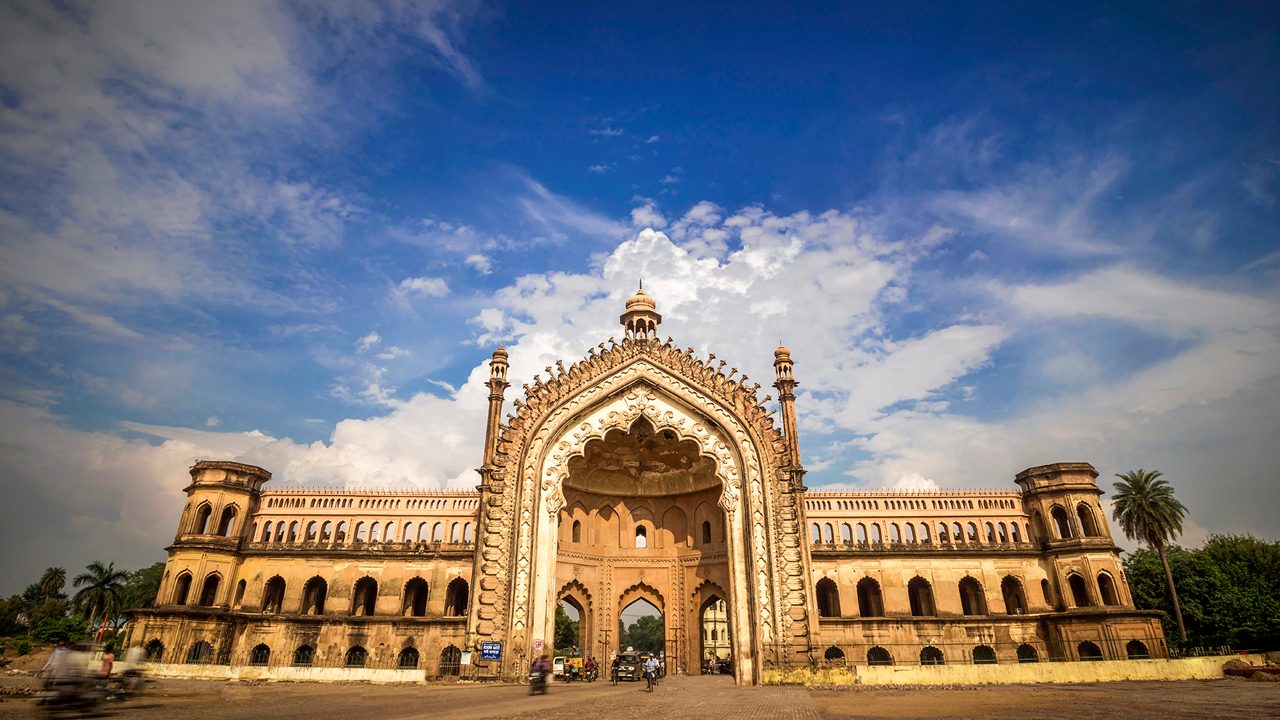
Lucknow — Rumi Darwaza, Chhota Imambara (Palace of Lights) & British Residency 1857
Lucknow — Complete Awadhi food trail: Tundey Kababi, Dum Biryani & Meetha Paan
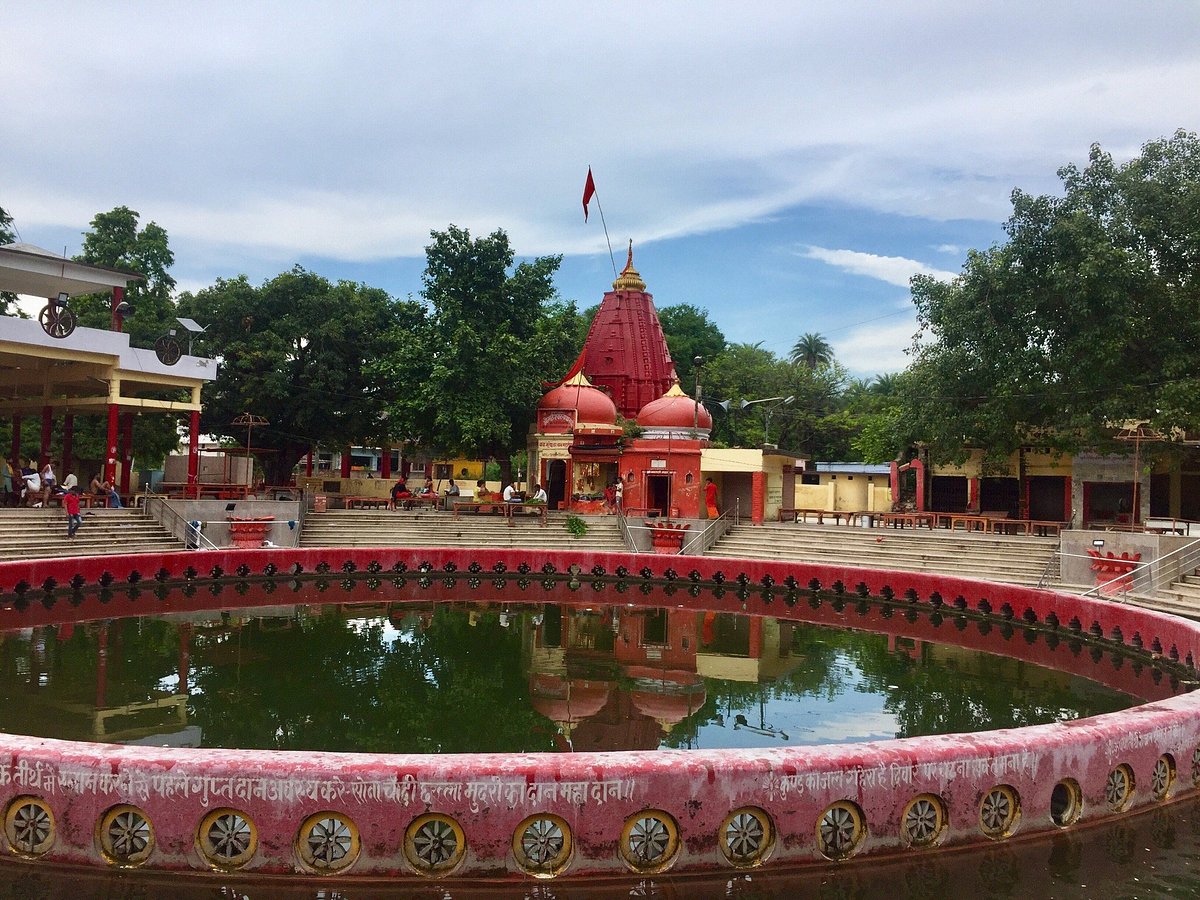
Naimisharanya — Chakra Kund holy dip, Lalita Devi Shakti Peetha & Vyas Gaddi
Naimisharanya — pre-dawn Chakra Kund bath at brahma muhurta & Gomti aarti
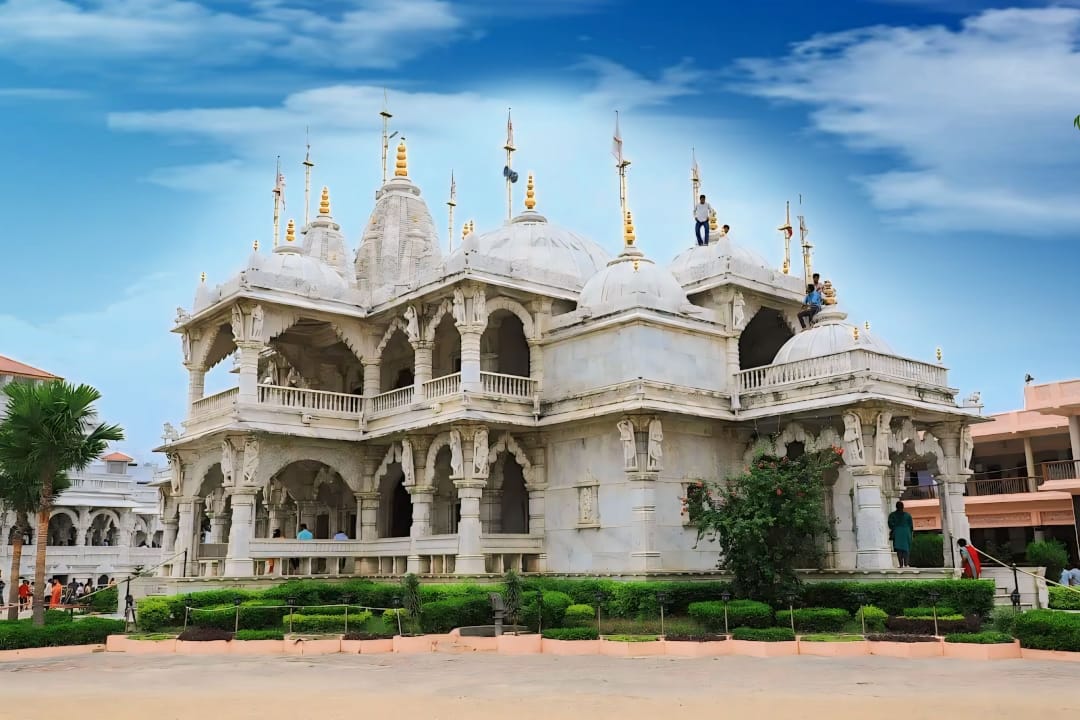
Chhapiya — Swaminarayan Janmabhoomi Temple, Janma Sthan & dawn mangala aarti
Ayodhya — Ram Mandir (January 2024), Hanumangarhi, Kanak Bhawan & Saryu Snan
Ayodhya Day 2 — Nageshwarnath Mandir, Treta Ke Thakur & Ram Katha Museum
Prayagraj — Triveni Sangam holy dip & boat ride at the confluence of three sacred rivers
Prayagraj — Akbar's Fort, Patalpuri Temple, Akshayavat & Anand Bhavan
Expert pilgrimage and heritage guide throughout · Private AC vehicle

Day-by-Day Itinerary — 7 Nights 8 Days Chhapiya Lucknow Naimisharanya Ayodhya Prayagraj Tour Package

7 Nights / 8 Days · Chhapiya · Timings adjustable to your arrival

Day 1

Arrival in Lucknow — Bara Imambara, Bhulbhulaiya, Rumi Darwaza & Hazratganj

Arrive at Lucknow by flight (Chaudhary Charan Singh International Airport) or train (Charbagh Railway Station). Meet your dedicated tour guide and transfer to hotel. After freshen-up, begin Lucknow heritage exploration at the magnificent Bara Imambara (1784 CE) — built by Nawab Asaf-ud-Daula as a monumental famine-relief project, housing one of the world's largest arched chambers with no external beam support, the Asfi Mosque, and the Shahi Baoli. Ascend to the legendary Bhulbhulaiya — 489 identical archways and labyrinthine upper-floor passages; a 30-minute guided adventure through an 18th-century engineering marvel that defeats navigation without an expert guide. Enjoy panoramic views of old Lucknow from the rooftop terraces. Step outside to the iconic Rumi Darwaza (1784 CE) — the towering 60-foot triumphal gateway modeled on the Sublime Porte of Constantinople, one of North India's most photographed monuments. Evening: stroll along Hazratganj — Lucknow's elegant colonial-era promenade lined with heritage buildings, boutiques, bookstores, and cafes. Dinner at a heritage Awadhi restaurant: Dum Biryani, Nihari, and Shahi Tukda. Overnight in Lucknow.
Day 2

Lucknow — Chhota Imambara, British Residency, Hussainabad & Awadhi Food Trail

After breakfast, visit the Chhota Imambara (1837 CE) — the Palace of Lights, with thousands of Belgian crystal chandeliers, golden calligraphy, and the silver-canopied throne of the Nawab of Awadh. Proceed to the British Residency (1800 CE) — the haunting, atmospheric site of the 87-day Siege of Lucknow during the 1857 First War of Independence; cannonball-scarred ruins, overgrown walls, and the largest concentration of British graves in India create an atmosphere unlike any other heritage site in the country. Hussainabad Clock Tower (1887 CE) — India's tallest clock tower at 67 metres, modeled on London's Elizabeth Tower — and the adjacent Picture Gallery with life-size portraits of the Nawabs of Awadh painted by European court artists. Afternoon: the legendary Lucknow food trail — Tundey Kababi (est. 1905, the incomparable 160-spice Galouti Kebab), Idris ki Biryani lane, and Ram Asrey sweets (est. 1805) for Lucknawi mithai and the seasonal Makkhan Malai. Evening: Aminabad bazaar — Lucknow's most vibrant old-city market for authentic hand-embroidered Chikankari kurtas, Zardozi embroidery, silver jewellery, Basket Chaat, Tokri Chaat, and Meetha Paan. Overnight in Lucknow.
Day 3

Lucknow to Naimisharanya — Chakra Kund, Lalita Devi Shakti Peetha & Gomti Aarti

After breakfast, check out and drive 85 km to Naimisharanya (Nimsar) — approx. 1.5 hrs. This ancient forest sanctuary on the Gomti river is one of the holiest pilgrimage sites in all of Hindu scripture: where 88,000 rishis assembled and Maharishi Suta Goswami narrated all 18 Puranas to Shaunaka Rishi and the assembled sages. Lord Brahma's Sudarshana Chakra descended here to mark the sacred forest boundary — Naimisharanya means "in the twinkling of an eye," the speed at which the Chakra fell. Visit the Chakra Kund — the circular sacred tank at the heart of Naimisharanya, believed to be the exact landing site of Lord Vishnu's Chakra; a holy bath here is declared in the Puranas as equivalent to the merit of all pilgrimages combined. Offer prayers at the Lalita Devi Temple — one of the 108 Shakti Peethas, where the heart of Sati fell, an immensely powerful and active Devi shrine. Visit Vyas Gaddi — the sacred seat where Maharishi Veda Vyasa composed and Suta narrated the Puranas. Dadhichi Kund — the sacred tank associated with the sage Dadhichi who sacrificed his bones to create Indra's Vajra weapon. Evening: the deeply moving Gomti riverbank aarti in the ancient forested setting — one of the most serene spiritual experiences in North India. Dinner and overnight at pilgrim guesthouse in Naimisharanya.
Day 4

Naimisharanya Dawn Rituals & Drive to Chhapiya — Swaminarayan Janmabhoomi & Evening Aarti

Rise before dawn for the pre-dawn bath at the Chakra Kund (brahma muhurta) — the most sacred time at Naimisharanya, when mist rises from the Gomti, forest birds awaken, and the sound of Vedic hymns carries through the ancient trees. Morning aarti at the Lalita Devi Temple. After morning rituals and breakfast, drive approximately 130 km to Chhapiya (approx. 2.5 hrs via Lucknow). Check-in to the pilgrim guesthouse. Chhapiya (Chapiya), Gonda district — the sacred birthplace of Sahajanand Swami, Lord Swaminarayan, born on Chaitra Shukla Navami (Ram Navami) 1781 CE to Dharmadev and Bhaktimata. He is worshipped as Purna Purushottam Narayan — the Supreme Being himself — by over 100 million Swaminarayan devotees worldwide across BAPS, NarNarayan Dev Gadi, Laxmi Narayan Dev Gadi, Vadtal Gadi, and all affiliated sects. Visit the Swaminarayan Janmabhoomi Temple complex: the Janma Sthan (the exact sacred room of his birth), the ancestral home of Dharmadev and Bhaktimata, the Kulkhani (ancestral well where the young Ghanshyam played and performed childhood miracles), and the serene Nilkanth Van garden. Receive prasad. Attend the evening aarti at the Janmabhoomi Temple — one of the most devotionally charged experiences for Swaminarayan devotees anywhere in the world. Dinner (satvik vegetarian) and overnight at Chhapiya.
Day 5

Chhapiya Morning Aarti & Drive to Ayodhya — Ram Mandir, Hanumangarhi & Saryu Aarti

Rise before dawn for the morning mangala aarti at the Swaminarayan Janmabhoomi Temple — the pre-dawn prayer at the birthplace of the Lord, deeply intimate and the most spiritually powerful time at Chhapiya. After prasad and a final parikrama of the Janmabhoomi complex, take breakfast and drive to Ayodhya — 100 km (approx. 2 hrs) via the Gonda–Faizabad highway. Ayodhya — the birthplace of Bhagwan Shri Ram — is one of the Sapta Puri, the seven cities that grant Moksha in Hindu tradition. Both Chhapiya and Ayodhya share the sacred Ram Navami tithi (Chaitra Shukla Navami), making the journey from the birthplace of Lord Swaminarayan to the birthplace of Lord Rama one of unique spiritual continuity. Begin with Saryu Snan at Ram ki Paidi — the sacred bath in the Saryu River, considered essential for all Ayodhya pilgrims. Ascend Hanumangarhi — the hilltop Hanuman temple at Ayodhya's highest point. The Ram Mandir (Ram Janmabhoomi Temple) — the magnificent new temple consecrated on 22 January 2024, in Nagara-style Rajasthani pink sandstone, housing the idol of Ram Lalla. Visit Kanak Bhawan (the golden palace temple of Sita-Ram) and Dashrath Mahal. Evening: the moving Saryu Aarti at Ram ki Paidi. Dinner and overnight in Ayodhya.
Day 6

Ayodhya — Ram-Bhumi in Depth: Ancient Temples, Ghats & Ram Katha Museum

A full second day in Ayodhya to explore the deeper sacred landscape of Ram-Bhumi. Morning aarti at the Ram Mandir or sunrise on the Saryu Ghat. Visit Nageshwarnath Mandir — the oldest temple in Ayodhya, associated with Kush (Rama's son), believed to have been established in the Treta Yuga itself, maintaining unbroken worship through the ages. Treta Ke Thakur — the site of Rama's Ashwamedha Yagna, with ancient stone idols of Rama, Sita, Lakshmana, and Hanuman worn smooth by centuries of devotional touch, conveying an extraordinary sense of living antiquity. Ram Katha Museum — the comprehensive documentation of the Ram Mandir movement and 5,000 years of Ayodhya's pilgrimage history. Birla Mandir (Ram Vivah Mandap). Exploration of the Saryu Ghats: Swargadwar Ghat, Brahm Kund, Chakra Hariji Ghat — each with its own place in the Valmiki Ramayana narrated by the guide. Afternoon: a second darshan at the Ram Mandir at a quieter time for personal prayer. Evening: sunset on the Saryu. Dinner and second overnight in Ayodhya.
Day 7

Ayodhya to Prayagraj — Triveni Sangam Holy Dip, Boat Ride & Akbar's Fort

After breakfast, check out and drive approximately 200 km to Prayagraj (approx. 3.5–4 hrs). Prayagraj — the Tirtha Raj (king of all pilgrimages) — is the sacred city at the Triveni Sangam: the confluence of the Ganga, Yamuna, and the mystical Saraswati rivers, the holiest point in Hindu geography. Upon arrival, proceed directly to the Sangam for the sacred Triveni Sangam Snan — the holy bath at the confluence of three sacred rivers, declared in the Puranas as the most meritorious act of pilgrimage available to a human being, equivalent in merit to all other pilgrimages combined. The boat ride on the Sangam — watching the distinct green Yamuna meet the grey-brown Ganga, with the vast plain stretching to the horizon — is both visually extraordinary and spiritually unforgettable. Offer prayers at Alopi Devi Mandir — the unique Shakti Peetha where no idol is present, only an empty doli (cradle), marking the spot where Sati's hands fell. Visit Allahabad Fort (1583 CE) — Emperor Akbar's massive riverside fort at the Sangam, housing the Patalpuri Temple (an ancient subterranean Shaivite shrine, one of the oldest continuously worshipped temples in the world) and the legendary Akshayavat — the immortal Banyan tree mentioned in the Ramcharitmanas and the Mahabharata, under which pilgrims perform ancestral rites (Pitru Tarpan). Visit Anand Bhavan — the ancestral home of the Nehru family and a significant museum of the Indian independence movement. Bharadwaj Ashram — the ancient hermitage of Maharishi Bharadwaj, visited by Lord Rama on his exile journey southward. Evening: at leisure at the Sangam promenade or personal prayers. Overnight in Prayagraj.
Day 8

Prayagraj — Morning at the Sangam, Hanuman Mandir & Departure

Rise early for a second morning at the Triveni Sangam — a sunrise bath at the confluence, watching the Ganga and Yamuna meet as the sun rises over the plain, is one of the most sublime experiences in all of India. Those who wish to perform Pitru Tarpan (ancestral rites) at the Sangam — considered the most auspicious location for this ritual in all of Hinduism — can do so with the assistance of the local Panda priests (at extra cost, not included). Visit the Bade Hanuman Mandir at Prayagraj — the famous Hanuman temple where the idol of Lord Hanuman reclines in a lying-down (shayana) posture, believed to be the only such posture of Hanuman in India. The Hanuman idol is submerged in Sangam floodwater each monsoon and emerges when waters recede — a unique annual phenomenon. After breakfast, explore the Triveni Pushpa Vatika and, if time permits, the Allahabad High Court building — one of the finest examples of colonial Indo-Saracenic architecture in India. Transfer to Prayagraj Junction Railway Station or Allahabad/Bamrauli Airport for your onward journey. Tour concludes with the blessings of the Triveni Sangam, the Swaminarayan Janmabhoomi, the Ram Janmabhoomi, and the eternal spiritual power of all five sacred destinations.

What's Included & What's Not Included

Inclusions

  • 7 nights accommodation — 2 nights Lucknow, 1 night Naimisharanya (pilgrim guesthouse), 1 night Chhapiya (pilgrim guesthouse), 2 nights Ayodhya, 1 night Prayagraj
  • Daily meals as per itinerary (7 Breakfasts + 7 Dinners)
  • Private AC vehicle for all intercity transfers and local sightseeing throughout
  • Dedicated English/Hindi-speaking pilgrimage and heritage guide for all 8 days
  • Lucknow: Bara Imambara and Bhulbhulaiya guided tour (entry fees included)
  • Naimisharanya: Chakra Kund, Lalita Devi Temple, Vyas Gaddi, and Gomti aarti
  • Chhapiya: Swaminarayan Janmabhoomi full guided tour — Janma Sthan, ancestral home, Kulkhani, Nilkanth Van
  • Ayodhya (2 days): Ram Mandir, Hanumangarhi, Kanak Bhawan, Nageshwarnath, Treta Ke Thakur, Saryu Snan, Saryu Aarti
  • Prayagraj: Triveni Sangam boat ride and holy dip (boat charges included), Akbar's Fort, Patalpuri Temple, Anand Bhavan
  • Arrival pick-up from Lucknow Airport or Railway Station
  • Departure drop to Prayagraj Junction or Allahabad Airport
  • All toll taxes, driver allowance, parking, and fuel charges
  • 24/7 on-call support during the tour

Exclusions

  • Train or flight tickets to Lucknow (start) and from Prayagraj (end)
  • Lunches and beverages not listed in the itinerary
  • British Residency ASI entry ticket (approx. ₹25 for Indians)
  • Pitru Tarpan or ancestral rites at the Sangam (Panda priest fees, at guest's discretion)
  • Temple donation or special puja arrangements
  • Shopping at Aminabad, Hazratganj, or Prayagraj markets
  • Personal expenses — laundry, beverages, phone calls
  • Travel insurance (strongly recommended)
  • Medical or emergency expenses
  • Tips for guide and driver (appreciated)
  • Any services not explicitly listed under inclusions

Good to Know

Tour starts in Lucknow (Airport / Charbagh Railway Station) and ends in Prayagraj (Prayagraj Junction / Allahabad Airport). Both pickup and drop are included.

Chhapiya and Naimisharanya: strictly satvik vegetarian meals only (no onion, no garlic). Inform us of all dietary requirements at booking.

Dress code: modest traditional attire at all temples. Remove footwear before entering all shrines.

Ram Mandir Ayodhya: phones and cameras must be deposited at the cloak room before entering the inner sanctum.

Bara Imambara Lucknow: entry tickets included. Bhulbhulaiya guided tour — do not separate from the guide at any time.

Kashi Vishwanath Temple (if extended to Varanasi): Aadhaar card mandatory.

Triveni Sangam Prayagraj: the holy bath involves wading or boating — carry a change of clothes and towel. Avoid during active monsoon (July–September) when currents are strong.

Ram Navami (March/April): Swaminarayan Jayanti at Chhapiya and Ram Navami at Ayodhya coincide on the same tithi — the most auspicious time for this entire circuit. Book 6–8 weeks in advance.

Senior pilgrims: Hanumangarhi Ayodhya (76 steps) is optional. All other sites are accessible by vehicle to the gate.


Frequently Asked Questions — 7 Nights 8 Days Chhapiya Lucknow Naimisharanya Ayodhya Prayagraj Tour Package

What is the route and travel order followed in this 7N8D package?

The tour follows a geographically optimized route to minimize backtracking: Arrive Lucknow → 2 nights Lucknow (heritage sightseeing) → Naimisharanya (85 km northwest, 1 night) → Chhapiya (130 km via Lucknow, 1 night) → Ayodhya (100 km, 2 nights) → Prayagraj (200 km, 1 night) → depart from Prayagraj. This route flows west-to-east and then south, with each destination logically connected by distance and road conditions. The total road distance covered is approximately 615 km over 8 days — an average of 77 km per travel day, very comfortable in a private AC vehicle.

Why is the Triveni Sangam called the Tirtha Raj — the king of all pilgrimages?

The Triveni Sangam at Prayagraj is declared the Tirtha Raj in multiple Puranas, most explicitly in the Matsya Purana and Padma Purana, because it is the meeting point of the three most sacred rivers in Hinduism: the Ganga (originating at Gangotri, the river of Lord Shiva's matted hair), the Yamuna (originating at Yamunotri, the sister of Yama and daughter of Surya), and the Saraswati (the invisible underground river of Brahma, the river of Vedic knowledge and wisdom). The Puranas state that no virtue, penance, sacrifice, or donation in any other place equals a single bath at the Triveni Sangam. It is also the site of the Kumbh Mela — held every 12 years, the 2025 Maha Kumbh attracted over 400 million visitors, the largest human gathering ever recorded in history.

What is the Patalpuri Temple inside Akbar's Fort and can pilgrims visit it?

Patalpuri Temple (Patalpuri Mandir) is an ancient subterranean (underground) temple inside Allahabad Fort, believed by scholars to be one of the oldest continuously worshipped temples in India. The name means "underworld city" — the temple is accessed by descending below ground level, creating a sensation of entering another realm. It houses ancient stone idols including a celebrated image of Lord Shiva. The Akshayavat (the immortal Banyan tree) is located within the same fort complex — it is mentioned in the Ramayana (Valmiki), the Mahabharata, and the Puranas as the tree that survives each Pralaya (cosmic dissolution). The fort is under Indian Army jurisdiction; civilian visitors access the temple through a dedicated entry maintained for pilgrims. Our guide will navigate all entry requirements.

What makes the 7N8D package the most complete Chhapiya tour?

This is our largest Chhapiya-destination package and includes all five major destinations: Lucknow (Nawabi heritage, 2 nights), Naimisharanya (Puranic scripture sanctuary), Chhapiya (Swaminarayan Janmabhoomi), Ayodhya (Ram Janmabhoomi, 2 nights), and Prayagraj (Triveni Sangam). The 2 nights each in Lucknow and Ayodhya are the defining feature — in Lucknow this allows the complete Day 1 (Bara Imambara, Bhulbhulaiya, Rumi Darwaza, Hazratganj) and Day 2 (Chhota Imambara, British Residency, food trail, Aminabad) programmes; in Ayodhya this allows Day 1 (Ram Mandir, Hanumangarhi, Kanak Bhawan, Saryu Aarti) and Day 2 (Nageshwarnath, Treta Ke Thakur, Ram Katha Museum, deeper ghats). Adding Prayagraj with the Triveni Sangam completes the three great pilgrimage axes: Swaminarayan birthplace + Ram birthplace + the Sangam of all sacred rivers.

What is the best time to undertake this 7N8D pilgrimage?

October to March is the ideal window for all five destinations: pleasant weather (10–28°C), comfortable for outdoor sightseeing, temple visits, Sangam bathing, and ghat walks. Key festival highlights: November — Lucknow Mahotsav (10-day cultural festival with Kathak, Thumri, and Awadhi food), Kartik Purnima at Naimisharanya and Prayagraj Sangam (full moon bathing); January — Makar Sankranti Sangam Snan at Prayagraj (millions of pilgrims); February/March — Maha Shivaratri; March/April — Ram Navami, Swaminarayan Jayanti (both at Chhapiya and Ayodhya on the same day). Maha Kumbh years (next: 2037): the Prayagraj Sangam is especially auspicious. Avoid April–June (extreme heat, 40–44°C). Book 6–8 weeks in advance for Ram Navami, Lucknow Mahotsav, and Kumbh Mela periods.

Can this package be extended to include Varanasi or Bodhgaya?

Yes — Varanasi is just 125 km from Prayagraj (2.5 hrs). Adding Varanasi creates a 9N10D package: Lucknow + Naimisharanya + Chhapiya + Ayodhya + Prayagraj + Varanasi (Kashi Vishwanath, Ganga Aarti, dawn boat ride, and Sarnath). Adding both Varanasi and Bodhgaya creates an 11N12D Grand Pilgrimage Circuit. We can customize any extension at the time of booking. Alternatively, guests travelling onward from Prayagraj to Varanasi independently can arrange their own onward journey from Prayagraj Junction Railway Station, which has excellent train connectivity to Varanasi (approx. 2.5 hrs).


Ready to Explore Chhapiya?

Customized itineraries · Best price guarantee · 24×7 support

Ready to Plan Your Sacred Journey?

Talk to our Varanasi travel experts — free consultation, custom itinerary & transparent pricing.