
8 Nights 9 Days Chitrakoot Prayagraj Varanasi Ayodhya Chhapiya Tour Package

8 Nights / 9 Days · Pilgrimage & Heritage ·2 - 15 ·Chitrakoot
4.9 28 reviews

8 Nights 9 Days Chitrakoot Prayagraj Varanasi Ayodhya Chhapiya Tour Package — Chitrakoot Tour Package Overview

Experience the most unhurried and deeply immersive pilgrimage circuit of Uttar Pradesh with our 8 Nights 9 Days Chitrakoot Prayagraj Varanasi Ayodhya Chhapiya Tour Package — the definitive 9-day sacred journey designed for devotees who want to absorb every sacred site, every ghat, every aarti, and every divine story without haste. This extended itinerary allocates two full nights each at Chitrakoot, Prayagraj, and Varanasi — India's three most spiritually powerful destinations — plus a dedicated night in Ayodhya and a blessed final night at Chhapiya, the birthplace of Bhagwan Swaminarayan. At Chitrakoot, the hallowed forest of Lord Ram's 11.5-year exile, spend two days in total immersion: Kamadgiri Parikrama, Gupt Godavari Caves, Hanuman Dhara, Sphatik Shila, Janaki Kund, Sati Anusuiya, and the Mandakini ghats by both sunrise and sunset. At Prayagraj, the Tirtha-raja, take two days to experience the Triveni Sangam dawn snan, Akshaya Vat, and all the sacred and historical landmarks at a pilgrim's pace. Spend two transformative nights in Varanasi — the eternal city of Lord Shiva — for a Ganges sunrise boat ride, Kashi Vishwanath Jyotirlinga, Sarnath Buddhist circuit, Ganga Aarti, and deeper exploration of the 84 ghats. Visit Ayodhya for Ram Mandir darshan, Saryu Snan, and the full sacred circuit from Hanumangarhi to Guptar Ghat. Conclude at Chhapiya — where Bhagwan Swaminarayan was born on Ram Navami 1781 — for a blessed dawn aarti before departure. Nine days, five sacred cities, and the complete spiritual heartland of India.

Package Highlights

V

VisitKashi

Your trusted travel partner · 24×7 support

Tour Highlights — Key Experiences in This Package

Two nights at Chitrakoot — complete Kamadgiri Parikrama, Gupt Godavari, Hanuman Dhara & Sphatik Shila
Two nights at Prayagraj — Triveni Sangam Snan, Akshaya Vat, Alopi Devi & Sangam boat rides
Two nights at Varanasi — Ganges sunrise, Kashi Vishwanath, Sarnath & Dashashwamedh Ganga Aarti
Kamadgiri Parikrama — 5 km barefoot walk around Lord Ram's wish-fulfilling hill
Gupt Godavari Caves — underground royal court of Ram with inner wading water cave
Hanuman Dhara — miraculous perpetual spring with panoramic Chitrakoot valley views
Sphatik Shila — crystalline rock where Ram and Sita sat together on the Mandakini
Triveni Sangam dawn bath — the most meritorious holy dip in all of Hinduism
Akshaya Vat inside Allahabad Fort — indestructible banyan mentioned in the Mahabharata
Alopi Devi Mandir — one of the 51 Shakti Peethas at Prayagraj
Sunrise Ganges boat ride at Varanasi past all 84 ghats
Kashi Vishwanath Jyotirlinga darshan & grand Vishwanath Corridor
Sarnath — Dhamek Stupa, Lion Capital & Buddha's first sermon site
Dashashwamedh Ganga Aarti — 7 priests, 45-minute synchronized fire ritual
Ram Mandir darshan — the temple of the millennium consecrated January 2024
Guptar Ghat Ayodhya — site of Lord Ram's Jal Samadhi on the Saryu
Swaminarayan Janmabhoomi at Chhapiya — birthplace of Bhagwan Swaminarayan

Day-by-Day Itinerary — 8 Nights 9 Days Chitrakoot Prayagraj Varanasi Ayodhya Chhapiya Tour Package

8 Nights / 9 Days · Chitrakoot · Timings adjustable to your arrival

Day 1

Arrival in Chitrakoot — Kamadgiri Parikrama & Ram Ghat Evening Aarti

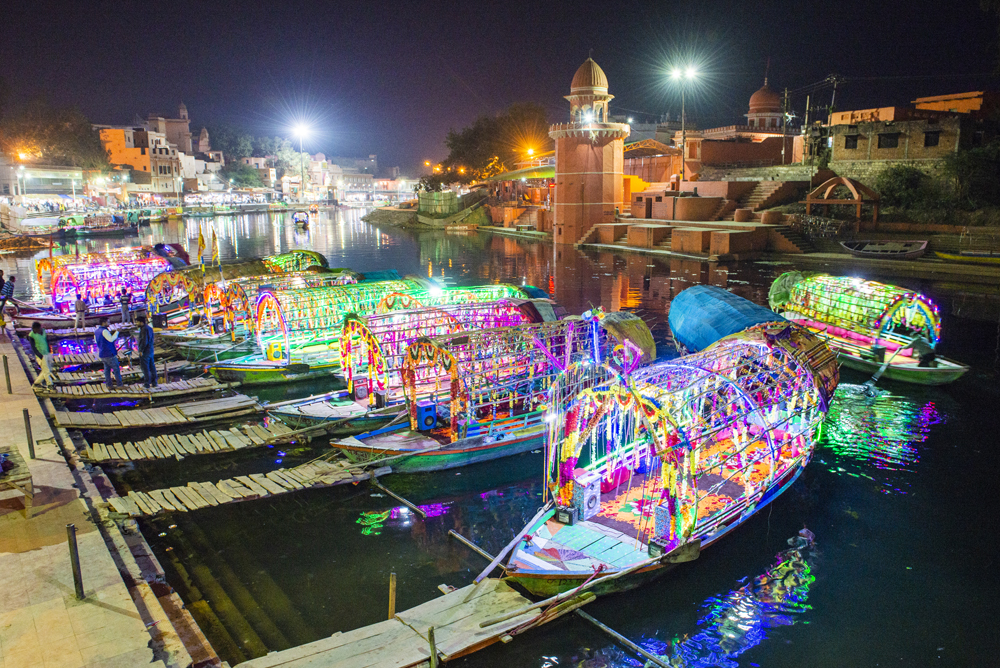
Arrive at Chitrakoot by road or train (Chitrakoot Dham Karwi Railway Station, 8 km from the main temple area). Meet your dedicated pilgrimage guide and check in to hotel. After freshen-up, begin with the most sacred act at Chitrakoot — the Kamadgiri Parikrama. This 5 km barefoot circumambulation of the Kamadgiri hill is described in the Valmiki Ramayana and multiple Puranas as bestowing merit equal to a hundred Ashwamedha Yagnas. Lord Ram is believed to dwell within this hill in his subtle eternal presence, and circumambulating it with sincere devotion is said to fulfill all worldly and spiritual wishes. The paved forest path winds through ancient temples including Bharat Milap Mandir — the emotionally charged spot where Bharat fell weeping at Ram's feet and begged him to return to Ayodhya — Matangi Devi Temple, and the central Kamadgiri shrine. Evening: proceed to Ram Ghat on the tranquil Mandakini River — the very ghat where Mother Sita bathed daily during the years of exile. Attend the gentle and intimate evening Aarti as oil diyas drift on the sacred Mandakini in the golden glow of dusk. Dinner and overnight in Chitrakoot.
Day 2

Chitrakoot Deep Darshan — Gupt Godavari, Hanuman Dhara, Sphatik Shila, Sati Anusuiya & Mandakini Sunset

Rise before sunrise for a Mandakini Snan (holy bath) at Ram Ghat — the most auspicious moment to begin a pilgrimage day in Chitrakoot, as the mist rises from the Mandakini and the forest resonates with birdsong. After breakfast, complete the comprehensive Chitrakoot sacred circuit that two nights here richly allows: Gupt Godavari Caves — the twin caves where Lord Ram held his royal court during forest exile; the outer cave is large and accessible, while the remarkable inner cave requires wading 40-50 metres through ankle-deep underground Godavari waters flowing through a narrow rock passage — a spiritual adventure found nowhere else in India. Janaki Kund — the serene riverside ghat where Sita bathed daily, marked by an ancient temple on the Mandakini bank. Hanuman Dhara — climb 360 stone steps up the wooded hillside to the miraculous perpetual spring that appeared when Hanuman asked for something to cool his burned body after returning from Lanka; the summit commands a sweeping panoramic view of the entire Chitrakoot valley and surrounding Vindhya hills. Sati Anusuiya Ashram — where the great sage Atri's wife bestowed divine boons upon Sita: immortal sindoor, the Akshaya Patra, and eternal youth. Afternoon: Sphatik Shila — the smooth crystalline rock outcrop on the Mandakini bank where Ram and Sita are said to have sat together watching the sunset; the spot carries a tender, intimate sanctity distinct from the grandeur of the main temple sites. Raghav Prayag Ghat and the gentle mandakini ghats. Evening: sunset Mandakini boat ride. Overnight in Chitrakoot.
Day 3

Check-out Chitrakoot — Drive to Prayagraj — Akshaya Vat, Sangam Sunset Boat Ride

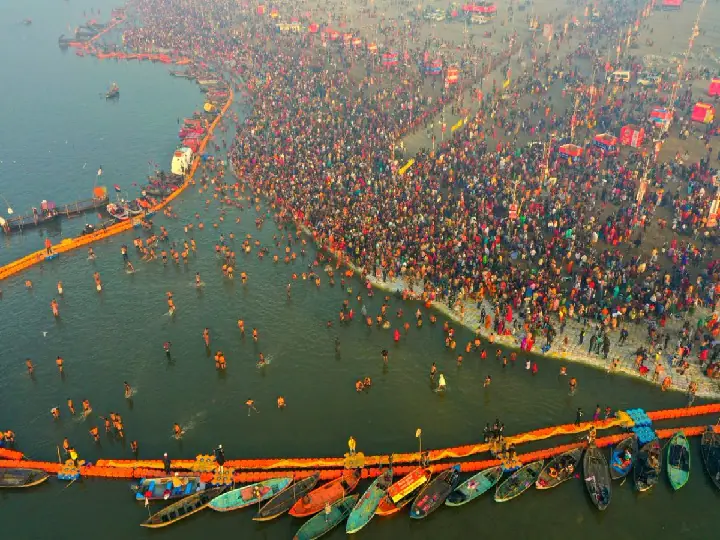
Begin with an optional early Mandakini Snan before breakfast. After check-out, drive to Prayagraj (approx. 130 km, 3 hrs) — the Tirtha-raja (King of all Pilgrimages), the confluence city where the Ganga, Yamuna, and the invisible Saraswati meet in the most sacred tripoint in Hinduism. Check in to hotel. Afternoon: visit Allahabad Fort (built by Emperor Akbar in 1583 CE) for Akshaya Vat darshan — the immortal banyan tree enclosed within the fort, mentioned in the Mahabharata as indestructible even during the Pralaya (cosmic dissolution), documented by Chinese pilgrim Xuanzang in 644 CE, and referenced in the Padma Purana. Inside the fort complex, visit the underground Patalpuri Temple — a cave shrine of great antiquity — and Saraswati Koop. Bade Hanuman Ji — the extraordinary reclining Hanuman idol at the Sangam shore, submerged by Ganga floodwaters every monsoon, always resurfaces in perfect condition. Evening: sunset boat ride at the Triveni Sangam — witness the majestic meeting of the turquoise Yamuna and the turbid ochre Ganga as they converge in the shimmering golden light of dusk, one of the most visually and spiritually spectacular scenes in all of India. Overnight in Prayagraj.
Day 4

Prayagraj — Triveni Sangam Dawn Snan, Alopi Devi Shakti Peetha, Anand Bhawan & Ganga Aarti

Wake well before sunrise for the supreme pilgrimage act of Prayagraj — the Triveni Sangam Snan at dawn. Board a boat to reach the exact confluence point where Ganga, Yamuna, and the invisible Saraswati meet. The Puranas unanimously declare that a single dawn bath here washes away accumulated sins of all past lives and bestows the accumulated merit of a thousand Ashwamedha Yagnas. Witness the first rays of sunrise transform the sacred waters into liquid gold as thousands of pilgrims chant and offer arghya. After the snan, breakfast and morning rest at hotel. Mid-morning: Alopi Devi Mandir — one of the 51 Shakti Peethas of India and the only one in Prayagraj, where Goddess Sati's final piece (her lap/allop) fell; uniquely, the goddess is worshipped here in the form of a decorated palanquin (doli) rather than an idol. Afternoon: Anand Bhawan — the beautifully preserved ancestral home of the Nehru-Gandhi family, now a national museum showcasing the Indian independence movement. Chandrashekhar Azad Park. Bharadvaja Ashram — the ancient hermitage of the sage Bharadvaja mentioned in the Ramayana, where Ram, Sita, and Lakshman rested on their way to Chitrakoot. Evening: Ganga Aarti at Sangam Ghat — the sacred fire ritual on the banks of the holiest confluence. Overnight in Prayagraj.
Day 5

Drive to Varanasi — Arrival & Evening Dashashwamedh Ganga Aarti

After breakfast, check out and drive from Prayagraj to Varanasi (approx. 200 km, 3.5 hrs) — the world's oldest continuously inhabited city and the eternal capital of Lord Shiva, where Shiva himself is said to whisper the Taraka Mantra into the ears of the dying, granting liberation. Arrive by afternoon. Check in to hotel. After freshen-up, explore the main ghat area on foot or by cycle rickshaw: walk the Panchganga Ghat, Lalita Ghat, Manikarnika Ghat (the continuously burning cremation ghat), Dashashwamedh Ghat, and Assi Ghat — each with its own ancient mythology and living tradition. This evening arrival and gentle ghat walk sets the stage for tomorrow's pre-dawn boat ride. Evening: the spectacular Dashashwamedh Ghat Ganga Aarti — 7 head priests in white silks, standing on raised platforms in perfect formation, perform a 45-minute synchronized fire ritual with 21-tier brass wands, conch shells, incense, and Sanskrit chants before thousands of awestruck devotees and travelers from around the world. Arguably the most visually stunning daily ritual in India. Overnight in Varanasi.
Day 6

Varanasi — Sunrise Boat Ride on the Ganges, Kashi Vishwanath Corridor & Sarnath

Pre-dawn: board a traditional wooden rowing boat on the Ganges for the iconic Varanasi sunrise — one of the most transcendent spiritual experiences on earth. Float past all 84 ghats as the ancient city gradually awakens: priests perform Surya Puja on stone platforms, sadhus sit in deep Samadhi at the water's edge, devotees chant and take holy dips in the Ganga, and the eternal fires of Manikarnika Ghat — which have burned without interruption for over 3,500 years — cast a sacred golden glow on the slowly moving waters. After breakfast, explore the magnificent Kashi Vishwanath Corridor (inaugurated 2021) — the grand new temple precinct surrounding the ancient Jyotirlinga of Lord Shiva, featuring Annapurna Devi Temple, Avimukteshwar Mandir, and the historically celebrated Vishwanath Lane. Post-lunch: drive to Sarnath (10 km) — the deer park where the newly Enlightened Buddha gave his first sermon (Dhammacakkappavattana Sutta) to five disciples in 528 BCE. Visit the Dhamek Stupa (5th-6th century CE), Chaukhandi Stupa, Mulagandha Kuti Vihara, and the Sarnath Archaeological Museum — home to the Lion Capital of Ashoka (India's national emblem, carved circa 250 BCE). Return to Varanasi. Afternoon: Durga Kund Temple, Tulsi Manas Mandir (where Tulsidas composed the Ramcharitmanas in 1574 CE), and Sankat Mochan Hanuman Temple. Evening at leisure on the ghats. Overnight in Varanasi.
Day 7

Drive to Ayodhya — Ram Mandir Darshan, Hanumangarhi & Saryu Ghat Aarti

After breakfast, check out and drive to Ayodhya (approx. 200 km, 3.5-4 hrs) — the birthplace of Lord Ram, one of the seven Moksha-puris of Hinduism, and one of the most emotionally resonant cities in the world for hundreds of millions of Hindus. Arrive by afternoon. Check in to hotel. Proceed for the most awaited darshan of the entire journey — the Sri Ram Janmabhoomi Mandir, the magnificent temple built on the exact birthplace of Lord Ram, consecrated on 22 January 2024 after a 500-year wait. The 161-foot Nagara shikhara in white Rajasthani makrana marble and pink Bansi Paharpur sandstone is a masterpiece of sacred architecture, with 392 columns intricately carved with divine figures. The sanctum sanctorum houses the idol of Ram Lalla in a golden throne. Visit Hanumangarhi — the 18th-century fort-temple of Sankat Mochan Hanuman perched 76 feet above the city on 76 steps, housing the beloved idol of Anjani Mata with the infant Hanuman. Evening: the enchanting Saryu Aarti at Ram Ki Paidi — priests stand on the riverside steps performing the sacred fire ritual as thousands of illuminated diyas drift down the holy Saryu. The sight of Ayodhya illuminated in the evening along the Saryu is deeply moving. Overnight in Ayodhya.
Day 8

Ayodhya Full Darshan — Saryu Snan, Kanak Bhawan, Guptar Ghat — Drive to Chhapiya — Swaminarayan Janmabhoomi

Wake before sunrise for a Saryu Snan at Ram Ki Paidi — the most sacred bath in Ayodhya, declared in the Skanda Purana to confer liberation (moksha) upon the bather. Witness the sunrise aarti on the riverside steps as the entire city of Ayodhya awakens in devotion. After the snan, complete the full Ayodhya pilgrimage circuit at a leisurely pace: Kanak Bhawan — the resplendent golden palace gifted to Sita by Queen Kaikeyi, housing magnificent golden idols of Ram and Sita adorned with royal jewels. Sita Ki Rasoi — the original palace kitchen of Ayodhya, one of the most ancient temple sites in the city. Nageshwarnath Temple — established by Luv (son of Ram and Sita), one of the oldest surviving temples in Ayodhya. Treta Ke Thakur at Tulsi Ghat — where Tulsidas had a vision of Ram and is believed to have composed verses of the Ramcharitmanas. Mani Parvat — the hill from which Hanuman leapt with the Sanjeevani mountain. Guptar Ghat — the profoundly solemn ghat on the Saryu where Lord Ram, accompanied by the entire populace of Ayodhya, took Jal Samadhi (divine submergence into the sacred waters), concluding his earthly avatar and returning to his eternal Vaikuntha form. Post-lunch, check out and drive to Chhapiya (Chapiya), Gonda district (approx. 100 km, 2 hrs). Arrive at the sacred birthplace of Bhagwan Swaminarayan — born as Ghanshyam Maharaj on 3 April 1781 (Chaitra Shukla Navami, Ram Navami day) to Dharmadev and Bhaktimata. The Swaminarayan Janmabhoomi temple complex, built at the exact house where he was born, is the holiest site in the global Swaminarayan faith. Evening prayers and full darshan. Overnight in Chhapiya/Gonda.
Day 9

Chhapiya — Swaminarayan Janmabhoomi Morning Aarti, Full Temple Darshan & Departure

Rise early for the dawn aarti and the most complete darshan of the Swaminarayan Janmabhoomi temple complex — the holiest site in the Swaminarayan faith worldwide, revered by BAPS, Vadtal, Ahmedabad, and all branches of the Sampraday. Explore the full complex in the tranquil morning hours: the main Janmabhoomi Mandir on the exact site of the birth house of Ghanshyam Maharaj, the childhood hindola (swing) where the young Swaminarayan played, the lovingly carved temple of Dharmadev and Bhaktimata, the garden complex, and the life-story exhibition hall narrating the extraordinary biography of Swaminarayan — who left home at age 11 and walked 12,000 km barefoot across India over 7 years as a young ascetic named Nilkanth Varni, before being initiated and founding one of the world's largest Vaishnava movements at age 21. The Janmabhoomi complex, in the early morning silence before the crowds arrive, carries a profound peace that devotees describe as the culmination of the entire UP pilgrimage. Receive the blessings of all five sacred destinations — Chitrakoot, Prayagraj, Kashi, Ayodhya, and Chhapiya — and carry the grace of this complete sacred circuit into your life. Depart from Gonda Railway Station or drive to Lucknow (approx. 90 km, 1.5 hrs) for onward travel by rail or air. Tour concludes with the complete blessings of all five divine cities.

What's Included & What's Not Included

Inclusions

  • 8 nights accommodation (2N Chitrakoot + 2N Prayagraj + 2N Varanasi + 1N Ayodhya + 1N Chhapiya/Gonda)
  • Daily breakfast and dinner as per itinerary (9 Breakfasts + 8 Dinners)
  • Private AC vehicle for all transfers and sightseeing throughout the 9-day circuit
  • Full route: Chitrakoot - Prayagraj - Varanasi - Sarnath - Ayodhya - Chhapiya - Lucknow/Gonda departure
  • Dedicated English/Hindi-speaking pilgrimage guide at all five destinations
  • Sunset boat ride at Triveni Sangam Prayagraj (Day 3)
  • Sunrise boat ride on the Ganges at Varanasi (Day 6)
  • Mandakini River sunset boat ride at Chitrakoot (Day 2)
  • Kamadgiri Parikrama guidance and full briefing
  • All toll taxes, driver allowance, parking, and fuel charges
  • Arrival pick-up at Chitrakoot (Karwi Railway Station or bus stand)
  • Departure drop at Gonda station or Lucknow Airport/Station
  • 24/7 on-call support throughout the 9-day journey

Exclusions

  • Train, bus, or flight tickets to Chitrakoot (start) or from Gonda/Lucknow (end)
  • Lunches and beverages not listed in the itinerary
  • Personal puja samagri, prasad, temple donations, and offerings
  • Allahabad Fort entry ticket for Akshaya Vat and Patalpuri Temple darshan
  • Sarnath ASI site entry and museum fees (approx. Rs. 40 for Indians)
  • Any personal expenses — shopping, laundry, beverages, phone calls
  • Travel insurance (strongly recommended for senior travelers)
  • Medical or emergency expenses
  • Tips and gratuities for guide and driver
  • Any services not explicitly mentioned under inclusions

Good to Know

Dress modestly at all pilgrimage sites — cover shoulders and knees; remove footwear before all temple and ghat entrances.

Carry a government-issued photo ID for each adult traveler (mandatory at Allahabad Fort for Akshaya Vat and Patalpuri Temple).

For Gupt Godavari inner cave: wear clothes suitable for wading ankle-deep water; keep valuables in a waterproof pouch or bag.

Kamadgiri Parikrama is performed barefoot — carry a cloth bag for footwear during the 5 km circumambulation.

Photography is strictly prohibited inside the Ram Mandir sanctum (Ayodhya) and the Kashi Vishwanath main shrine (Varanasi).

Sarnath ASI site and museum entry fees are payable on-site and are not included in the package price (approx. Rs. 40 for Indian nationals).

Tour starts in Chitrakoot (Karwi) and ends in Chhapiya/Gonda. Pick-up from Karwi Station and drop to Gonda Station or Lucknow Airport are included.

During Ram Navami (March-April), all five destinations see very large gatherings simultaneously — book at least 10 weeks in advance for this period.

This 9-day itinerary is specifically designed to avoid the rushing that affects shorter packages — please use the extra time at each destination to explore at a devotee's pace rather than a tourist's pace.


Frequently Asked Questions — 8 Nights 9 Days Chitrakoot Prayagraj Varanasi Ayodhya Chhapiya Tour Package

Why does this 9-day package give 2 nights each at Chitrakoot, Prayagraj, and Varanasi?

Most pilgrimage packages rush through each destination in a single day — arriving late afternoon and leaving the next morning — which means pilgrims miss the early morning rituals (the most sacred time at every site), the secondary sacred sites, and the meditative depth that each city offers. Two nights allow a full dawn-to-dusk day at each destination. At Chitrakoot, Day 2 covers Gupt Godavari inner cave, Hanuman Dhara, Sphatik Shila, and the sunset boat ride. At Prayagraj, Day 4 adds Alopi Devi Shakti Peetha, Bharadvaja Ashram, and a second Sangam experience. At Varanasi, having two days means Sarnath, the full Kashi Vishwanath Corridor, and Ganga Aarti all on the same trip without compromise.

What is the significance of Chhapiya for Swaminarayan devotees?

Chhapiya (Chapiya) in Gonda district, Uttar Pradesh, is the birthplace of Bhagwan Swaminarayan — born as Ghanshyam Maharaj on 3 April 1781 on Ram Navami day to Dharmadev (a Sanskrit scholar) and Bhaktimata. It is the holiest site in the global Swaminarayan faith, equivalent in spiritual authority to Ayodhya for Ram devotees. The Swaminarayan Janmabhoomi temple complex here is visited by millions of devotees from India and worldwide — from the BAPS, Vadtal, and Ahmedabad branches of the Sampraday.

What is Bharadvaja Ashram in Prayagraj and why is it significant for this pilgrimage?

Bharadvaja Ashram in Prayagraj is the ancient hermitage of the great Vedic sage Maharishi Bharadvaja — one of the seven Saptarshis and the author of thousands of Rig Vedic hymns. In the Ramayana, Ram, Sita, and Lakshman visited this very ashram on their way from Ayodhya to Chitrakoot, and Sage Bharadvaja directed them toward Chitrakoot. Visiting this ashram in Prayagraj creates a perfect narrative thread through the entire pilgrimage: you are following the exact route of Ram's forest exile from Ayodhya through Prayagraj to Chitrakoot.

Is Alopi Devi Mandir included and what makes it special?

Yes. Alopi Devi Mandir in Prayagraj is one of the 51 Shakti Peethas of India — the sites where the body parts of Goddess Sati fell after Shiva carried her in grief and Vishnu severed her body with his Sudarshana Chakra. At Alopi Devi, Sati's last piece (her lap — alop means "to disappear") fell, and the goddess is uniquely worshipped here as a decorated palanquin (doli) rather than an idol. It is particularly significant for women pilgrims and devotees of the Goddess.

Can we depart from Lucknow instead of Gonda at the end?

Yes. After morning darshan at Chhapiya on Day 9, we drive to Lucknow (approx. 90 km, 1.5 hrs from Chhapiya) for departures from Chaudhary Charan Singh International Airport or Lucknow Junction Railway Station. Lucknow has far better connectivity to all major cities by both air and rail. The Lucknow drop is included in the package at no extra cost.

What is the best time of year for this 9-day pilgrimage circuit?

October to March is ideal across all five destinations. Key festival periods: Ram Navami (Ayodhya, Chitrakoot, and Chhapiya all celebrate Janmotsav simultaneously — plan well in advance), Deepotsav Ayodhya (November, spectacular), Dev Deepawali Varanasi (November, 1 million lamps on the Ganges), Magh Mela Prayagraj (January-February, massive). Avoid May-June due to extreme Uttar Pradesh heat. Monsoon (July-August) is lush and beautiful at Chitrakoot but road travel is slower.


Ready to Explore Chitrakoot?

Customized itineraries · Best price guarantee · 24×7 support

Ready to Plan Your Sacred Journey?

Talk to our Varanasi travel experts — free consultation, custom itinerary & transparent pricing.