

8 Nights 9 Days Ayodhya Prayagraj Chitrakoot Varanasi Bodhgaya Tour Package — Ayodhya Tour Package Overview
This circuit weaves together the complete Ramayana sacred geography with India's supreme Buddhist pilgrimage and the holiest Shaiva city — creating a once-in-a-lifetime spiritual odyssey that transcends any single religious tradition.
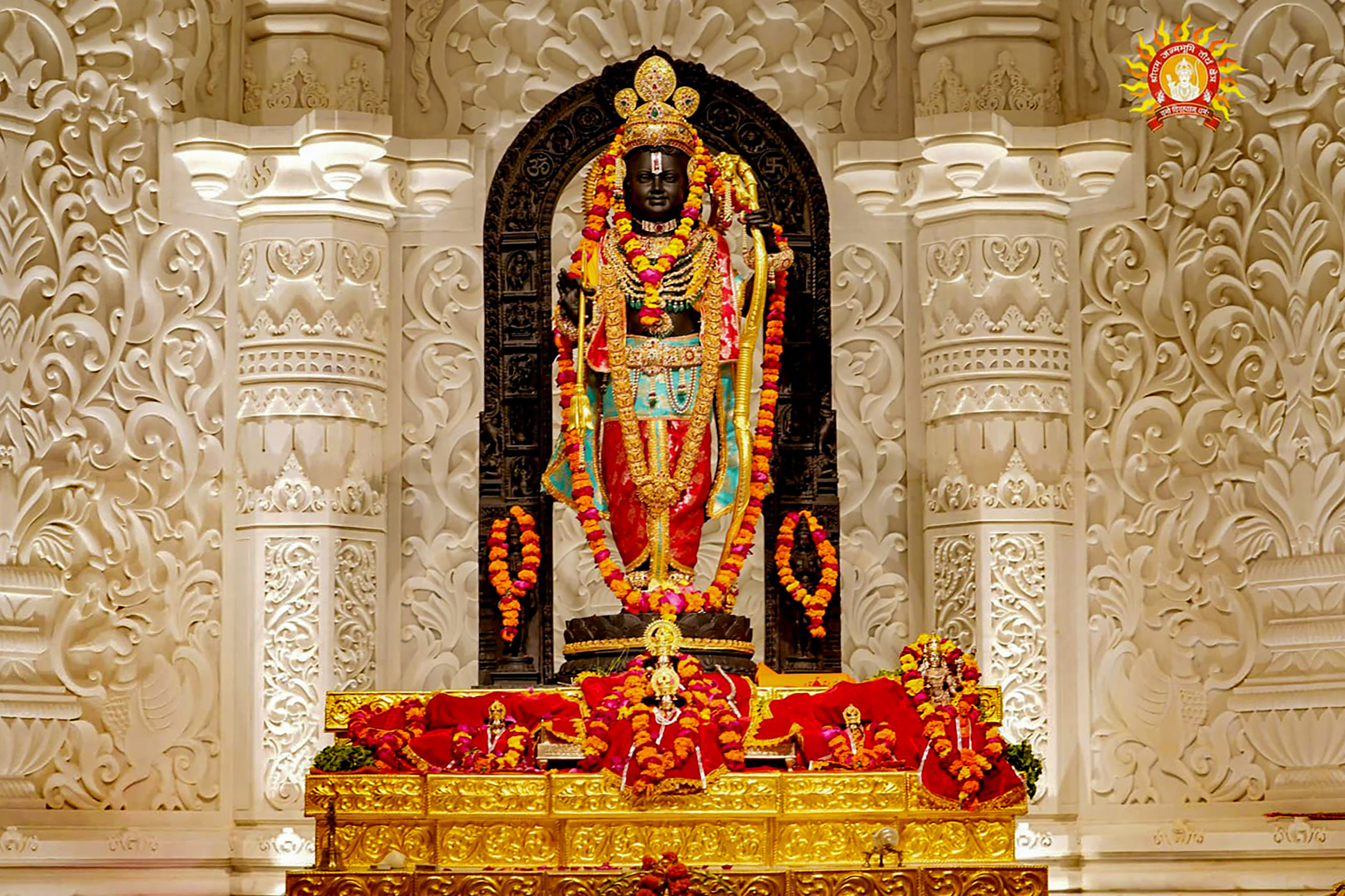
Ayodhya (2 nights) — Begin where it all started: the birthplace and eternal kingdom of Lord Ram. The newly consecrated Ram Mandir (Ram Janmabhoomi), the fortified Hanuman Garhi, the golden Kanak Bhawan, the Saryu River Aarti on two evenings, and Ayodhya's deeper heritage — Dashrath Mahal, Mani Parvat, Guptar Ghat.
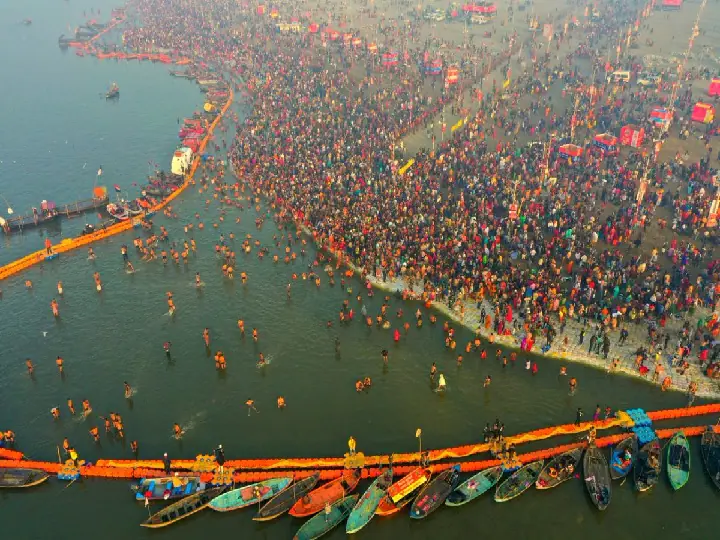
Prayagraj (2 nights) — The sacred Triveni Sangam where Ganga, Yamuna & Saraswati converge. Holy dip at the Kumbh Mela ground, darshan at Bade Hanuman Ji (Lete Hanumanji), the immortal Akshayavat banyan tree at Akbar's Fort, Anand Bhawan, and Khusro Bagh.
Chitrakoot (1 night) — Ram's sacred forest home for 11½ years of exile. Kamadgiri Parikrama, Ramghat Aarti on the Mandakini, the mysterious Gupt Godavari Caves, Sphatik Shila, and Janaki Kund.
Varanasi (2 nights) — Lord Shiva's eternal city of moksha. Kashi Vishwanath Jyotirlinga, the Ganga Aarti at Dashashwamedh on two evenings, sunrise boat ride past 84 ghats, and Sarnath — where the Buddha delivered his first sermon.
Bodhgaya (1 night) — The most sacred Buddhist pilgrimage site on earth — where Siddhartha Gautama attained enlightenment under the Bodhi Tree, becoming the Buddha. The Mahabodhi Temple (UNESCO World Heritage Site), the original Bodhi Tree, the Vajrasana (diamond throne), and the Great Buddha Statue make Bodhgaya a profoundly moving conclusion to this extraordinary circuit.
VisitKashi manages every detail: private AC intercity transfers, expert guides in all five cities, boat rides at three sacred rivers, hand-picked hotels, and 24/7 on-trip support throughout all 9 days.
Package Highlights
Private AC Cab
Dedicated AC Innova Crysta / Ertiga for all 5-city intercity drives and local sightseeing — 9 days, zero shared transport.
8 Nights Hotel
2N Ayodhya + 2N Prayagraj + 1N Chitrakoot + 2N Varanasi + 1N Bodhgaya — hand-picked hotels near pilgrimage centres.
Sangam Boat Ride
Motorboat to Triveni Sangam — the sacred heart of Prayagraj.
Ganges Sunrise Boat Ride
Dawn rowing boat past all 84 Varanasi ghats — India's most iconic morning experience.
Mandakini Boat Ride
Serene sacred boat ride on the Mandakini River at Ramghat, Chitrakoot.
Expert Guides (5 Cities)
Dedicated government-licensed English/Hindi expert guides in all five cities.
24/7 On-Trip Support
Round-the-clock VisitKashi WhatsApp helpline across all 9 days and 5 cities.
VisitKashi
Your trusted travel partner · 24×7 support
Tour Highlights — Key Experiences in This Package
Day-by-Day Itinerary — 8 Nights 9 Days Ayodhya Prayagraj Chitrakoot Varanasi Bodhgaya Tour Package
8 Nights / 9 Days · Ayodhya · Timings adjustable to your arrival
Arrival Ayodhya · Ram Mandir · Hanuman Garhi · Kanak Bhawan · Saryu Aarti
Night 1 — Ayodhya · Lord Ram's birthplace & the sacred Janmabhoomi
Our VisitKashi representative receives you at Ayodhya Junction / Ayodhya Dham Station / Lucknow Airport and transfers you to your hotel for check-in and freshening up.
Afternoon — Ram Mandir & Ram Janmabhoomi
- Proceed to the Ram Mandir — the newly consecrated grand temple complex on the exact birthplace of Lord Ram; seek darshan of Ram Lalla, the divine child form of Ram, enshrined in the inner sanctum consecrated on 22 January 2024
- Explore the Ram Janmabhoomi complex — the temple museum, landscaped pilgrimage precinct, and interpretive galleries
- Hanuman Garhi — the fortified hilltop temple (76 steps) where child Hanuman is enshrined with mother Anjana, guarding Ram's birthplace
- Kanak Bhawan — the golden-throne temple gifted by Queen Kaikeyi to Ram and Sita; an ornately decorated Vaishnava shrine with exquisite gilded sculptures
Evening — Saryu River Aarti
- Walk to Ram Ki Paidi — the sacred ghat complex with 14 ghats corresponding to Ram's 14 years of exile
- Witness the enchanting Saryu River Aarti — a lamp ceremony on the river where Lord Ram was born and where he ultimately took Jal Samadhi; the illuminated ghats at night are among Ayodhya's most beautiful sights
Return to hotel. Dinner on own account.
Ayodhya Deep Dive · Saryu Snan · Dashrath Mahal · Mani Parvat · Guptar Ghat · Saryu Aarti (2nd)
Night 2 — Ayodhya · Complete Ramayana landscape at an unhurried pace
Full breakfast at the hotel. Your second full day in Ayodhya explores the deeper layers of this eternal city.
Early Morning — Saryu Snan
- Holy dip in the Saryu River at Ram Ki Paidi at sunrise — bathing in the Saryu cleanses all sins accumulated since birth and is one of the most sacred acts a pilgrim can perform in Ayodhya
Morning — Dashrath Mahal & Ancient Temples
- Dashrath Mahal — ancestral palace of King Dashrath with vivid Ramayana murals; one of Ayodhya's most artistically rich temples
- Nageshwarnath Temple — one of Ayodhya's most ancient Shiva temples, believed to have been established by Ram's son Kush
- Treta Ke Thakur — temple marking where Lord Ram performed the Ashwamedha Yajna; ancient black stone sculptures of Ram and his brothers
- Sita Ki Rasoi — the traditional site of Sita's kitchen; a uniquely intimate shrine
Afternoon — Mani Parvat & Guptar Ghat
- Mani Parvat — sacred hillock from which Hanuman scattered Sanjeevani herb particles; panoramic views over Ayodhya and the Saryu River
- Guptar Ghat — where Lord Ram is believed to have taken Jal Samadhi at the end of his earthly incarnation; one of Ayodhya's most profoundly moving sacred sites
- Optional: Ram Katha Museum — dioramas and paintings depicting the Ramayana narrative
Evening — Saryu Aarti (2nd Evening)
- Attend the Saryu River Aarti for the second evening — the second viewing is invariably deeper and more absorbing than the first
Return to hotel. Dinner on own account.
Drive to Prayagraj · Triveni Sangam · Bade Hanuman Ji · Ganga Aarti
Night 3 — Prayagraj · The world's holiest river confluence
After an early breakfast and check-out, begin your 4-hour drive to Prayagraj — where the Ganga, Yamuna, and invisible Saraswati converge at the sacred Triveni Sangam.
Upon Arrival — Triveni Sangam
- Check in to hotel, freshen up, then board a motorboat to Triveni Sangam — the most auspicious bathing spot in Hinduism; the confluence point where the dark green Yamuna and the silt-brown Ganga visibly merge
- Perform Sangam Snan — believed to cleanse karma across seven lifetimes and grant liberation
- Float a deep daan (oil lamp offering) on the sacred waters
- Visit Bade Hanuman Ji Temple (Lete Hanumanji) — the reclining Hanuman idol uniquely embedded in the earth at Sangam; rises with floodwaters every monsoon
Evening — Ganga Aarti
- Witness the serene Ganga Aarti at Sangam Ghat — lamp ceremony with Vedic chanting at the riverbank
Return to hotel. Dinner on own account.
Prayagraj Fort · Akshayavat · Anand Bhawan · Khusro Bagh · Azad Park
Night 4 — Prayagraj · Mughal heritage, Ashoka's legacy & freedom history
Full breakfast at the hotel, then a complete day through Prayagraj's magnificent heritage.
Morning — Prayagraj Fort
- Prayagraj Fort (Akbar's Qila, 1583 AD) — Emperor Akbar's grand military fortification at the sacred Sangam junction
- Patalpuri Temple — ancient underground shrine revered as a portal to the netherworld
- Akshayavat (Immortal Banyan Tree) — described in the Puranas as indestructible through cosmic dissolution; venerated for over 2,000 years
- Ashoka Pillar (232 BCE) — UNESCO-protected sandstone monolith inscribed with Emperor Ashoka's rock edicts
Afternoon — Anand Bhawan, Swaraj Bhawan & Khusro Bagh
- Anand Bhawan — ancestral home of Jawaharlal Nehru; national museum with independence-era artefacts and the Jawahar Planetarium
- Swaraj Bhawan — birthplace of Indira Gandhi; heritage museum of the Nehru-Gandhi legacy
- Khusro Bagh — serene Mughal walled garden with three ornate royal sandstone tombs
Late Afternoon — Azad Park
- Chandra Shekhar Azad Park — where revolutionary Azad made his last stand in 1931; visit his iconic memorial
- Optional: Allahabad Museum — Harappan seals, Mauryan sculptures, Roerich artworks
Return to hotel. Dinner on own account.
Drive to Chitrakoot · Kamadgiri Parikrama · Bharat Milap · Ramghat Aarti
Night 5 — Chitrakoot · Ram's sacred forest — the heart of the Ramayana
After an early breakfast and check-out, begin your 3-hour drive to Chitrakoot — the sacred Ramayana forest city where Ram, Sita, and Laxman spent 11.5 years of their 14-year exile.
Upon Arrival — Kamadgiri Parikrama
- Kamadgiri Parvat Parikrama — a 5 km barefoot circumambulation of the sacred hill worshipped as Lord Ram himself; one parikrama equals ten Govardhan parikramas in spiritual merit
- Kamta Nath Temple at the foot of Kamadgiri — an ancient Ramayana-era shrine
- Bharat Milap Mandir — where Bharat met Ram during the exile; one of the most emotionally charged sites in India
Afternoon — Ramghat & Mandakini River
- Ramghat — the principal ghat on the Mandakini River where Ram, Sita & Laxman bathed daily
- Mandakini River Boat Ride — serene boat ride past ancient ghats, forest ashrams, and temple-lined banks
- Sati Anusuya Ashram — forest ashram where the Trimurti sought shelter during the exile
Evening — Ramghat Aarti
- Witness the Ramghat Aarti on the Mandakini — thousands of oil lamps illuminate the forested riverbanks; many pilgrims call this the most spiritually powerful moment of the entire journey
Check in to hotel. Dinner on own account.
Gupt Godavari · Sphatik Shila · Janaki Kund · Drive to Varanasi · Kashi Vishwanath · Ganga Aarti
Night 6 — Varanasi · From Ram's forest to Shiva's eternal city
Breakfast at hotel, then a focused Chitrakoot morning before the drive to Varanasi.
Morning — Gupt Godavari, Sphatik Shila & Janaki Kund
- Gupt Godavari Caves (18 km from Ramghat) — cave temples where Ram held court during exile; wade through a subterranean stream into a vast chamber with ancient Shivalingas
- Sphatik Shila — the crystalline quartz rock where Ram and Sita rested; Ram's divine footprints preserved in stone
- Janaki Kund — the sacred kund where Sita bathed daily; a peaceful riverside temple
Midday — Drive to Varanasi (approx. 5 hours)
- After an early lunch (own expense), drive to Varanasi (Kashi) — the world's oldest living city. Check in to hotel and freshen up.
Evening — Kashi Vishwanath & Ganga Aarti
- Kashi Vishwanath Temple — seek blessings at the most sacred Jyotirlinga; walk the magnificent Kashi Vishwanath Corridor
- Witness the world-famous Ganga Aarti at Dashashwamedh Ghat — seven priests with fire torches, conch shells, and Vedic chanting; performed every evening without exception for centuries
Return to hotel. Dinner on own account.
Sunrise Ganges Boat Ride · Sarnath · Kashi Temples · Ganga Aarti (2nd)
Night 7 — Varanasi · Dawn on the Ganges, Sarnath & the soul of Kashi
Your second day in Varanasi begins before dawn at the most sacred river in Hinduism.
Early Morning — Sunrise Ganges Boat Ride
- Board a wooden rowing boat at Assi Ghat at sunrise (5–5:30 AM) — glide past all 84 ghats watching yogis, pilgrims, morning rituals, and the eternal smoke of Manikarnika Ghat rising against the golden sky
- Optional: early morning Ganga Snan — the most auspicious time to bathe in the Ganges
Morning — Sarnath
- Sarnath (12 km from Varanasi) — where the Buddha delivered his first sermon to five disciples, setting the Wheel of Dharma in motion; one of Buddhism's four most sacred sites
- Dhamek Stupa (500 CE) — marking the exact spot of the first discourse; exquisite Gupta-era stone carvings
- Ashoka Pillar at Sarnath — whose Lion Capital became India's national emblem
- Sarnath Museum (optional) — Asia's finest collection of Buddhist sculptures
- Mulagandha Kuti Vihar — Japanese Buddhist temple with vivid life-of-Buddha murals
Afternoon — Kashi's Sacred Temples
- Durga Temple (Durga Kund) — striking 18th-century red-painted temple on a sacred tank
- Tulsi Manas Temple — where Goswami Tulsidas composed the Ramcharitmanas
- Vishwanath Gali — Varanasi's famous temple lane with flower stalls, puja shops, ancient shrines
- Optional: Banarasi silk weaving workshop — watch master weavers on traditional handlooms
Evening — Ganga Aarti (2nd Evening)
- Ganga Aarti at Dashashwamedh Ghat — second viewing reveals ritual layers impossible to absorb in one visit; consider a rowboat for the closest river-level view
Return to hotel. Dinner on own account.
Drive to Bodhgaya · Mahabodhi Temple · Bodhi Tree · Great Buddha Statue · Monastery Walk
Night 8 — Bodhgaya · Where the Buddha attained enlightenment
After an early breakfast and check-out, begin your 4-hour drive to Bodhgaya (Bihar) — the most sacred site in Buddhism and one of the four most important Buddhist pilgrimage destinations in the world.
Bodhgaya is the place where Prince Siddhartha Gautama sat in deep meditation under the Peepal tree for 49 continuous days and attained complete enlightenment (bodhi), becoming the Buddha — the Awakened One. This single event, approximately 2,500 years ago, gave birth to one of the world's great religions, followed by 500+ million people today.
Upon Arrival — Mahabodhi Temple Complex
- Mahabodhi Temple — the UNESCO World Heritage Site and the most sacred temple in Buddhism, marking the exact spot of the Buddha's enlightenment; the towering 55-metre pyramidal structure dates to the 5th–6th century CE with origins in Emperor Ashoka's original structure (260 BCE)
- Bodhi Tree — the sacred Peepal tree growing on the same spot as the original tree under which the Buddha attained enlightenment; receiving blessings here is the most spiritually significant act at Bodhgaya; the tree is a direct descendant of the original, propagated from the Sri Maha Bodhi tree in Sri Lanka
- Vajrasana (Diamond Throne) — the red sandstone seat placed by Emperor Ashoka marking the exact spot where the Buddha sat in the final meditation leading to enlightenment; the most sacred object at Bodhgaya; touching it or circumambulating it carries immense spiritual merit across all Buddhist traditions
- Animesh Lochan Chaitya — the small shrine marking the spot where the Buddha stood for one week after enlightenment, gazing at the Bodhi Tree in gratitude
Afternoon — Monasteries & Great Buddha Statue
- Great Buddha Statue — the magnificent 80-foot (25-metre) sandstone statue of the meditating Buddha inaugurated by the Dalai Lama in 1989; surrounded by ten 7-foot accompanying statues gifted by Buddhist nations from around the world
- International Buddhist Monasteries — Bodhgaya is home to temples and monasteries built by Buddhist nations worldwide: the Tibetan Monastery, Japanese Temple (built by Buddhist monk Nichidatsu Fujii), Chinese Temple, Thai Temple, Bhutanese Monastery, and Myanmar Temple — each a unique architectural jewel representing their respective Buddhist traditions
- Archaeological Museum (optional) — housing Buddhist sculptures and artefacts from the Pala period excavated from the Bodhgaya site
Evening — Bodhi Tree Meditation
- Return to the Mahabodhi Temple in the evening when the complex is beautifully lit and the atmosphere is most serene for meditation and prayer
- Join the evening circumambulation (pradakshina) of the Mahabodhi Temple with monks and pilgrims from across the Buddhist world — one of Bodhgaya's most moving daily rituals
Check in to hotel. Dinner on own account.
Bodhgaya Morning · Dungeshwari Caves · Sujata Stupa · Departure
Day 9 — Bodhgaya final morning · Pilgrimage complete · Departure transfer
Your final morning in Bodhgaya — a peaceful conclusion to your 9-day pilgrimage across five sacred cities.
Early Morning — Sunrise at Mahabodhi Temple
- Begin at the Mahabodhi Temple at sunrise (5–6 AM) — the most serene and sacred time to be at the temple; watch monks and pilgrims from Tibet, Thailand, Japan, Sri Lanka, Myanmar, Bhutan, and India perform morning prayers; the air fills with chanting in multiple languages, all converging on the same spot of enlightenment
- Final meditation or prayer under the Bodhi Tree — take a moment of complete stillness at the most sacred spot in Buddhism
Morning — Dungeshwari Caves & Sujata Stupa
- Mahakala Caves (Dungeshwari Caves) (12 km from Bodhgaya) — the cave on Pragbodhi Hill where Prince Siddhartha practiced severe austerities for 6 years before abandoning extreme asceticism; a Hindu temple and Buddhist shrine now mark the site; a fascinating and historically significant site often missed by casual visitors
- Sujata Stupa (3 km from Bodhgaya, across the Niranjana River) — built over the house of Sujata, the village girl who offered the Buddha a bowl of kheer (rice milk) which he accepted, breaking his fast before his final meditation; this act of nourishment is considered instrumental to his enlightenment — without Sujata's offering, the Buddha may not have had the physical strength to attain nirvana
After a final lunch (own expense), our driver transfers you to Gaya Junction (GAYA) / Gaya Airport for your onward journey. Bodhgaya is 15 km from Gaya Junction.
🙏 Your 9-day pilgrimage — from Ram's birthplace in Ayodhya to Prayagraj's sacred Sangam, through Ram's forest at Chitrakoot, Shiva's eternal Kashi, and culminating at the very ground of the Buddha's enlightenment in Bodhgaya — is now complete. You have traced the living sacred geography of both Hinduism and Buddhism across the holy heartland of India. May you carry home the combined blessings of Ram, Shiva, and the Buddha forever.
What's Included & What's Not Included
Inclusions
- 8 nights hotel stay — 2N Ayodhya + 2N Prayagraj + 1N Chitrakoot + 2N Varanasi + 1N Bodhgaya (twin sharing, daily breakfast)
- Private AC cab for all intercity drives and local sightseeing across all 5 cities
- Expert government-licensed English / Hindi guides in all five cities
- Arrival & departure transfer (Ayodhya / Lucknow arrival — Gaya / Varanasi / Prayagraj departure as per booking)
- Motorboat ride at Triveni Sangam — Prayagraj
- Sunrise wooden rowing boat ride on the Ganges — Varanasi
- Mandakini River boat ride at Ramghat — Chitrakoot
- Kamadgiri Parikrama pilgrimage guidance
- All toll taxes, parking fees & driver allowances
- 24x7 VisitKashi on-trip WhatsApp support across all 9 days
Exclusions
- Train / flight tickets to / from any city on the circuit
- Lunch & dinner throughout all 9 days (own expense)
- Entry fees — Allahabad Museum, Anand Bhawan, Prayagraj Fort, Sarnath Museum, Gupt Godavari, Mahabodhi Temple inner complex (donation-based), Archaeological Museum Bodhgaya
- Kashi Vishwanath Temple VIP darshan ticket (optional, nominal cost)
- Puja samagri, prasad & flowers at temples (available locally)
- Personal expenses & shopping
- Camera / videography fees at temples and heritage sites
- Tips & gratuities for guides / drivers
- Travel insurance (strongly recommended for 9-day multi-city tours)
- Anything not explicitly listed above
Good to Know
Night Distribution: Night 1 & 2 — Ayodhya · Night 3 & 4 — Prayagraj · Night 5 — Chitrakoot · Night 6 & 7 — Varanasi · Night 8 — Bodhgaya. Departure Day 9 from Gaya Junction (15 km from Bodhgaya) or Gaya Airport.
Four Sacred River Dips: Saryu (Ayodhya, Day 2) + Triveni Sangam (Prayagraj, Day 3) + Mandakini (Chitrakoot, Day 5) + Ganges (Varanasi, Day 7) — one of the most spiritually complete river pilgrimage sequences possible.
Mahabodhi Temple: Open 5 AM to 9 PM. No entry fee for the main temple (donation accepted). Inner shrine/Vajrasana area: small entry donation. Photography allowed in most areas; tripods require permission. Remove footwear before entering the main compound.
Kamadgiri Parikrama: Done entirely barefoot on a flat, paved 5 km path. Best time: evening 5-7 PM. Takes 1.5-2 hours. Carry 500 ml water.
Gupt Godavari Caves: Carry quick-dry trousers — wading through ankle-to-knee-deep water required in the main cave. Rubber sandals available at the entrance for rent.
Kashi Vishwanath Temple: Mobile phones strictly NOT allowed inside. Carry only Aadhar card and a small bag. Deposit valuables in provided lockers at the entrance gate.
Frequently Asked Questions — 8 Nights 9 Days Ayodhya Prayagraj Chitrakoot Varanasi Bodhgaya Tour Package
What makes the addition of Bodhgaya so significant to this pilgrimage circuit?
▼Bodhgaya is where Siddhartha Gautama attained enlightenment under the Bodhi Tree, becoming the Buddha. It is the most sacred site in Buddhism — equivalent to Mecca for Islam or Jerusalem for Christianity. Adding Bodhgaya to the Ayodhya–Prayagraj–Chitrakoot–Varanasi Ramayana circuit creates a uniquely complete pilgrimage: the Ramayana circuit honours the Vaishnava tradition, Varanasi represents the Shaiva tradition, and Bodhgaya adds the Buddhist tradition — giving you the three great spiritual traditions of India's heartland in a single journey. Varanasi and Bodhgaya are just 4 hours apart, making this combination highly practical.
What is the Mahabodhi Temple and why is it a UNESCO World Heritage Site?
▼The Mahabodhi Temple complex in Bodhgaya marks the exact spot where Siddhartha Gautama attained enlightenment approximately 2,500 years ago. The current temple structure dates to the 5th–6th century CE, but the site has been a pilgrimage destination since Emperor Ashoka built the original shrine in 260 BCE. UNESCO designated it a World Heritage Site in 2002 in recognition of its exceptional universal significance — it is not just the birthplace of one of the world's great religions, but a living site of continuous pilgrimage for 2,500 years.
What is the night distribution across this 9-day tour?
▼Night 1 & 2 in Ayodhya · Night 3 & 4 in Prayagraj · Night 5 in Chitrakoot · Night 6 & 7 in Varanasi · Night 8 in Bodhgaya. Departure on Day 9 from Gaya Junction (15 km from Bodhgaya) or Gaya Airport. If your departure needs to be from Varanasi or Patna, we can arrange transfers — inform us at booking.
How far is Bodhgaya from Varanasi and how is the drive?
▼Bodhgaya is approximately 240 km from Varanasi city centre — about 4 to 4.5 hours by road via NH19 passing through Sasaram. The drive passes through the flat Gangetic plains of eastern UP and Bihar. Our private AC vehicle covers this route comfortably with one planned rest stop.
Can non-Hindus or Buddhists join this tour?
▼Absolutely. This tour is designed for spiritual seekers of all backgrounds. Bodhgaya particularly welcomes visitors from all faiths — the Mahabodhi Temple complex and international monasteries are open to everyone. At Hindu temples like Kashi Vishwanath (Hindus only inside the sanctum), non-Hindu visitors can appreciate the Kashi Vishwanath Corridor and ghats. Our guides are experienced with interfaith groups and international visitors.
What is the Vajrasana (Diamond Throne) at Bodhgaya?
▼The Vajrasana is the red sandstone seat placed by Emperor Ashoka in 260 BCE to mark the exact spot where the Buddha sat in his final meditation leading to enlightenment. It is located directly under the Bodhi Tree inside the Mahabodhi Temple compound. The Vajrasana is considered the most sacred object in Buddhism — the very ground of enlightenment. Touching it, sitting near it, or circumambulating it is considered to carry immense merit across all Buddhist traditions.
What are the Dungeshwari Caves and why visit them?
▼The Dungeshwari Caves (also called Mahakala Caves or Pragbodhi) are where Prince Siddhartha spent 6 years practicing extreme austerities before abandoning asceticism as a path to enlightenment. The site contains both a Hindu temple (where the cave deity is worshipped as a goddess) and a Buddhist shrine. It represents the pivotal "middle way" moment in the Buddha's journey — he left these caves, accepted Sujata's offering of rice milk, and proceeded to the Bodhi Tree. Visiting Dungeshwari brings the Buddha's spiritual journey to life in a way that Bodhgaya alone cannot.
Can I do holy dips at all four sacred rivers — Saryu, Sangam, Mandakini, and Ganges?
▼Yes — this 9-day circuit offers holy dips at: Saryu River in Ayodhya (Day 2 sunrise), Triveni Sangam in Prayagraj (Day 3), Mandakini River in Chitrakoot (Day 5), and the Ganges in Varanasi (Day 7 during sunrise boat ride). Bathing in all four sacred rivers of this circuit in one pilgrimage is an act of extraordinary spiritual merit described in the Puranas. Additionally, the Niranjana River in Bodhgaya (where the Buddha bathed before his final meditation) can be visited on Day 9.
Is this package suitable for senior citizens?
▼Yes, with adjustments. The Saryu and Sangam boat rides are gentle. The Kamadgiri parikrama (5 km flat paved path) is suitable for most seniors at a slow pace. The Gupt Godavari cave wading can be skipped. The Hanuman Garhi climb (76 steps) can be replaced with base temple darshan. Dungeshwari Caves involve a short uphill walk which can be skipped. The Mahabodhi Temple complex is very accessible. We regularly manage senior pilgrimage groups of 70-80+ years.
Can I extend this package to include Rajgir and Nalanda near Bodhgaya?
▼Absolutely. Rajgir (65 km from Bodhgaya) is where the Buddha spent many monsoon retreats and delivered key discourses — the Griddhakuta (Vulture Peak), Venuvana Monastery, and the Jivaka Mango Grove are key sites. Nalanda (95 km from Bodhgaya) was the world's first university, established in the 5th century CE, and the greatest centre of Buddhist learning — its ruins are a UNESCO World Heritage Site. VisitKashi offers an extended 9N/10D circuit including Rajgir and Nalanda. Contact us on WhatsApp.
What is the best time of year for this 5-city 9-day pilgrimage?
▼October to March is ideal for all five cities — pleasant weather (10-28 C). November is exceptional: Dev Deepawali in Varanasi lights the Ganges with one million lamps. The Buddha Purnima full moon in May draws millions of Buddhist pilgrims to Bodhgaya — extraordinarily atmospheric but very crowded. Ram Navami (March-April) is celebrated grandly in Ayodhya. January brings the Magh Mela to Prayagraj. Avoid May-June for the circuit as a whole (extreme heat).
Ready to Explore Ayodhya?
Customized itineraries · Best price guarantee · 24×7 support