
8 Nights 9 Days Prayagraj Varanasi Ayodhya Chitrakoot Bodhgaya Tour Package — Prayagraj Tour Package Overview
This is VisitKashi's ultimate pilgrimage package — the only tour in this series that crosses the boundary between the Hindu sacred circuit and the Buddhist sacred circuit, connecting the three great faiths' most important sites in a single continuous journey. From the eternal Triveni Sangam to Lord Ram's birthplace, from Lord Shiva's moksha city to the Buddha's enlightenment ground, and finally to the Ramayana's most emotionally powerful forest destination — this itinerary is unmatched in its spiritual breadth and depth.
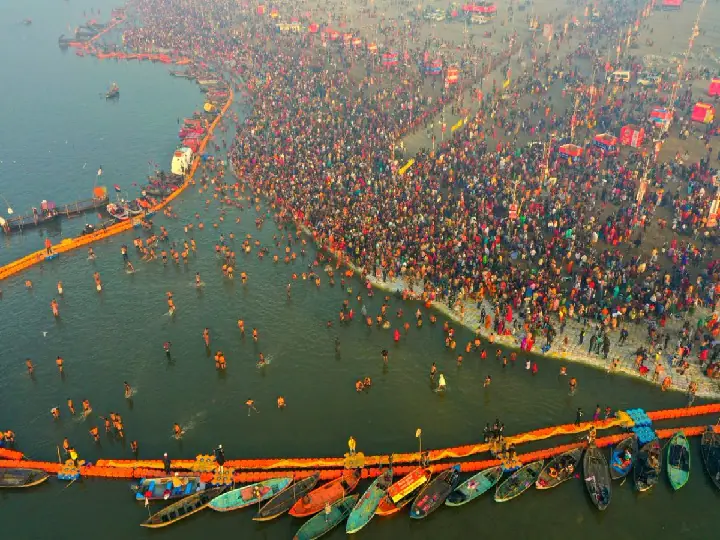
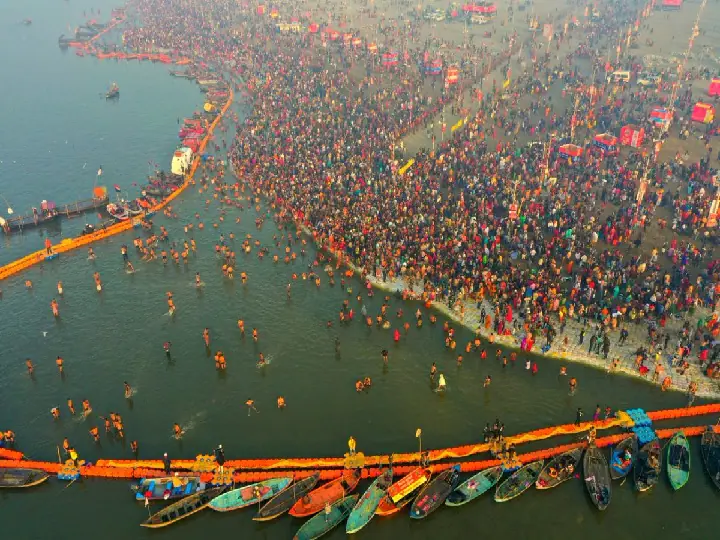
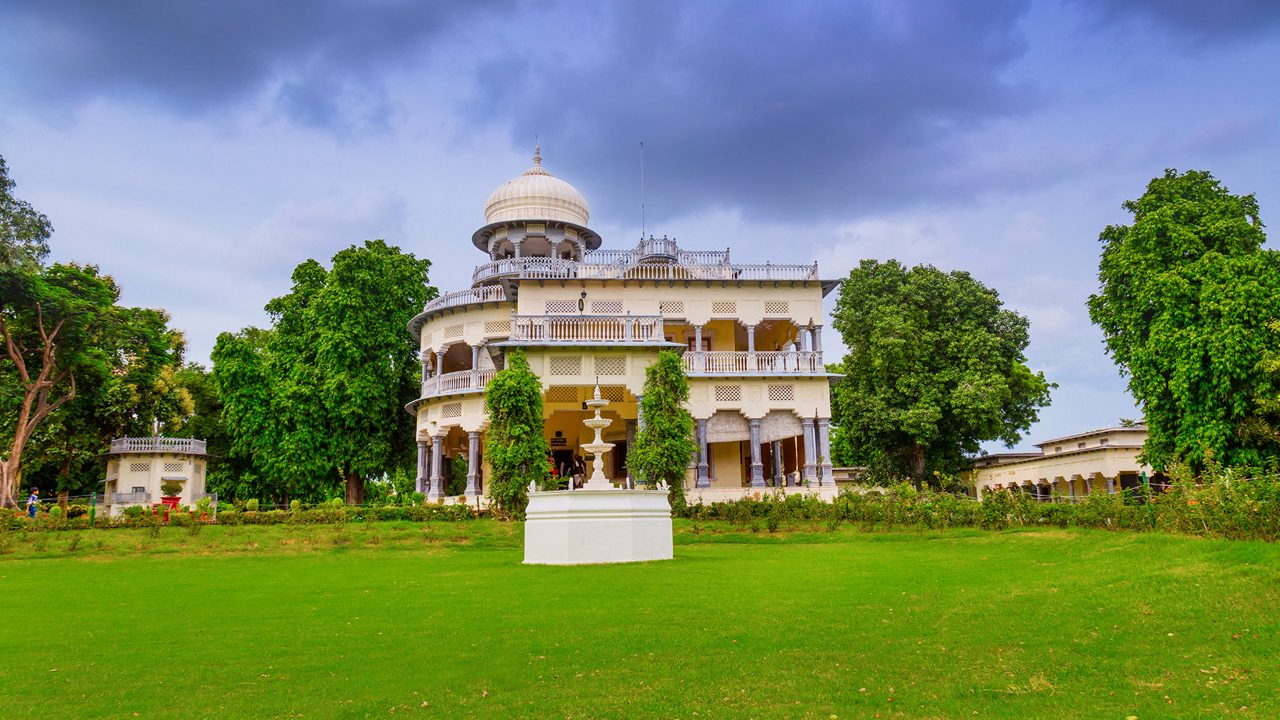
Prayagraj (2 nights) — Begin at the Triveni Sangam, the confluence of Ganga, Yamuna & Saraswati, Hinduism's most sacred bathing spot. Explore the Prayagraj Fort, Akshayavat, Ashoka Pillar (232 BCE), the freedom heritage of Anand Bhawan, and the Mughal beauty of Khusro Bagh.
Ayodhya (1 night) — Seek blessings at the magnificent new Ram Mandir at the sacred birthplace of Lord Ram, scale the 76 steps of Hanuman Garhi, visit the gold-adorned Kanak Bhawan, and witness the serene Saryu Aarti at Ram Ki Paidi.
Varanasi (2 nights) — Immerse yourself in the world's oldest city. Experience Kashi Vishwanath Jyotirlinga, the grand Ganga Aarti at Dashashwamedh Ghat on both evenings, an iconic sunrise boat ride past 84 ghats, and Sarnath — where the Buddha first preached after his enlightenment at Bodhgaya.
Bodhgaya (2 nights) — Journey to the Mahabodhi Temple (UNESCO World Heritage Site) — the holiest site in Buddhism and one of humanity's most significant sacred spaces; the very spot where Siddhartha Gautama attained enlightenment under the Bodhi Tree and became the Buddha. Walk the Cankamana (walking meditation path), meditate under the Bodhi Tree, explore the extraordinary diversity of international Buddhist monasteries, visit Dungeshwari Cave Hills (where the Buddha meditated for six years before enlightenment), and the Vishnupad Temple in Gaya — one of Hinduism's most revered Vishnu shrines and a major pitra tarpan site.
Chitrakoot (1 night) — Complete the sacred circuit at the Ramayana's most emotionally powerful destination — the forest city where Lord Ram, Sita, and Laxman spent 11½ years of exile. The Kamadgiri Parikrama, Ramghat Aarti on the Mandakini, and the mysterious Gupt Godavari Caves complete the most spiritually comprehensive pilgrimage circuit available in India.
VisitKashi — Varanasi's most trusted pilgrimage travel partner — handles every detail: private AC intercity transfers, hand-picked hotels near each destination's sacred heart, government-licensed expert guides in all five cities, boat rides at each river destination, and 24/7 on-trip support.
Package Highlights
Private AC Cab
Dedicated AC Innova Crysta / Ertiga for all local sightseeing and intercity drives across all 5 cities — no shared transport, full itinerary flexibility throughout all 9 days.
8 Nights Hotel
2N Prayagraj + 1N Ayodhya + 2N Varanasi + 2N Bodhgaya + 1N Chitrakoot — hand-picked hotels near pilgrimage sites in all five cities.
Sangam Boat Ride
Motorboat to Triveni Sangam confluence — Prayagraj's holiest experience.
Ganges Sunrise Boat Ride
Dawn row boat past all 84 Varanasi ghats — India's most iconic morning experience.
Mandakini Boat Ride
Sacred boat ride on the Mandakini River at Ramghat, Chitrakoot.
Expert Guides (5 Cities)
Separate government-licensed English / Hindi specialist guides in Prayagraj, Ayodhya, Varanasi, Bodhgaya, and Chitrakoot.
24/7 Support
Round-the-clock VisitKashi helpline and WhatsApp support across all 9 days.
VisitKashi
Your trusted travel partner · 24×7 support
Tour Highlights — Key Experiences in This Package
Day-by-Day Itinerary — 8 Nights 9 Days Prayagraj Varanasi Ayodhya Chitrakoot Bodhgaya Tour Package
8 Nights / 9 Days · Prayagraj · Timings adjustable to your arrival
Arrival Prayagraj · Triveni Sangam · Bade Hanuman Ji · Sangam Ganga Aarti
Night 1 — Prayagraj · The eternal sacred confluence
Our VisitKashi representative receives you at Prayagraj Junction / Airport / Bus Stand and transfers you to your hotel for check-in and freshening up.
Afternoon — Triveni Sangam
- Drive to Sangam Ghat and board a motorboat to the sacred Triveni Sangam — the confluence of Ganga, Yamuna & the invisible Saraswati; considered the most auspicious bathing spot in all of Hinduism and one of the seven most sacred tirthas on earth
- Perform Sangam Snan — a holy dip believed to cleanse karma across seven lifetimes and grant the soul liberation (moksha); one of the defining acts of this pilgrimage circuit
- Float a deep daan (lamp offering) on the sacred waters and offer prayers at the confluence
- Visit Bade Hanuman Ji Temple (Lete Hanumanji) — the extraordinary reclining Hanuman idol embedded in the earth at Sangam; the idol uniquely rises with floodwaters every monsoon — one of India's most revered and unusual Hanuman shrines
Evening — Sangam Ganga Aarti
- Witness the serene Ganga Aarti at Sangam Ghat — lamp offering ceremony with chanting and flowers at the riverbank as the sun sets over the sacred confluence
- Evening walk through the local market for chai, chaat, and Prayagraj street food
Return to hotel for overnight rest. Dinner on own account.
Prayagraj Fort · Akshayavat · Ashoka Pillar · Anand Bhawan · Khusro Bagh · Shankar Viman Mandapam
Night 2 — Prayagraj · Mughal grandeur, India's freedom heritage & sacred temples
Full breakfast at the hotel, then an immersive full day through Prayagraj's extraordinary Mughal, colonial, nationalist, and sacred landmarks.
Morning — Prayagraj Fort Complex
- Prayagraj Fort (Akbar's Qila, 1583 AD) — Mughal India's grandest fortification at the sacred Sangam junction; the same Emperor Akbar whose empire was contemporaneous with the spread of Ashoka's Buddhism across Asia
- Patalpuri Temple — ancient underground temple, one of Prayag's 68 sacred tirthas listed in the Puranas
- Akshayavat (Immortal Banyan Tree) — venerated for over 2,000 years as indestructible; pilgrims believe touching it grants liberation
- Ashoka Pillar (232 BCE) — the sandstone monolith bearing Emperor Ashoka's rock edicts; the same Ashoka who, after the Kalinga War, converted to Buddhism and erected pillars (including the one at Sarnath whose Lion Capital became India's national emblem) across his empire — a direct link between this pillar and Bodhgaya and Sarnath, which you will visit on this tour
Afternoon — Nehru Legacy, Mughal Gardens & Spiritual Temples
- Anand Bhawan & Swaraj Bhawan — ancestral home and birth-place museum of Jawaharlal Nehru; a national museum of India's independence movement
- Khusro Bagh — serene walled Mughal garden with three ornate sandstone royal tombs; a quiet heritage gem
- Chandra Shekhar Azad Park — where the legendary revolutionary made his last stand on 27 February 1931
- Shankar Viman Mandapam — a striking South Indian Dravidian temple near Sangam with 5 ornate towers (gopurams)
- Mankameshwar Mandir — an ancient Shiva temple on the Yamuna banks with a serene riverside setting
Return to hotel for overnight rest. Dinner on own account.
Drive to Ayodhya · Ram Mandir · Hanuman Garhi · Kanak Bhawan · Saryu Aarti
Night 3 — Ayodhya · Lord Ram's sacred birthplace — the new Ram Mandir
After an early breakfast and check-out, begin your 3-hour drive to Ayodhya — one of Hinduism's seven most sacred cities (Sapta Puri), the eternal birthplace of Lord Rama, and — as scholars note — also one of the birthplaces of the Jain tradition (Rishabhanatha, the first Jain Tirthankara, was born here).
Upon Arrival — Ram Mandir & Ram Janmabhoomi
- Check in to your Ayodhya hotel, freshen up, and proceed directly to the Sri Ram Janmabhoomi Temple (Ram Mandir) — consecrated in January 2024; its sandstone shikhara rises 161 feet above the exact birthplace of Lord Ram
- Seek darshan of Ram Lalla — the divine infant form of Lord Ram enshrined in the inner sanctum; one of Hinduism's most sought-after darshans in the country
- Walk through the Ram Janmabhoomi Parikrama Path — the 70-acre temple complex with Ramayana-carved pillars and the 108-foot Dhwaja Stambha (flag pillar)
Afternoon — Hanuman Garhi, Kanak Bhawan & Ancient Temples
- Hanuman Garhi — a magnificent 10th-century fort-temple atop 76 steps, housing an extraordinary idol of child Hanuman (Bal Hanuman) in his mother Anjani Devi's lap; Ayodhya's guardian temple
- Kanak Bhawan — the exquisitely ornate temple gifted by Queen Kaikeyi to Sita; gold-crowned Ram-Sita idols in royal wedding attire
- Nageshwarnath Temple — Ayodhya's oldest surviving temple, established by Ram's son Kush; dedicated to Lord Shiva
- Treta Ke Thakur — where Ram performed the Ashwamedha Yagna; black stone idols of the entire royal family carved from a single stone
Evening — Saryu Aarti at Ram Ki Paidi
- Witness the magnificent Saryu Aarti at Ram Ki Paidi Ghat — the evening fire ceremony on the sacred Saryu River; take a holy dip in the Saryu — considered as spiritually potent as the Ganga
- Walk along the Ram Ki Paidi steps — the 750-metre illuminated stepped ghat complex on the Saryu at dusk
Return to hotel for overnight rest. Dinner on own account.
Drive to Varanasi · Kashi Vishwanath · Sarnath Preview · 84 Ghats · Grand Ganga Aarti
Night 4 — Varanasi · The eternal city of Lord Shiva — and the city that links Hinduism to Buddhism
After an early breakfast and check-out, begin your 3.5-hour drive to Varanasi (Kashi) — the world's oldest continuously inhabited city, Lord Shiva's eternal abode, and — uniquely on this tour — the city that is the pivotal link between the Hindu and Buddhist sacred circuits: Sarnath, where the Buddha gave his first sermon, is just 12 km from Kashi's ghats.
Upon Arrival — Kashi Vishwanath Temple
- Check in to your Varanasi hotel, freshen up, and proceed to the Kashi Vishwanath Temple — one of the 12 sacred Jyotirlingas; scriptures declare that Lord Shiva personally whispers the Taraka Mantra into the ears of those who die in Kashi, granting instant moksha
- Walk through the magnificent Kashi Vishwanath Corridor — the 5-lakh sq ft development reconnecting the ancient temple to the Ganges, restoring 40+ ancient shrines
- Annapurna Devi Temple & Kaal Bhairav Temple — Kashi's Goddess of nourishment and the fearsome guardian whose permission is required to reside in the holy city
Afternoon — 84 Ghats Heritage Walk
- Walk Varanasi's iconic ghats — the ancient stone stairways each with its own mythology, deity, and ritual life
- Manikarnika Ghat — Hinduism's most sacred cremation ground, where pyres burn 24 hours a day, 365 days a year; a profound encounter with India's fearless relationship with death and liberation
- Sankat Mochan Hanuman Temple — founded by Tulsidas, author of the Ramcharitmanas; visited in sequence with Ayodhya's Hanuman Garhi this tour forms a rare Hanuman pilgrimage thread through the circuit
Evening — Grand Ganga Aarti
- Witness the world-famous Ganga Aarti at Dashashwamedh Ghat — seven priests, massive fire torches, conch shells, and Vedic chanting; a breathtaking, century-old ceremony
Return to hotel for overnight rest. Dinner on own account.
Sunrise Boat Ride · Sarnath — Where Buddhism Was Born · Kashi Temple Trail · Ganga Aarti (2nd)
Night 5 — Varanasi · Sarnath: the bridge between Kashi and Bodhgaya
Your second day in Varanasi begins before dawn — and today includes Sarnath, which on this particular 9-day tour carries special resonance: you will visit the Buddha's first sermon site the day before travelling to the Buddha's enlightenment site at Bodhgaya.
Early Morning — Sunrise Ganges Boat Ride
- Board a wooden rowing boat at Assi Ghat at sunrise (5–5:30 AM) and glide past all 84 ghats as Kashi awakens in golden light
- Watch morning puja rituals, yogis in meditation, pilgrims bathing, and the haunting smoke of Manikarnika Ghat — one of the most extraordinary visual experiences anywhere in the world
Morning — Sarnath
- Sarnath (12 km from Varanasi) — where the Buddha gave his first sermon after his enlightenment at Bodhgaya, setting the Dhammacakkappavattana (Wheel of Dharma) in motion; on this tour you visit it the day before Bodhgaya — experiencing the first sermon site before the enlightenment site creates a uniquely reversed, deeply meaningful Dhamma journey
- Dhamek Stupa (500 CE) — the 34-metre stupa marking the exact spot of the Buddha's first discourse; exquisite Gupta-era carvings
- Ashoka Pillar at Sarnath (250 BCE) — whose Lion Capital became India's national emblem and Dhamma Chakra became the wheel on the national flag; Ashoka also built the pillar you saw at Prayagraj — a powerful connecting thread across this journey
- Sarnath Museum (optional, entry extra) — housing the original Lion Capital and Asia's finest collection of Buddhist stone sculptures
- Mulagandha Kuti Vihar — Japanese Buddhist temple with Kosetsu Nosu murals of the Buddha's life
Afternoon — Kashi Temple Trail
- Durga Temple (Durga Kund), Tulsi Manas Temple, Batuk Bhairav Temple — Varanasi's essential temple trail with expert narration
- Vishwanath Gali — Varanasi's famous narrow temple lane with flower stalls, puja shops, and hidden ancient shrines
- Optional: Banarasi silk weaving workshop — watch master weavers and shop at genuine weaver prices
Evening — Ganga Aarti (2nd viewing)
- Attend the Ganga Aarti at Dashashwamedh Ghat again — the second viewing is invariably deeper and more moving; knowing the structure, you observe the layered symbolism and each priest's individual devotion with fresh awareness
Return to hotel for overnight rest. Dinner on own account.
Drive to Bodhgaya · Mahabodhi Temple · Sacred Bodhi Tree · Vajrasana Meditation · Monasteries
Night 6 — Bodhgaya · The Buddha's enlightenment ground — UNESCO World Heritage Site
After an early breakfast and check-out, begin your 4.5-hour drive to Bodhgaya in Bihar — the most sacred site in Buddhism and one of the most spiritually significant places on earth: the exact spot where Siddhartha Gautama sat under the Bodhi Tree, entered deep meditation, and attained nirvana — becoming the Buddha, the Awakened One — approximately 2,500 years ago.
Visiting Bodhgaya the day after Sarnath creates one of the most meaningful reversed pilgrimages in Buddhism: yesterday you saw the Dhammacakkappavattana site (first sermon), today you stand at the Sambodhi site (enlightenment itself). Most Buddhist pilgrims do it the other way around.
Upon Arrival — Mahabodhi Temple Complex
- Check in to your Bodhgaya hotel, freshen up, and proceed immediately to the Mahabodhi Temple — a UNESCO World Heritage Site and the holiest place in Buddhism; the temple was originally built by Emperor Ashoka in 260 BCE and later rebuilt in the 5th–6th century; it marks the exact spot of the Buddha's enlightenment
- The main tower rises 55 metres (180 feet) above the sacred ground in a distinctive tapering spire style that influenced Buddhist architecture across Asia; the entire complex glows gold in the afternoon light
- Stand at the Vajrasana (Diamond Throne) — the red sandstone seat beneath the Bodhi Tree where the Buddha sat during his meditation; Emperor Ashoka enshrined this seat in stone in 260 BCE; among the most sacred objects in the world
- Sit in meditation or prayer beneath the Sacred Bodhi Tree — a direct descendant of the original tree (Ficus religiosa) under which the Buddha attained enlightenment; brought from Anuradhapura, Sri Lanka, which preserved a cutting of the original; the experience of meditating here — with monks from Thailand, Tibet, Japan, Korea, Sri Lanka, and Myanmar surrounding you — is unlike anything available at any other site on this tour
- Walk the Cankamana (animated walking meditation path) — the lotus-flower-marked path where the Buddha walked in meditation after his enlightenment; 17 lotus bases mark his steps
- Visit the Animesh Lochana Chaitya — where the Buddha stood and gazed at the Bodhi Tree for a full week after enlightenment without blinking
- The serene Muchalinda Lake — where the serpent king Muchalinda sheltered the meditating Buddha from a seven-day rainstorm; a beautiful sculptural tableau at the lakeside
Afternoon — International Buddhist Monasteries
- Walk through the extraordinary global Buddhist community that has gathered around the Mahabodhi: Thai Monastery (the Royal Thai Temple with ornate gold-roofed architecture), Tibetan Monastery (with the Dalai Lama's seat and Tantric Buddhist murals), Japanese Temple (Indosan Nipponji) (a striking Meiji-era structure), Bhutanese Monastery (with vivid dzong-style murals), and many more
- Each monastery represents a different national tradition of Buddhism — together they form a living map of how one man's enlightenment in this small Bihar town became a world religion followed by 500 million people
Evening — Mahabodhi Temple Light Ceremony
- Return to the Mahabodhi Temple at dusk — when the temple complex is lit by thousands of butter lamps offered by monks and pilgrims from across Asia; the illuminated spire reflected in the surrounding moat is one of the most beautiful sights in all of India
- Attend evening prayers alongside monks — the multilingual Pali, Tibetan, and Sinhalese chanting is extraordinarily moving
Return to hotel for overnight rest. Dinner on own account.
Dungeshwari Cave Hills · Sujata Kuti · Niranjana River · Vishnupad Temple Gaya · Root Institute
Night 7 — Bodhgaya · Buddha's austerity caves · Gaya's Hindu pilgrimage heart
Your second day in Bodhgaya takes you beyond the Mahabodhi complex into the wider sacred geography of the Buddha's pre-enlightenment journey — and into Gaya city, which is simultaneously one of Hinduism's most important pilgrimage sites and the town that gave its name to Bodhgaya.
Early Morning — Bodhgaya Meditation Walk
- Begin at sunrise with a walk through the Mahabodhi Temple complex at first light — the most peaceful and spiritually potent time of day at this site; monks perform their morning rituals, pilgrims meditate in silent rows, and the Bodhi Tree's leaves catch the first rays of sun; an experience that cannot be replicated at any other time
- Sit in silent meditation under the Bodhi Tree for 15–30 minutes — the most recommended activity by every spiritual teacher who has visited Bodhgaya; second mornings here are almost always more profound than first visits
Morning — Dungeshwari Cave Hills (Pragbodhi)
- Dungeshwari Cave Hills (Pragbodhi) (17 km from Bodhgaya) — the cave complex in the Dungeshwari Hills where Siddhartha Gautama practised severe austerities and fasted almost to death for six years before abandoning the extreme ascetic path and moving to the Bodhi Tree at Bodhgaya; one of the most important and least-visited sites in the entire Buddhist sacred circuit
- Three cave temples are carved into the cliff face: the largest contains an ancient gold-painted statue of the emaciated Buddha depicting his ascetic phase; a smaller cave has an image of Tantric Padmasambhava; the site is also sacred in both Hindu and Buddhist traditions
- The hill location offers panoramic views of the Bodhgaya countryside — the same landscape Siddhartha would have seen as he descended from the hills to the Niranjana riverbank before his enlightenment
Late Morning — Sujata Kuti & Niranjana River
- Sujata Kuti (Sujata's Village, Bakraur) — the village on the bank of the Niranjana River where a young woman named Sujata offered rice pudding (kheer) to the emaciated Siddhartha when he abandoned his austerities — often described as the most important meal in world history; the temple mound marks the spot where Sujata's house stood
- Niranjana River (Phalgu River) — the shallow sandy river where Siddhartha bathed and accepted Sujata's offering before crossing to the Bodhi Tree; now largely dry in the summer but serene and atmospheric; the site is a quiet complement to the grandeur of the Mahabodhi complex
Afternoon — Vishnupad Temple, Gaya
- Gaya city (17 km from Bodhgaya) — one of Hinduism's most sacred pilgrimage cities; the Puranas describe Gaya as established by Vishnu himself and list it as a primary site for pitra tarpan (ancestral rites) — Hindus believe performing shraddha ceremonies here grants their ancestors liberation from the cycle of rebirth
- Vishnupad Temple — enshrines a 40 cm (16-inch) footprint of Lord Vishnu preserved in solid rock inside a silver-covered basin; the 30-metre-high temple on the banks of the Falgu River is one of the 108 Divya Desams (sacred Vishnu temples); restricted to Hindus but the exterior and Falgu riverbank are remarkable even for non-Hindu visitors
- Falgu River — the sacred river where Hindus perform pitru karmas; the same river alongside which Buddhist pilgrims pass en route to the Bodhi Tree — a remarkable sacred geography where Hindu ancestor-worship and Buddhist enlightenment pilgrimage share the same riverbank
- Mangla Gauri Temple (optional) — one of the 18 Shakti Pithas, located atop a hill in Gaya; dedicated to Goddess Sati; an important tantric site for those following the Shakti pilgrimage circuit
Late Afternoon — Root Institute & Daijokyo Temple
- Root Institute for Wisdom Culture — a Tibetan Buddhist centre founded by Lama Zopa Rinpoche; offers meditation sessions, dharma talks, and a serene garden; one of the best places in Bodhgaya for an introductory guided meditation experience
- Daijokyo Buddhist Temple (Japan) — a striking modern Japanese temple with a large prayer hall; distinguished by its unusually large Buddha statue and peaceful garden — different in character from the older Nipponji temple
Return to hotel for overnight rest. Dinner on own account.
Early Departure Bodhgaya · Drive to Chitrakoot · Kamadgiri Parikrama · Bharat Milap · Ramghat Aarti
Night 8 — Chitrakoot · From the Buddha's forest to Ram's forest — completing the circle
This is the longest travel day of the journey — and one of the most symbolically powerful. You depart the Buddha's enlightenment ground at dawn and arrive at Lord Ram's forest exile city by afternoon: from the most important site of Buddhist spiritual history to the most emotionally powerful site of Hindu epic tradition — in a single day's drive across the heartland of India.
Early Morning Departure — Bodhgaya
- Early wake-up and check-out; optional final visit to the Mahabodhi Temple at dawn (5:30–6 AM) for a brief sunrise meditation under the Bodhi Tree before departure — even 15 minutes at the Bodhi Tree at sunrise on the last morning is a deeply memorable farewell to this sacred site
- Depart by 6:30–7 AM for the approximately 7-hour drive to Chitrakoot (~350 km via Mirzapur / Chitrakoot Road); your private AC vehicle makes the journey comfortable with planned refreshment stops en route
- The drive passes through the landscape of Uttar Pradesh and Madhya Pradesh — rural India at its most genuine, through small towns, farmland, and ancient pilgrimage roads
Upon Arrival — Kamadgiri Parikrama
- Arrive in Chitrakoot by approximately 2–3 PM; check in to hotel and freshen up before heading directly to the Kamadgiri Parvat Parikrama — a 5 km barefoot circumambulation of the sacred hill worshipped as a physical form of Lord Ram; scriptures declare one Kamadgiri parikrama equal in merit to ten Govardhan parikramas and one complete Kashi Yatra
- Visit the Kamta Nath Temple at the base of the hill
- Bharat Milap Mandir — the moving spot where Bharat met Ram during the exile; stone footprints of Ram, Sita, Laxman, and Bharat are preserved here
Afternoon / Evening — Ramghat & Mandakini River
- Ramghat — the principal ghat on the Mandakini River where Ram, Sita & Laxman bathed daily during exile; the most sacred spot in Chitrakoot
- Mandakini River Boat Ride — a serene boat ride along the holy river past ancient ghats and forest ashrams; the Vindhya hills frame the skyline on both sides
Evening — Ramghat Aarti on the Mandakini
- Witness the Ramghat Aarti — as thousands of oil lamps illuminate the riverbanks amid the forested Vindhya hills; after two days at the spare, contemplative silence of Bodhgaya, the warm devotional fire of Chitrakoot's Ramghat aarti strikes with extraordinary emotional force — many travellers on this circuit describe this as the single most moving spiritual moment of the entire 9-day journey
Check in to hotel in Chitrakoot. Dinner on own account.
Gupt Godavari Caves · Sphatik Shila · Janaki Kund · Hanuman Dhara · Ram Darshan Museum · Departure
Day 9 — Chitrakoot full morning · Completion of India's greatest sacred circuit · Departure
Your final morning — the completion of the most spiritually comprehensive pilgrimage circuit in India. Five sacred cities, two of the world's great faith traditions, four sacred rivers, and nine days of deepening devotion all converge in this last Chitrakoot morning.
Early Morning — Mandakini Holy Dip at Ramghat
- Begin at sunrise with a final holy dip in the Mandakini River at Ramghat — completing the sacred four-river circuit of this journey: Triveni Sangam (Day 1) → Saryu, Ayodhya (Day 3) → Ganges, Varanasi (Day 5 optional) → Mandakini, Chitrakoot (Day 9)
- Offer prayers and a final deep daan (lamp offering) on the Mandakini as the morning mist rises from the river and the forest birds begin their chorus
Morning — Gupt Godavari Caves
- Gupt Godavari Caves (18 km from Ramghat) — two cave temples where Lord Ram held court during the exile; the first cave requires wading through a narrow ankle-to-knee-deep subterranean stream before opening into a large chamber with ancient Shivalingas and a perennial natural spring; a geological and spiritual marvel
Mid-Morning — Sphatik Shila, Janaki Kund & Hanuman Dhara
- Sphatik Shila — the crystalline quartz rock where Ram and Sita rested; Ram's footprints preserved in stone on the Mandakini bank
- Janaki Kund — the sacred tank where Sita bathed during the exile; a peaceful riverside spot surrounded by ancient trees
- Hanuman Dhara (optional, 200+ step climb) — the perpetual spring flowing over a rock-cut Hanuman image; summit panoramas of Chitrakoot's forested valley
Late Morning — Ram Darshan Museum
- Ram Darshan Museum (near Kamadgiri) — a beautifully illustrated audio-visual museum depicting the complete Ramayana narrative with dioramas and paintings; having physically visited Prayagraj, Ayodhya, Varanasi, and Chitrakoot — all the Ramayana sites described — the museum takes on an extraordinary personal resonance on the final morning of this circuit
Departure
- After lunch (own expense), our driver transfers you to Chitrakoot Railway Station / Satna Junction (45 min) / Karwi Bus Stand for your onward journey; or we return you to Varanasi (4 hrs) or Prayagraj (3.5 hrs) if your departure is from there
🙏 You have completed India's most spiritually complete sacred circuit — Triveni Sangam, Prayagraj Fort, Ram Janmabhoomi, Hanuman Garhi, Kashi Vishwanath, Dashashwamedh Ghat, Sarnath, Mahabodhi Temple, Bodhi Tree, Dungeshwari Caves, Vishnupad Gaya, Kamadgiri, Ramghat, and Gupt Godavari — across five sacred cities, four sacred rivers, and the two greatest pilgrimage traditions of the Indian subcontinent. May the blessings of all five sacred cities travel with you always.
What's Included & What's Not Included
Inclusions
- 8 nights hotel stay — 2N Prayagraj + 1N Ayodhya + 2N Varanasi + 2N Bodhgaya + 1N Chitrakoot (twin sharing, daily breakfast)
- Private AC cab for all local sightseeing and intercity drives across all five cities
- Expert government-licensed English / Hindi guides in all five cities (Prayagraj, Ayodhya, Varanasi, Bodhgaya, Chitrakoot)
- Arrival & departure transfer (railway station / airport / bus stand)
- Motorboat ride at Triveni Sangam — Prayagraj
- Sunrise wooden rowing boat ride on the Ganges — Varanasi
- Boat ride on the Mandakini River at Ramghat — Chitrakoot
- Dungeshwari Cave Hills excursion from Bodhgaya — transport and guide included
- Gaya Vishnupad Temple visit — transport and guide included
- Sujata Kuti & Niranjana River visit — transport included
- Kamadgiri Parikrama guidance & pilgrimage assistance
- All toll taxes, parking fees & driver allowances
- 24×7 VisitKashi on-trip WhatsApp support
Exclusions
- Train / flight / bus tickets to / from Prayagraj or Bodhgaya / Gaya (or any other city)
- Lunch & dinner (own expense throughout all 9 days)
- Entry fees — Anand Bhawan, Prayagraj Fort, Sarnath Museum, Ram Darshan Museum, Gupt Godavari caves, Dungeshwari Cave nominal fee
- Mahabodhi Temple complex camera fees (nominal, paid at entrance)
- Ram Mandir special / VIP darshan ticket or prasad (available locally at nominal cost)
- Kashi Vishwanath Temple VIP / special darshan ticket (optional, nominal cost)
- Puja samagri, prasad & flowers at all temples (available locally at nominal cost)
- Personal expenses & shopping (Banarasi silk, local handicrafts, Buddhist souvenirs)
- Camera / videography fees at heritage sites and temples
- Tips & gratuities for guides / drivers
- Travel insurance (strongly recommended for multi-city pilgrimages)
- Anything not explicitly listed above
Good to Know
Night Distribution: Night 1 & 2 — Prayagraj · Night 3 — Ayodhya · Night 4 & 5 — Varanasi · Night 6 & 7 — Bodhgaya · Night 8 — Chitrakoot. Departure Day 9 from Chitrakoot (Karwi / Chitrakoot Station / Satna Junction, 45 min). Return to Prayagraj or Varanasi for onward travel available at nominal extra cost.
Day 8 — Long Drive (Bodhgaya to Chitrakoot): ~350 km, approx 7 hours. Depart by 6:30–7 AM after optional dawn Bodhi Tree visit. One planned refreshment/comfort stop en route. Arrive Chitrakoot by 2–3 PM — sufficient time for the Kamadgiri parikrama and Ramghat Aarti. This is the only long drive day of the tour. Guests wishing to skip this leg and end the tour at Bodhgaya/Gaya should inform VisitKashi at the time of booking.
Mahabodhi Temple — What to Know: Open 5 AM–9 PM. No dedicated ticket required for entry. Camera fees are nominal and paid at the gate. Shoes removed at the main entrance (locker provided). Modest clothing required. Photography permitted in the compound but not inside the main shrine room. Best times: 5–7 AM (sunrise, most peaceful) and 6–8 PM (lamp ceremony, most atmospheric). Our Bodhgaya guide manages all entry formalities.
Vishnupad Temple, Gaya: Entry restricted to Hindus for the inner sanctum (the Vishnu footprint). Non-Hindu visitors can observe the temple exterior, the Falgu River bank, and the surrounding temple complex — still a remarkable and atmospheric experience. Guide assists with access formalities.
Ram Mandir Entry (Ayodhya): No advance booking for general darshan. Carry government ID (Aadhar card). Mobile phones, bags, and leather items NOT permitted inside — deposit at entry lockers. Guide assists with all formalities. Best darshan: 7–9 AM before peak crowds.
Gupt Godavari Caves (Day 9): Carry spare light trousers or quick-dry pants — ankle-to-knee-deep water wading in the main cave. Rubber sandals (₹20) for rent at entrance. Cave closed during peak monsoon (July–August).
Kashi Vishwanath Temple: Mobile phones and cameras strictly NOT permitted inside. Aadhar card mandatory. Guide handles all formalities.
Four-River Holy Dip Circuit: Triveni Sangam (Day 1), Saryu Ayodhya (Day 3), Ganges Varanasi (Day 5 optional), Mandakini Chitrakoot (Day 9 morning). Carry a dedicated towel and change of clothes for dip days.
Frequently Asked Questions — 8 Nights 9 Days Prayagraj Varanasi Ayodhya Chitrakoot Bodhgaya Tour Package
What is the night distribution in the 8N/9D Prayagraj Varanasi Ayodhya Chitrakoot Bodhgaya package?
▼Night 1 & 2 in Prayagraj · Night 3 in Ayodhya · Night 4 & 5 in Varanasi · Night 6 & 7 in Bodhgaya · Night 8 in Chitrakoot. Departure on Day 9 from Chitrakoot (Karwi Bus Stand, Chitrakoot Railway Station, or Satna Junction — 45 min away). We can return you to Varanasi (4 hrs) or Prayagraj (3.5 hrs) if your departure is from there. Alternatively, you can depart from Gaya Airport / Gaya Junction (if your flight or train is from there) by adjusting the itinerary to end at Bodhgaya instead of Chitrakoot — please inform us at booking.
Why visit Sarnath before Bodhgaya instead of after?
▼This is one of the most distinctive aspects of the itinerary: you visit Sarnath (Day 5 — where the Buddha gave his first sermon after enlightenment) before visiting Bodhgaya (Days 6–7 — where the Buddha attained enlightenment). Chronologically, enlightenment came before the first sermon, so the conventional Buddhist pilgrimage goes Bodhgaya first, Sarnath second. This reversed order — first sermon, then enlightenment — creates a unique retrospective experience: when you sit beneath the Bodhi Tree at Bodhgaya on Day 6, you already know what the Buddha went on to teach at Sarnath. Many travellers find this deepens the Bodhgaya experience rather than diminishing it.
How long is the drive from Bodhgaya to Chitrakoot on Day 8?
▼Bodhgaya to Chitrakoot is approximately 340–380 km, taking 6.5–7 hours by road (via Mirzapur or via Varanasi bypass). We depart early — typically 6:30–7 AM — after an optional final Mahabodhi Temple visit at dawn. With a planned refreshment stop, you arrive in Chitrakoot by 2–3 PM, leaving time for the Kamadgiri Parikrama (evening) and Ramghat Aarti before dinner. While this is the longest drive day of the tour, our private AC vehicle makes it comfortable. Alternatively, if you strongly prefer to avoid this drive, we can adjust the itinerary to end at Gaya/Bodhgaya and skip Chitrakoot — please request at booking.
What is the significance of Dungeshwari Cave Hills (Pragbodhi)?
▼Dungeshwari Cave Hills, also called Pragbodhi (meaning "before enlightenment"), are the caves in the Dungeshwari Hills 17 km from Bodhgaya where Siddhartha Gautama lived and practised severe austerities for six years before finally abandoning the extreme ascetic path. Three cave temples are carved into the cliff face — the largest contains an ancient gold-painted statue of the emaciated Buddha depicting this difficult period of his life. It is one of the most important sites in the Buddhist sacred circuit and vastly less visited than the Mahabodhi Temple. Visiting Pragbodhi gives the Bodhgaya experience a completeness that most day-trippers miss.
What is the connection between the Ashoka Pillar at Prayagraj and the sites at Sarnath and Bodhgaya?
▼Emperor Ashoka (268–232 BCE) is the historical link that connects three of the sites on this tour. He erected the pillar you see at Prayagraj Fort with his rock edicts. He also erected the pillar at Sarnath whose Lion Capital became India's national emblem. He built the original Mahabodhi Temple at Bodhgaya after his conversion to Buddhism following the Kalinga War. Visiting all three Ashokan monuments — Prayagraj pillar, Sarnath pillar, and Bodhgaya temple — within a single 9-day tour creates a remarkable historical thread through one of ancient India's most transformative reigns.
What is covered at the Mahabodhi Temple in Bodhgaya?
▼The Mahabodhi Temple Complex (UNESCO World Heritage) includes: the main 55-metre temple tower (the holiest building in Buddhism), the Sacred Bodhi Tree (a direct descendant of the original enlightenment tree), the Vajrasana or Diamond Throne (the stone seat preserved by Ashoka), the Cankamana or walking meditation path, the Animesh Lochana Chaitya (where Buddha gazed at the Bodhi Tree for one week), and the Muchalinda Lake with its serpent-king sculpture. Your guided visit includes all these sites with detailed explanation of each one's significance.
Can I meditate at the Bodhi Tree in Bodhgaya?
▼Yes — and this is one of the most recommended experiences at Bodhgaya. The Mahabodhi Temple compound is open for sitting meditation at all times (open hours: 5 AM–9 PM). Designated meditation spots are available around the Vajrasana area beneath the Bodhi Tree, along the Cankamana path, and within the temple complex. Monks from across Asia sit in rows for hours — the combined energy of concentrated meditation at this site is palpable even to first-time visitors. Our guide facilitates access and can translate any specific procedures required by the temple authorities.
Is this package suitable for non-Hindus or Buddhist travellers?
▼Yes — this is one of the most multi-faith itineraries available in India. Buddhist travellers will find Bodhgaya (Days 6–7) and Sarnath (Day 5) among the most significant pilgrimage experiences of their lives. Hindu travellers will experience the four great Hindu pilgrimage cities. Travellers of any faith or no faith will find this itinerary historically, culturally, and humanly extraordinary — encompassing 2,500 years of human spiritual history across five sacred cities. We have guided groups from Japan, South Korea, Thailand, Sri Lanka, Taiwan, and Myanmar whose primary objective was the Buddhist circuit, combined with the Hindu circuit for cultural completeness.
What is the best time of year for this 5-city 9-day pilgrimage?
▼October to March is ideal for all five cities. November is exceptional: Dev Deepawali in Varanasi illuminates the Ganges with one million lamps. January's Magh Mela at Prayagraj is among India's largest sacred gatherings. Ram Navami (March/April) in Ayodhya is spectacular. Bodhgaya is most atmospheric in winter (December–February) when the largest international Buddhist gatherings and meditation retreats take place — including the Kalachakra empowerment when held. Avoid May–June (extreme heat). Monsoon makes Gupt Godavari caves inaccessible (July–August).
Is this 9-day package suitable for senior citizens and families?
▼Yes, with appropriate planning. The Mahabodhi Temple complex is flat and accessible. The Dungeshwari Caves involve a short climb and step climbing but can be partially experienced. The Kamadgiri Parikrama (5 km, flat paved path) is suitable for most seniors. Gupt Godavari cave wading can be skipped. Hanuman Dhara climb (200+ steps) is optional. The Bodhgaya–Chitrakoot long drive (Day 8) can be made more comfortable with an extra comfort stop. We handle multigenerational pilgrimage groups regularly.
Can I fly into Varanasi and out of Gaya or Prayagraj on this tour?
▼Yes — and this is the most efficient air routing for this package. Fly into Varanasi (VNS) and arrange the tour in a modified order: Varanasi (2N) → Prayagraj (2N) → Chitrakoot (1N) → [or reverse the circuit to end at Bodhgaya] → Bodhgaya (2N) → fly out of Gaya Airport (GAY). Alternatively, fly in and out of Prayagraj (IXD) if Lucknow Airport (LKO — 2 hrs from Ayodhya) is used. Contact VisitKashi on WhatsApp with your flight details and we will design the most efficient routing for your specific arrival and departure points.
Ready to Explore Prayagraj?
Customized itineraries · Best price guarantee · 24×7 support